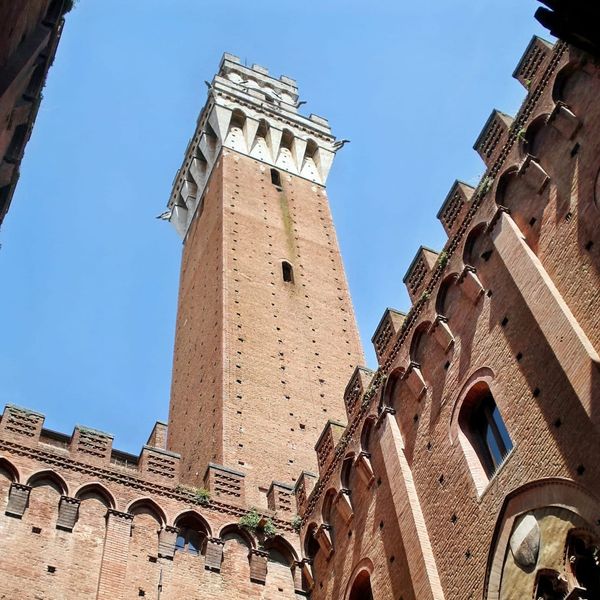
TODI — THE THRESHOLD AND THE CITY
The portal of San Fortunato asks you to stop one second longer. An architect reads Todi — its three walls, its Roman forum, and the doors built to make you pause.
Have you ever stopped in front of a door before going in?
Not to look for your keys, not to check the intercom. Stopped properly, for a second longer than you needed to, because something in that threshold asked you to.
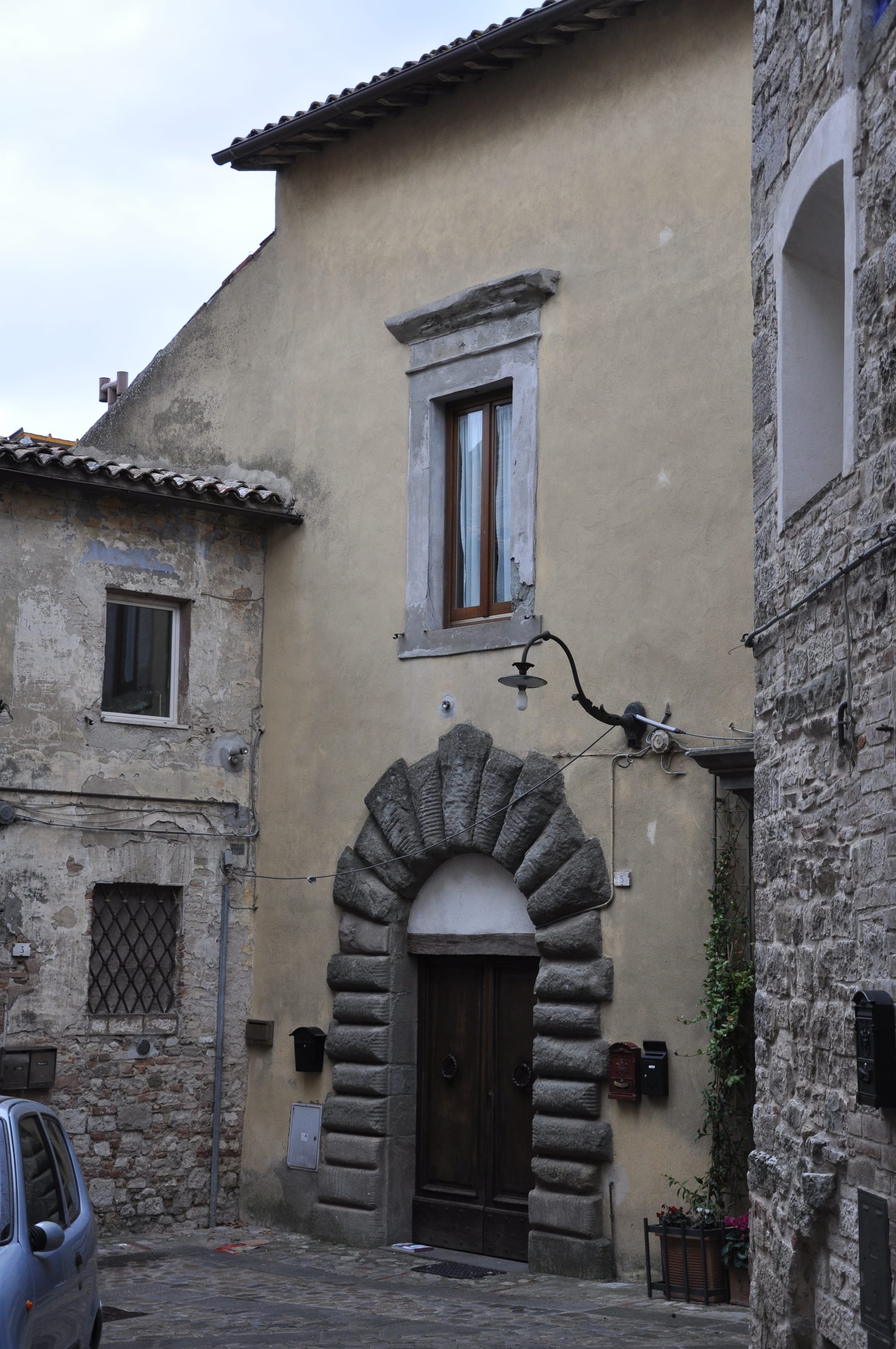
It happened to me in Todi, in front of the portal of San Fortunato, on a December morning with a low white sky and almost nobody around. And I found myself thinking about how many doors throughout history were built specifically to make you pause that extra second. And how many, today, are built specifically so you don't pause at all.
A Short History of the Threshold
In the ancient world, a doorway was a sacred boundary before it was a practical one. The Romans had Janus, the two-faced god who looked simultaneously inward and outward — fittingly, the god of thresholds, of beginnings, of passages. Crossing a doorway meant passing from one state into another, and someone, somewhere, had to watch over that moment.
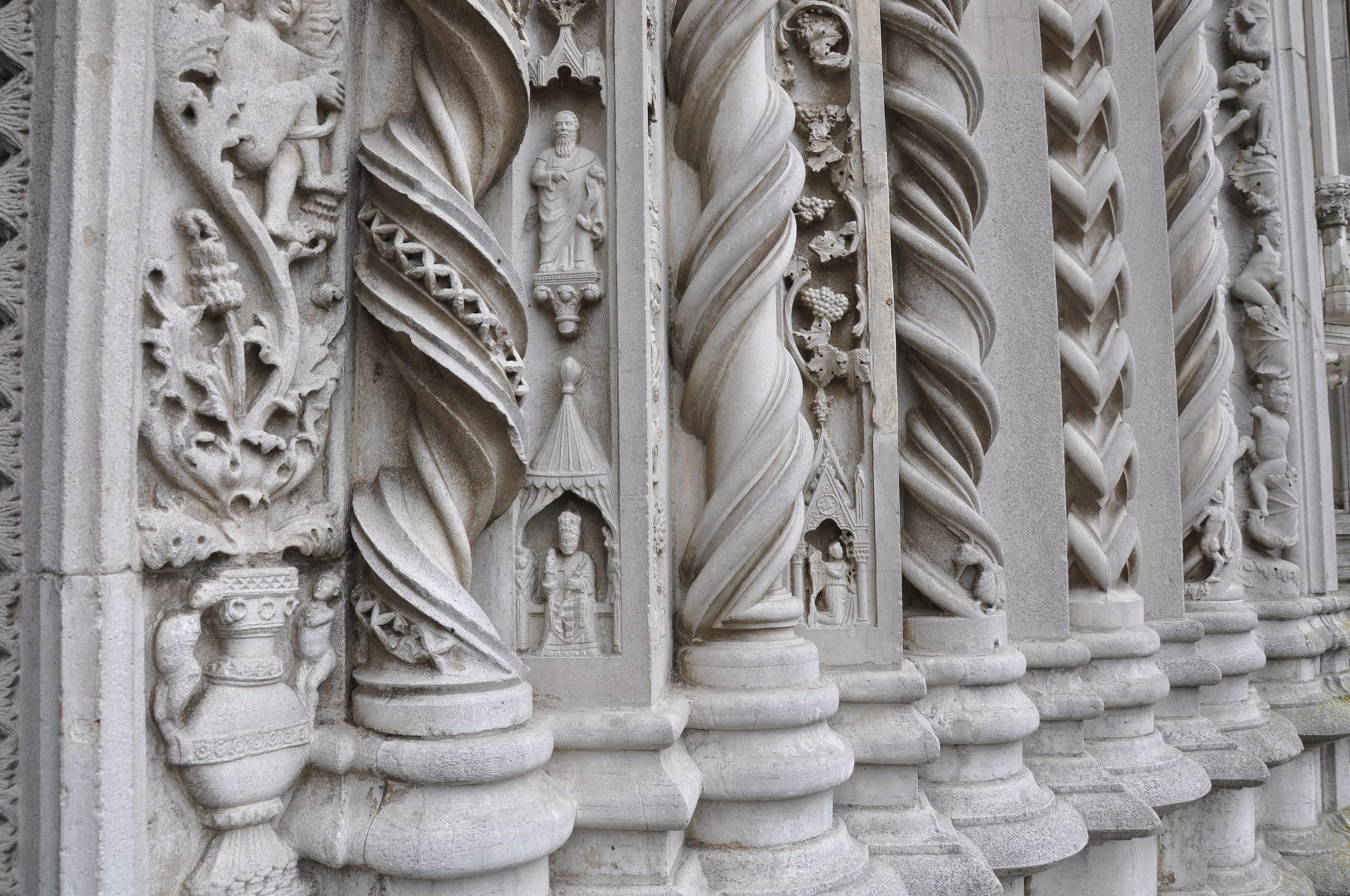
In the Middle Ages, the threshold became a sermon. The portals of Gothic cathedrals — San Fortunato's, which we'll come to shortly, but also those of Reims, of Chartres, of Orvieto — were conceived as funnels: the wall recedes in a sequence of ever-narrower arches, every surface covered in sculpture, every figure a character from sacred history. You don't simply enter a church. You cross a narrative, and the narrative ends exactly where the actual door begins.
In the Renaissance, the threshold became urban scenography. At Caprarola — I've written about this elsewhere on the blog — Vignola doesn't build a portal at all. He builds an entire road that culminates in the palace: a kilometre of calculated approach, an ascent designed to prepare you psychologically before you arrive. The threshold expands until it becomes urban planning.
In the bourgeois nineteenth century, the threshold returned to being a private stage. The entrance halls of grand townhouses — high ceilings, marble, stucco — were built to intimidate and impress before a visitor ever reached the apartment itself. The threshold declared the wealth of whoever lived beyond it.
And today? Today the threshold, in most cases, is an intercom with a camera. The contemporary apartment block's entrance hall is often a functional, clean, anonymous corridor — keycards, technological security, the cold elegance of a luxury shell that prizes individual isolation over welcome. Our own reinforced front door, more often than not, opens straight onto the living room, without so much as a moment's filter between outside and in. We have eliminated the threshold as an experience and kept only its function: security, thermal insulation, access control.
This isn't a judgement. It's an observation. We have simply stopped believing it was worth building something that made us pause an extra second before going in.
In Todi, that extra second is still there, carved into stone, six hundred years on.
San Fortunato: The Sermon They Never Finished
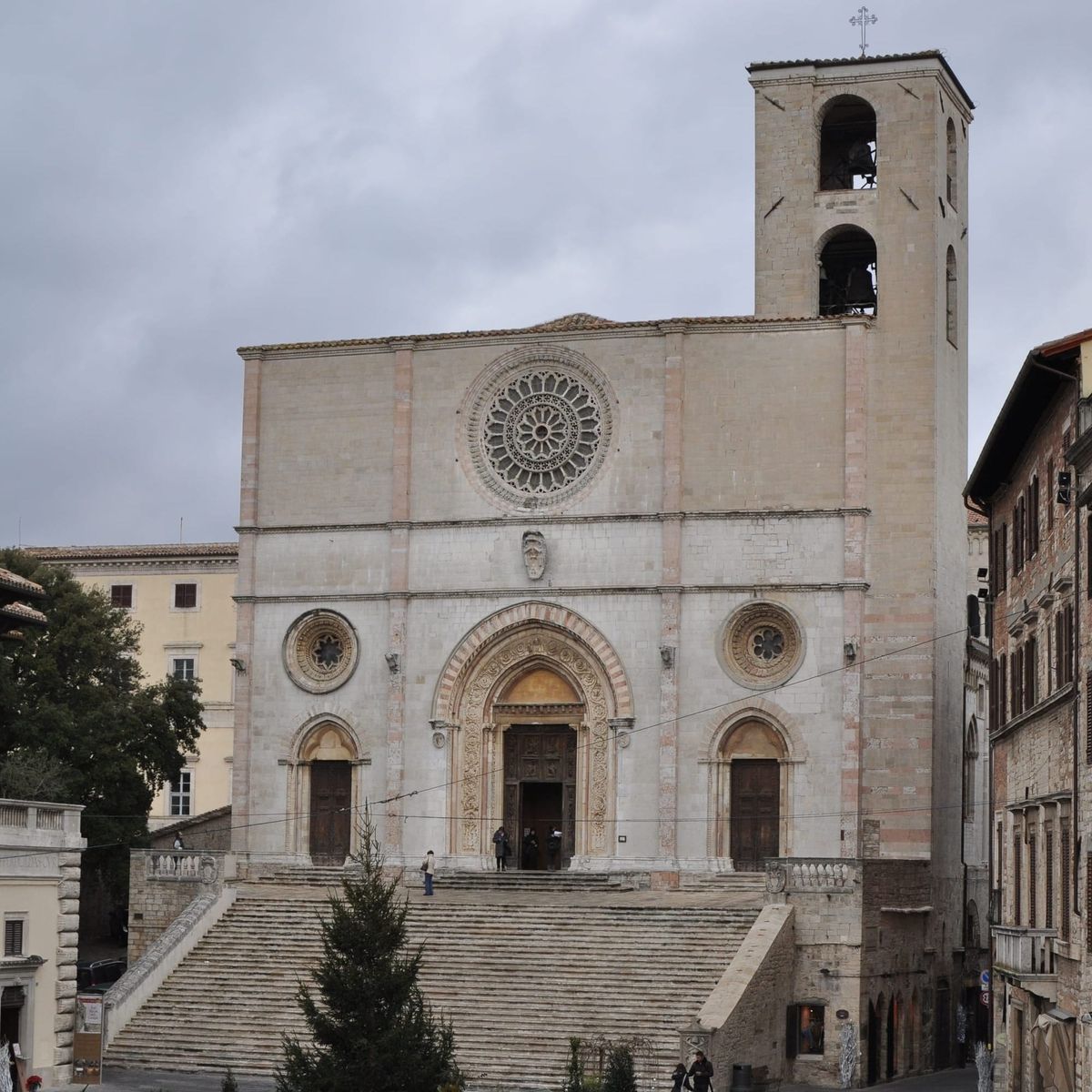
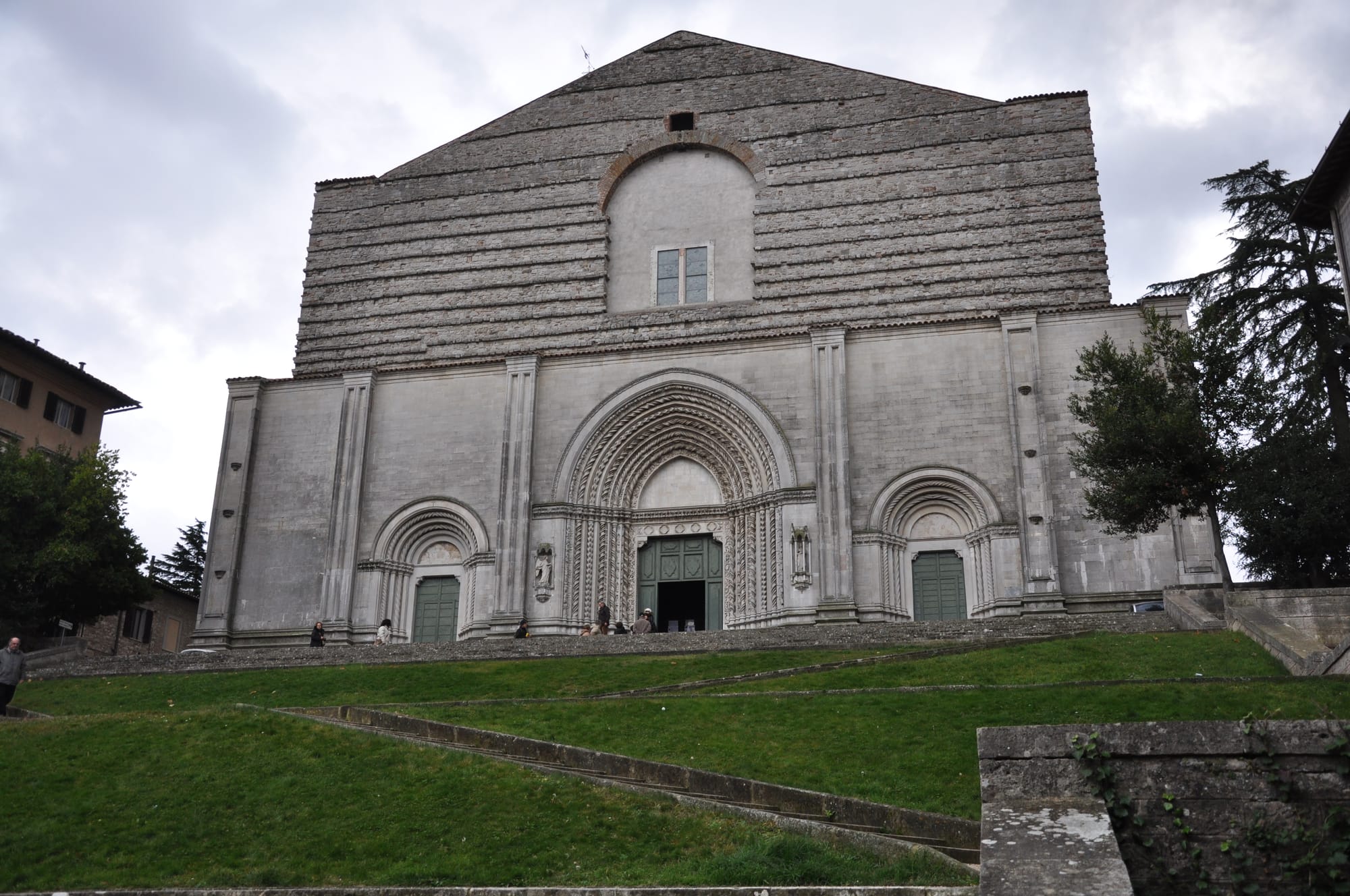
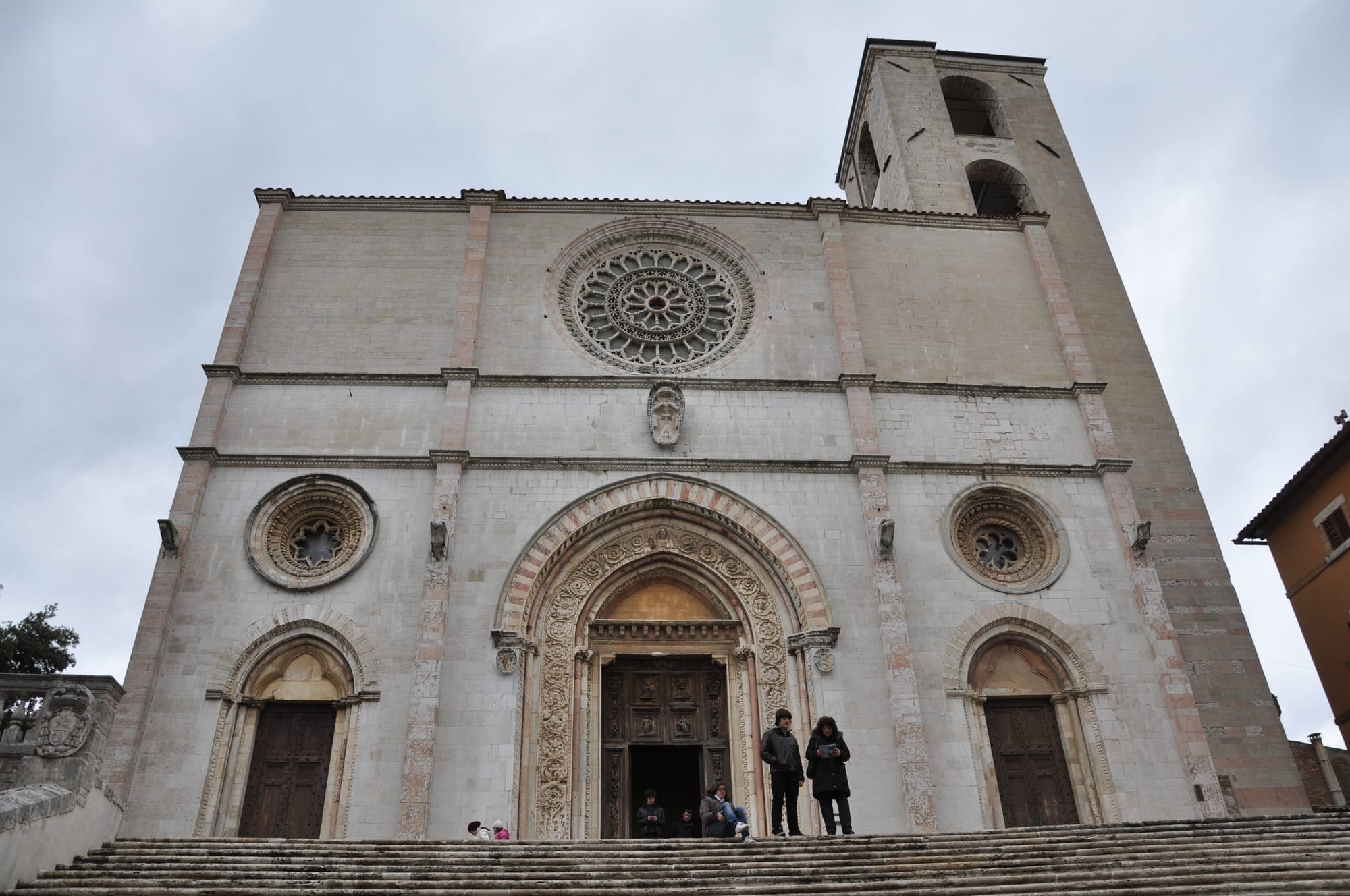
The central portal of San Fortunato was carved between 1424 and 1436 by Giovanni di Santuccio da Firenzuola and his nephew Bartolo di Angelo. Above it, the facade was meant to hold a rose window — the space is still there, still empty, to this day. The money ran out after the wars with Orvieto, the records say. I prefer to think the portal alone had already said everything it needed to say.
Get close. Closer than feels polite. At the base, two stone lions — stylophore spolia, lions recovered from the earlier Romanesque church and pressed back into service as column-bearers — kept there as structural relics while everything around them was rebuilt. Generations of Todi children have clambered onto their backs, and some still remember doing exactly that as a child.
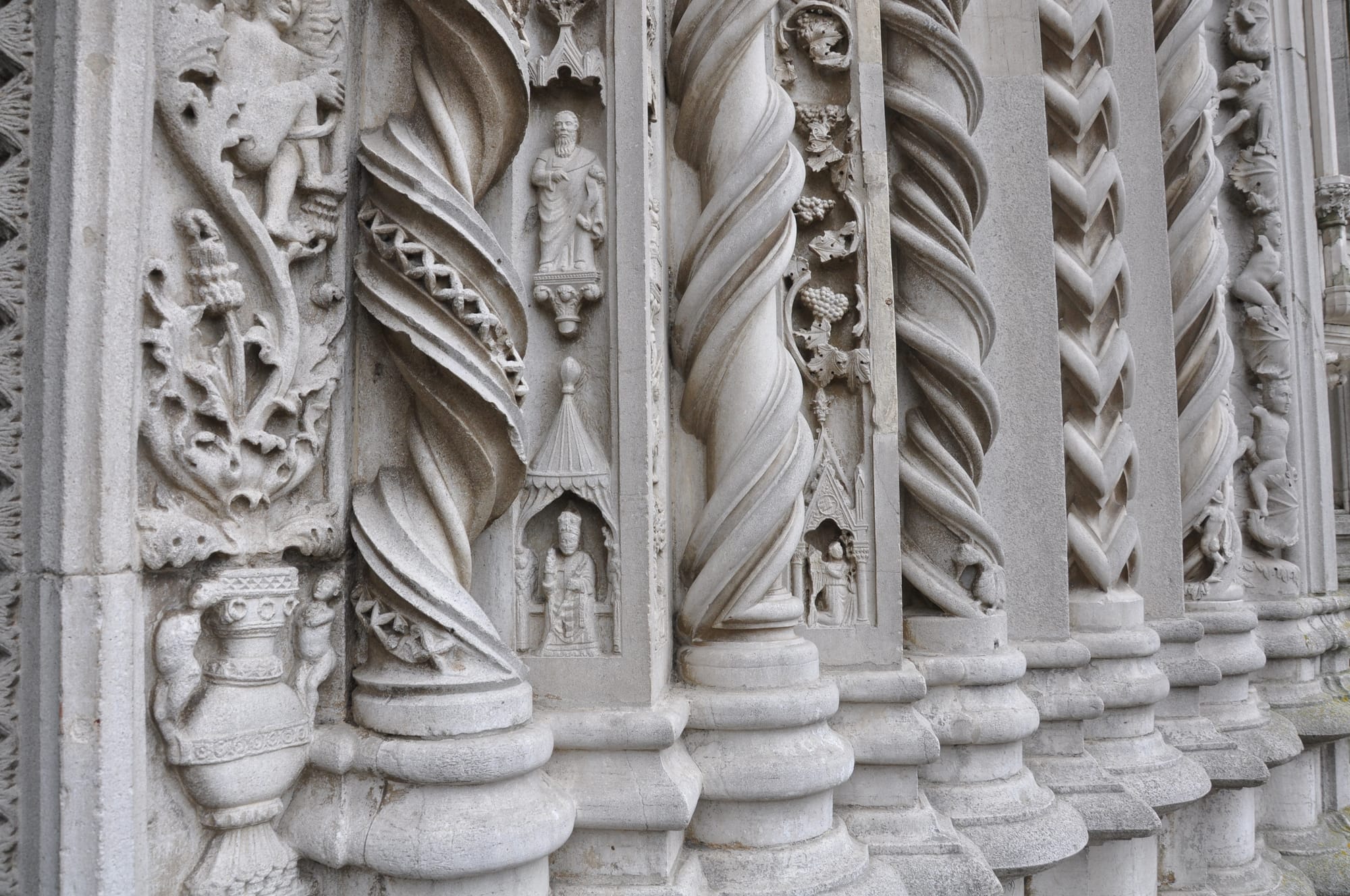
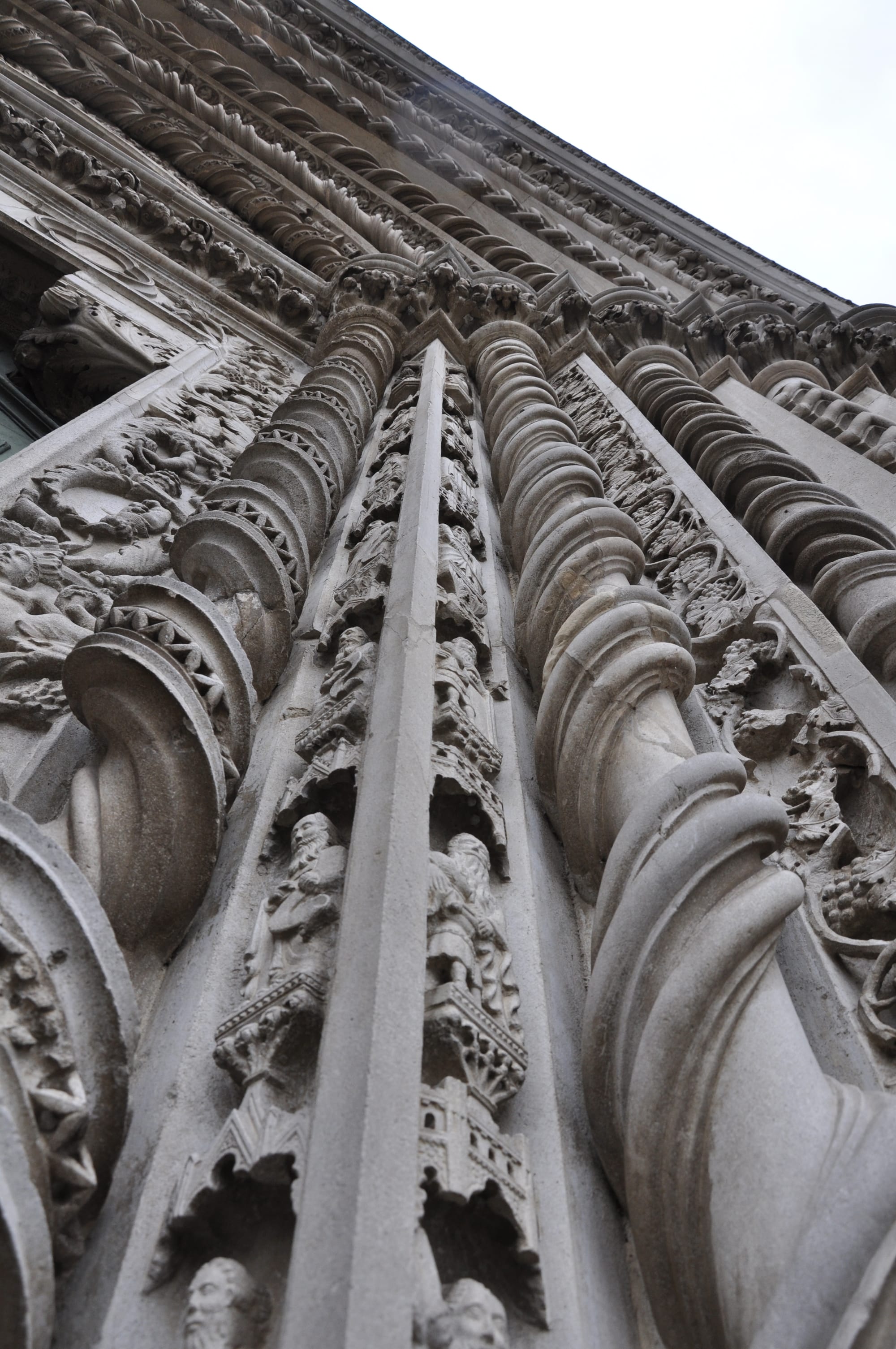
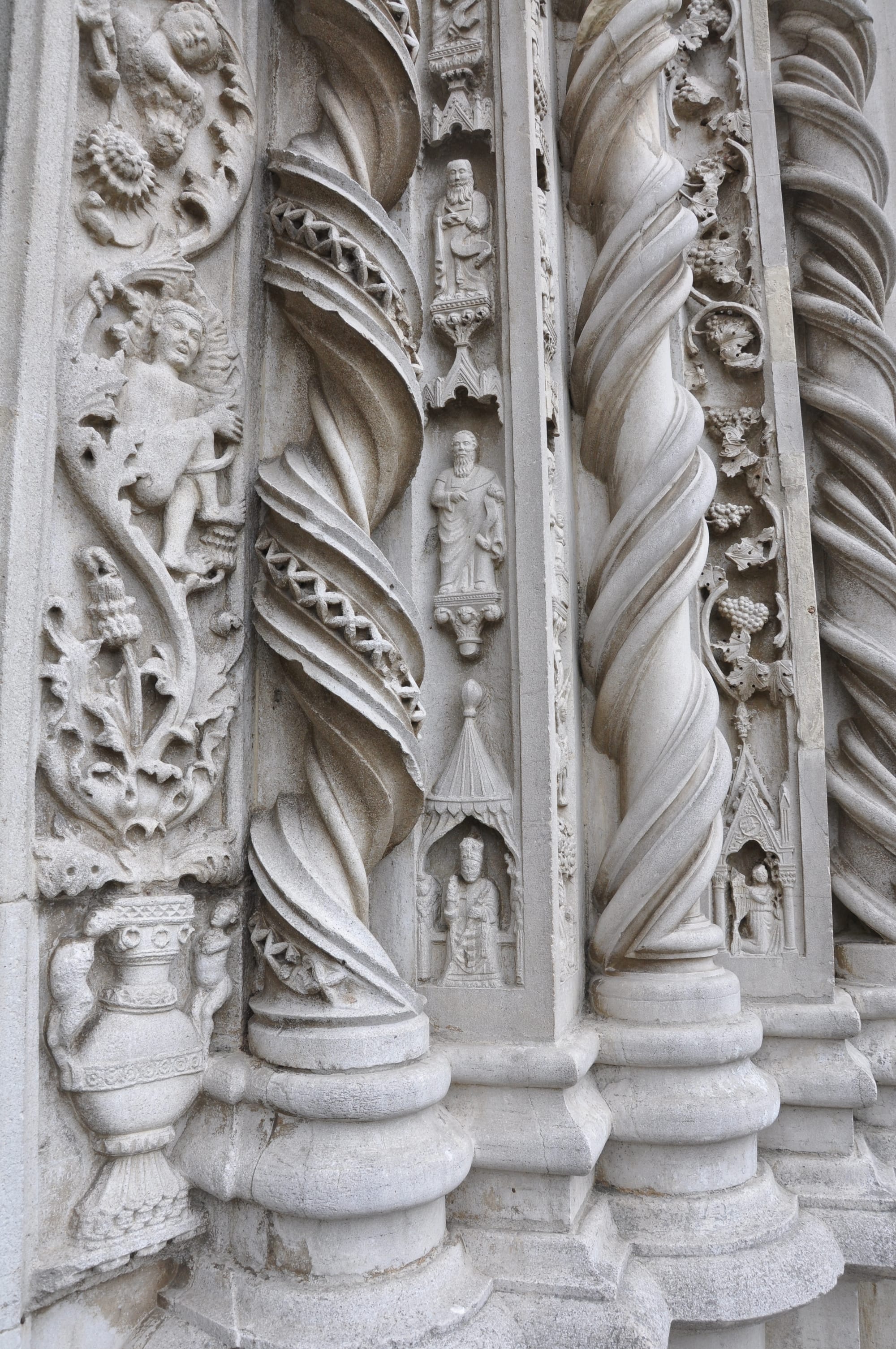
Climbing the jambs, the twelve apostles, six to a side, each recognisable by his own attribute. Around them, half-forgotten local saints — Romana, Degna, Cassian, whose bones still rest inside the church. And then, in the spiral colonnettes framing the opening — the ones carved as a continuous twisting spiral — there is something no official guide will tell you: carved into the vine winding around the column, a nude figure climbing, and at the top, on the other side, a woman waiting. A friar and a nun, some say. Whatever the precise reading, desire is there, wound into the same spiral motif that elsewhere carries the vine of Good and the fig of Evil. The Middle Ages had no trouble holding sanctity and temptation together on the same column, a few centimetres apart.
Higher still, around the lunette, thirteen saints in chorus, the stigmata of Francis, the Annunciation, Abraham and Isaac. A century of work, concentrated into a few square metres of stone, so that whoever was about to enter the church would have to stop — a second, ten minutes, however long it took — and read before crossing.
The rose window above never arrived. But I promise you, nothing is missing.
Todi, At Last
And now, after the door, the city.
Todi sits on a hill four hundred metres up, with the Tiber running through the valley below. Legend has it that an eagle chose the hilltop, snatching a tablecloth during a meal and carrying it to the summit as a divine sign. History, more prosaically, says it was simply a perfect defensive position — and that the name itself, from the Etruscan Tular, meant border. A city whose very name means threshold, in a way, from the very beginning.
Three rings of walls wrap the historic centre, one inside the other: Etruscan, Roman, medieval. The Etruscan ring, from the third century BC, has almost vanished — only Porta Marzia, on Via Roma, survives. The Roman ring dates to the first century BC, when Todi became a municipium and, beneath what is now Piazza del Popolo, a dense system of twelve interconnecting hydraulic galleries was excavated — an engineering infrastructure designed to drain, contain and distribute water beneath the ancient forum, which still holds up the square today like a floor suspended over empty space. The medieval ring, begun in 1209, is the widest, and is the one that still defines the boundary of the historic city — the same wall that withstood Frederick II's imperial army in 1240.
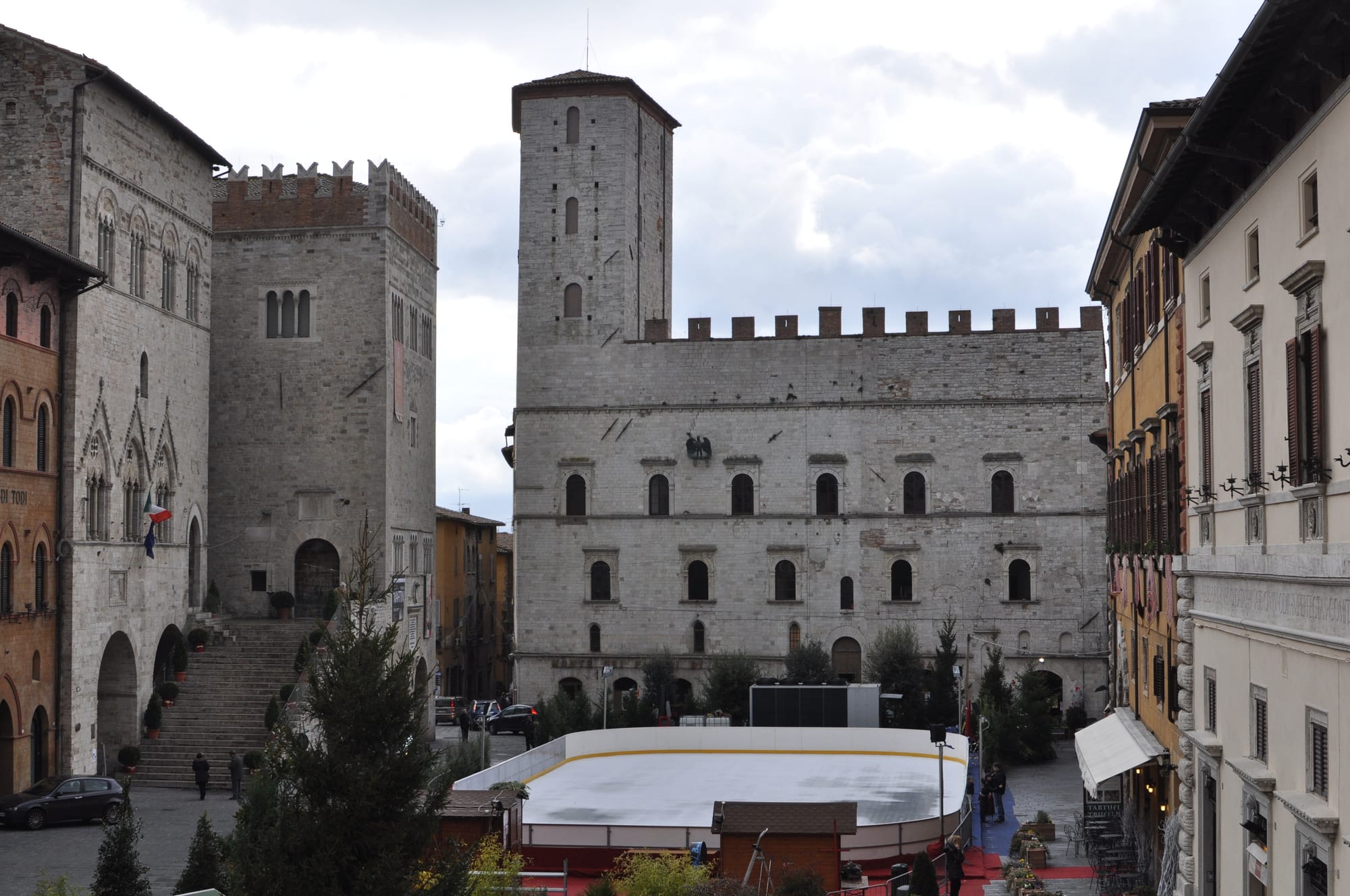
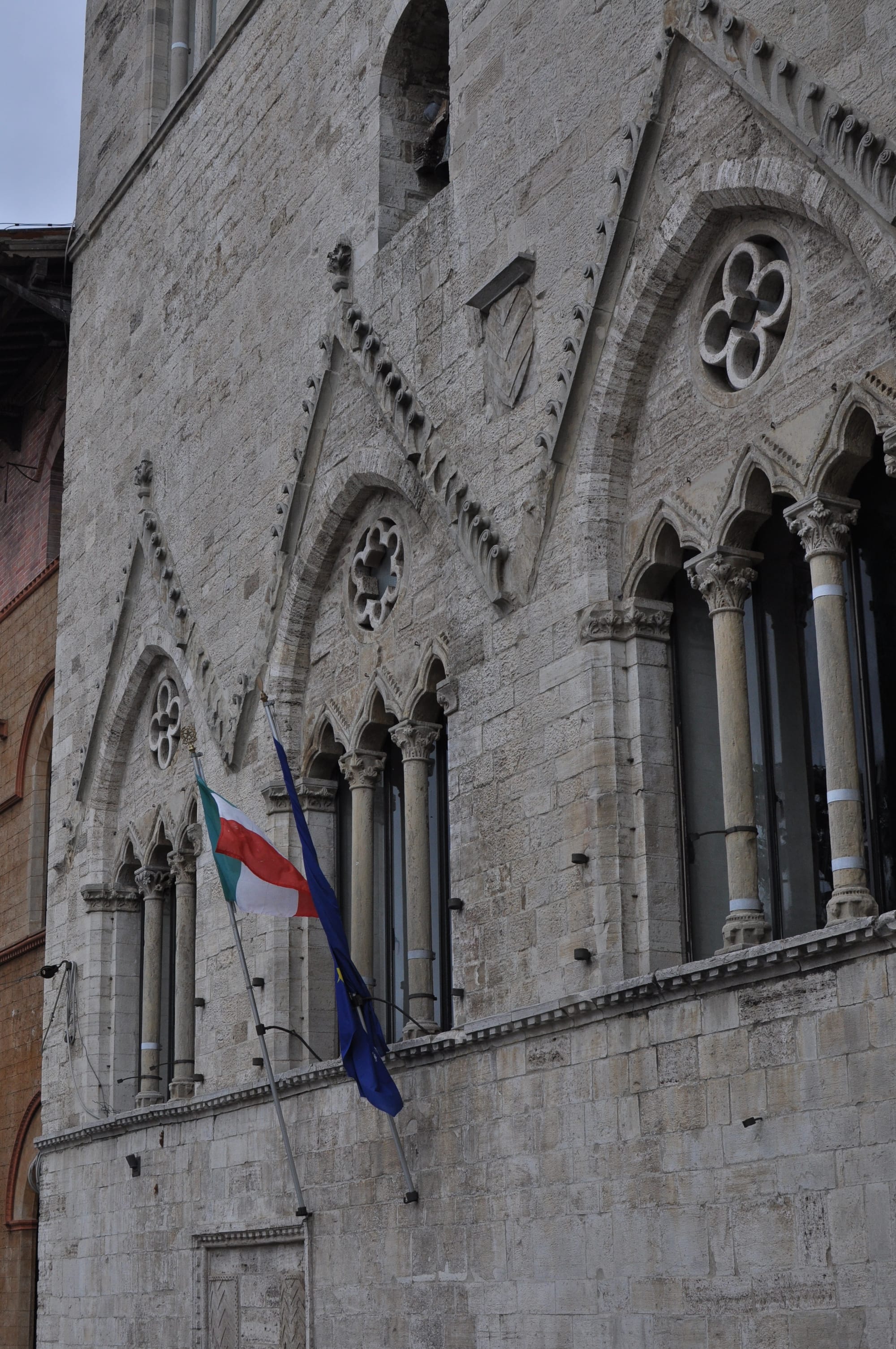
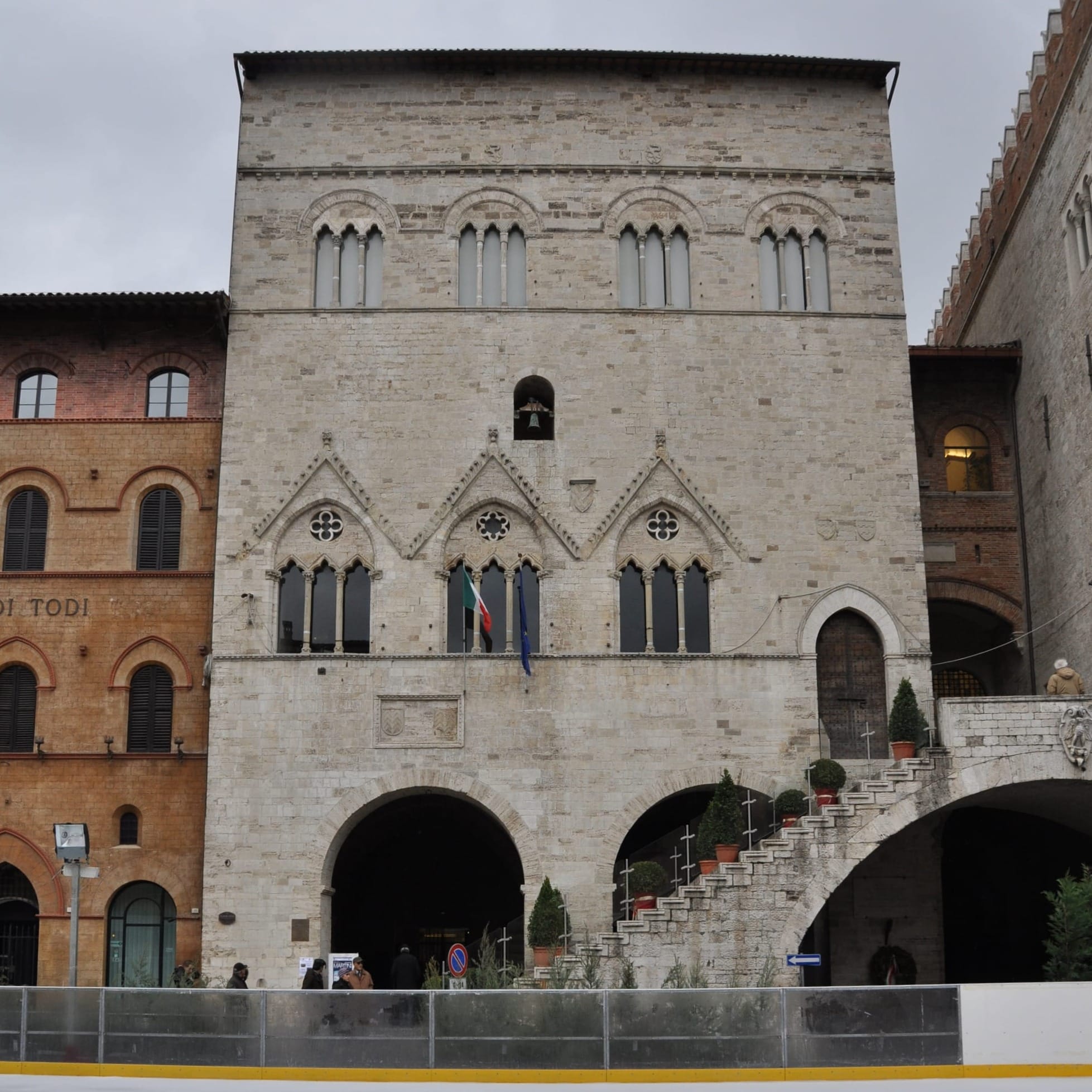
The piazza is the heart of everything, and it has remained the city's heart from its days as a Roman forum right through to today, without ever shifting a metre. The Palazzo del Popolo, Gothic-Lombard in style, is one of the oldest civic buildings in Italy still serving its original function. Facing it, the Palazzo dei Priori, with its trapezoidal tower and the bronze eagle of 1339 mounted on top — the same bird from the legend, fixed forever onto the facade. And then the Duomo, Romanesque, rebuilt more than once after a fire, an earthquake, a collapsed roof, its rose window arriving only in 1515.
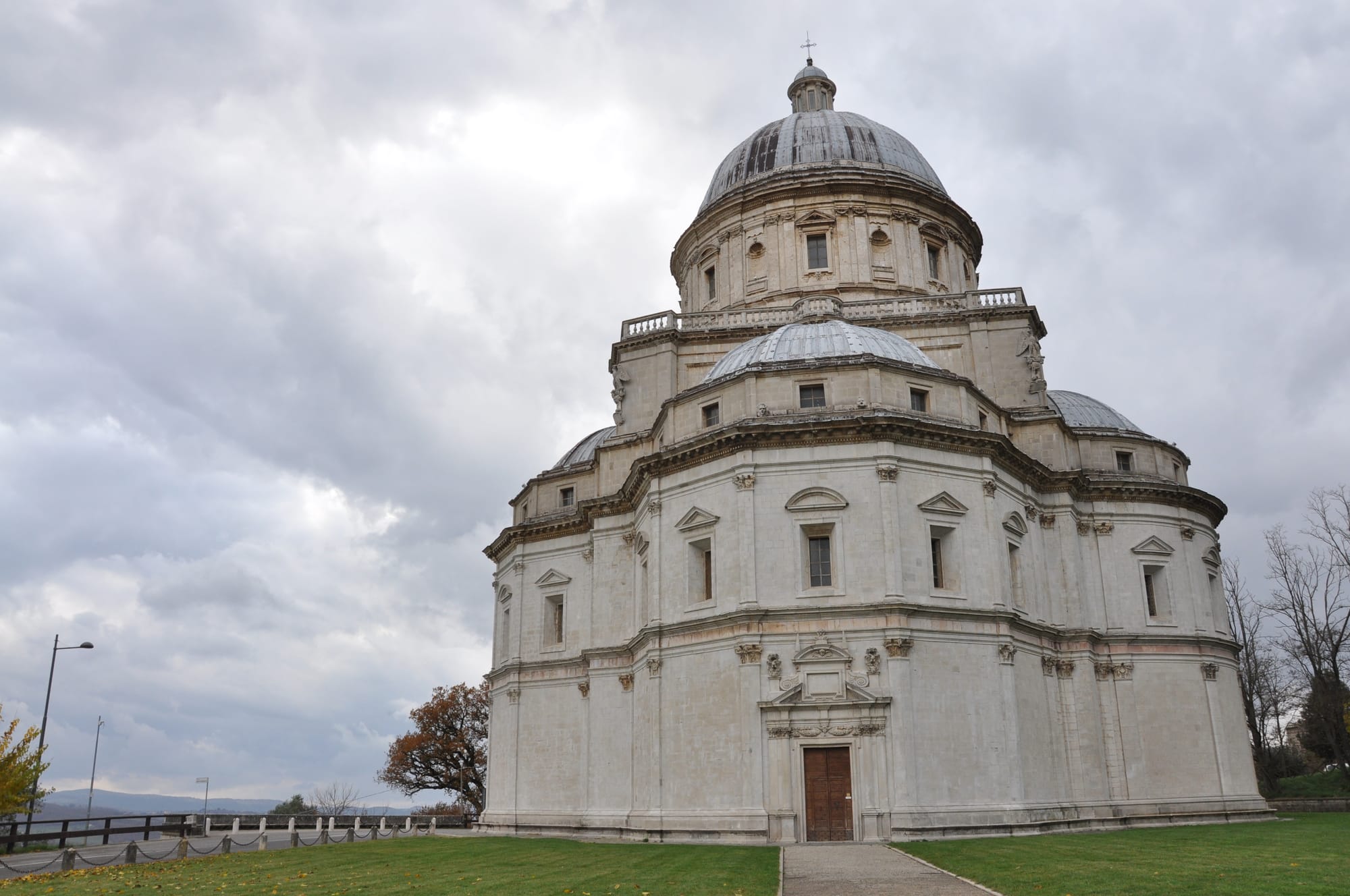
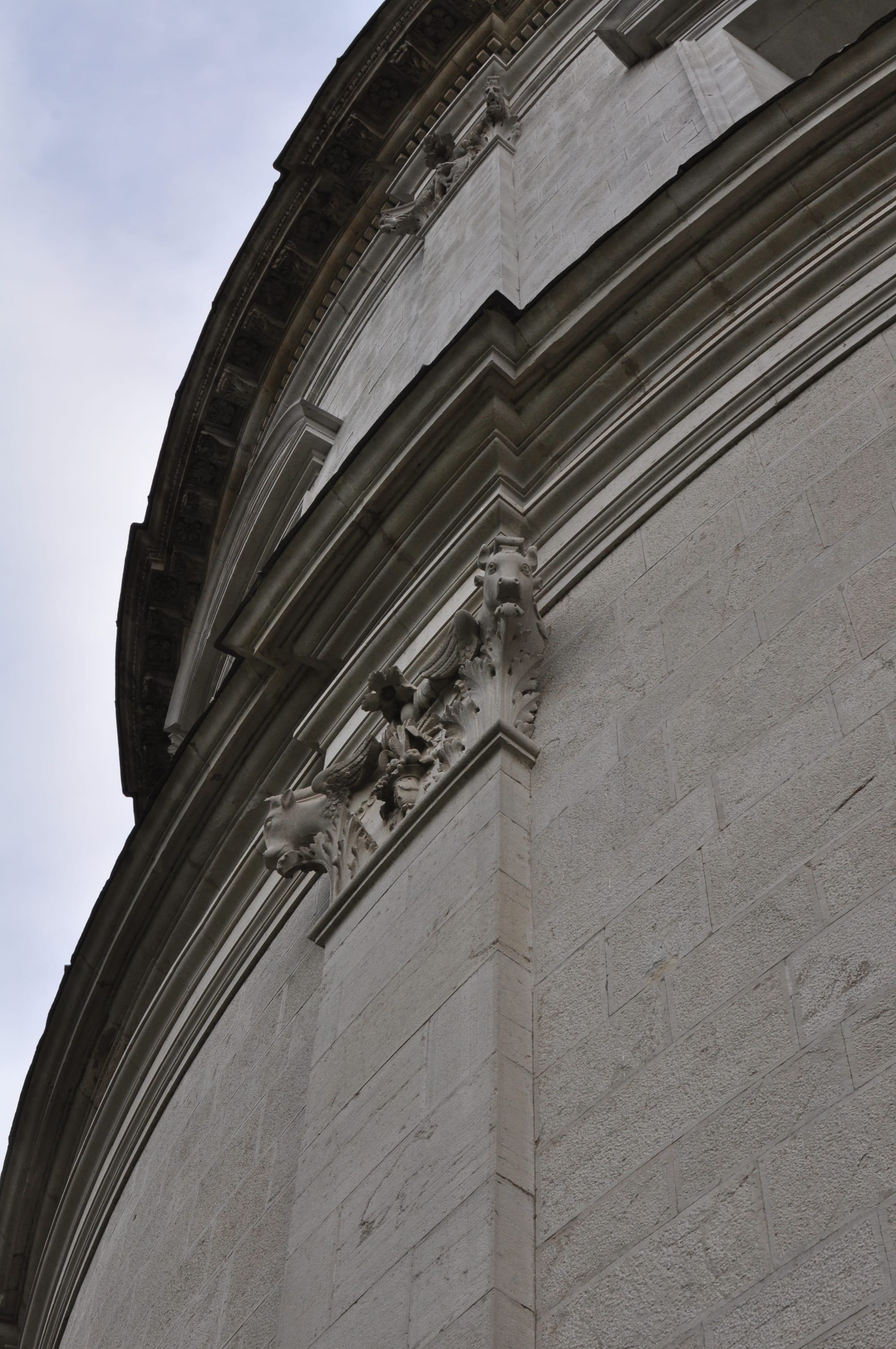
Outside the walls, standing alone on a meadow, the Tempio di Santa Maria della Consolazione — Greek-cross plan, central dome, attributed to circles close to Bramante. The same logic as San Biagio in Montepulciano, which I've written about already: a building meant to be seen from a distance, deliberately isolated, so that the landscape around it became as much a part of its architecture as the stone itself.
And then, of course, San Fortunato. The church that took two centuries to complete, its crypt holding the remains of Jacopone da Todi — poet, lawyer, Franciscan friar, author of nearly a hundred vernacular Laude, fierce opponent of Pope Boniface VIII. A man who gave up everything and wrote some of the most intense verses in Italian religious literature, buried beneath a church that, above him, they never quite finished building.
That December
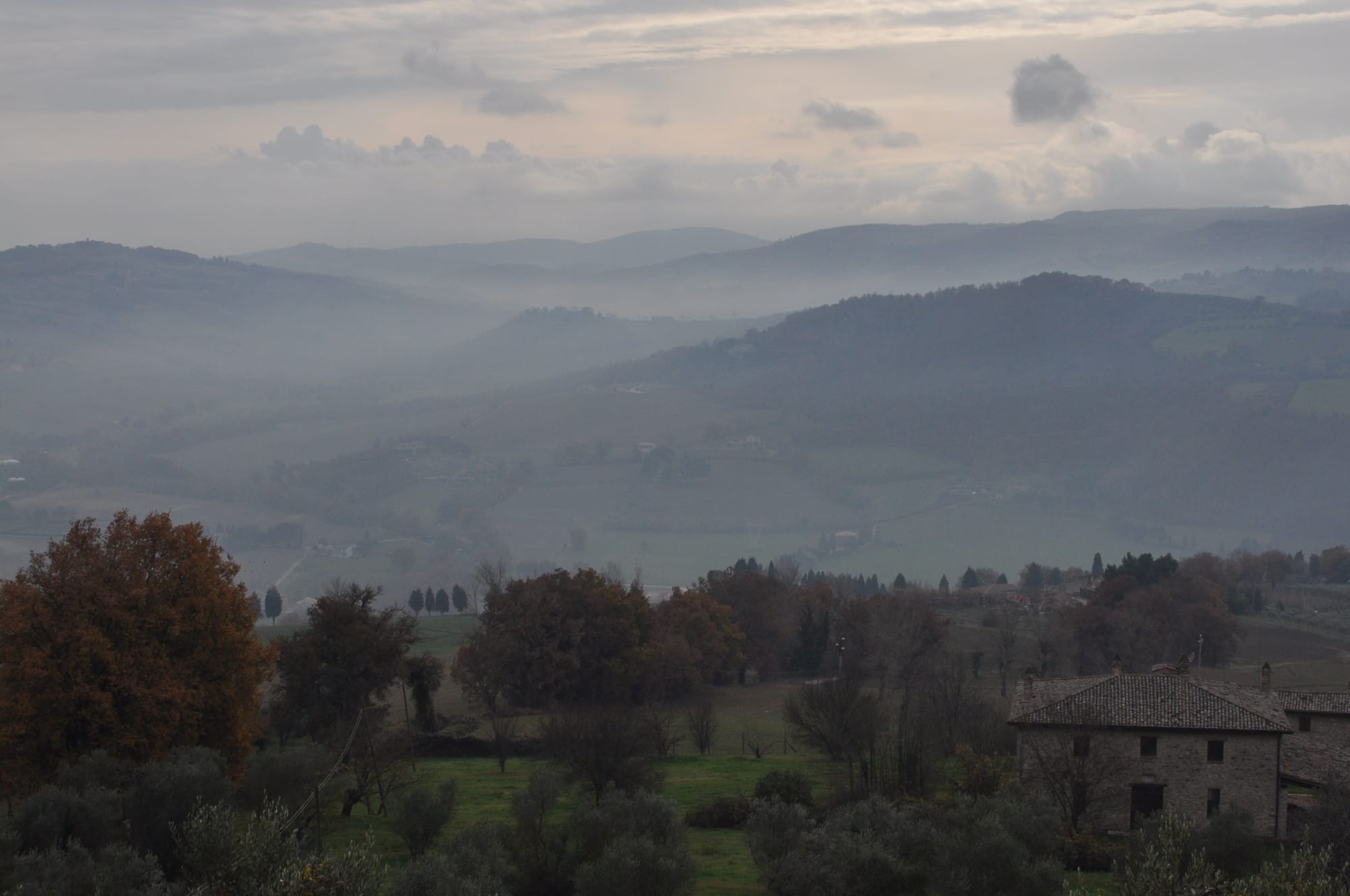
I was there in December, as I said. The sky was white-grey, unchanging, from nine in the morning until dark. Despite it being the Christmas season — and somewhere in Todi there must have been lights, decorations, the ordinary cheer of an Italian town in December — I remember none of it. I remember the cold, and a solitude I hadn't expected, walking through a city that a University of Kentucky study once named the most liveable in the world for the sustainability of its urban fabric.
Both things are true, and it took me a while to understand that. Todi's architecture was built for community — three concentric rings of walls, a forum at the exact centre, streets sized for conversation rather than traffic. What that architecture cannot do is guarantee that the community shows up. On an August afternoon, Piazza del Popolo is full of life, and Todi's reputation as a global model of urban sustainability — a label that has followed the town since the early 1990s, when the Italian press reported — incorrectly, as it turns out — that a University of Kentucky study by architecture professor Richard S. Levine had crowned Todi 'the most livable city in the world.' What Levine had actually done was use Todi as a case study in academic design exercises on urban sustainability, presented at a conference with a far less quotable title. The misunderstanding proved more durable than the original research — which is its own small lesson about how reputations get built.
That morning, in front of the portal of San Fortunato, I stopped for the extra second the stone was asking of me. No intercom. No camera. Just a sermon carved six hundred years ago, still there, still asking for the attention of whoever passes.
Before You Leave
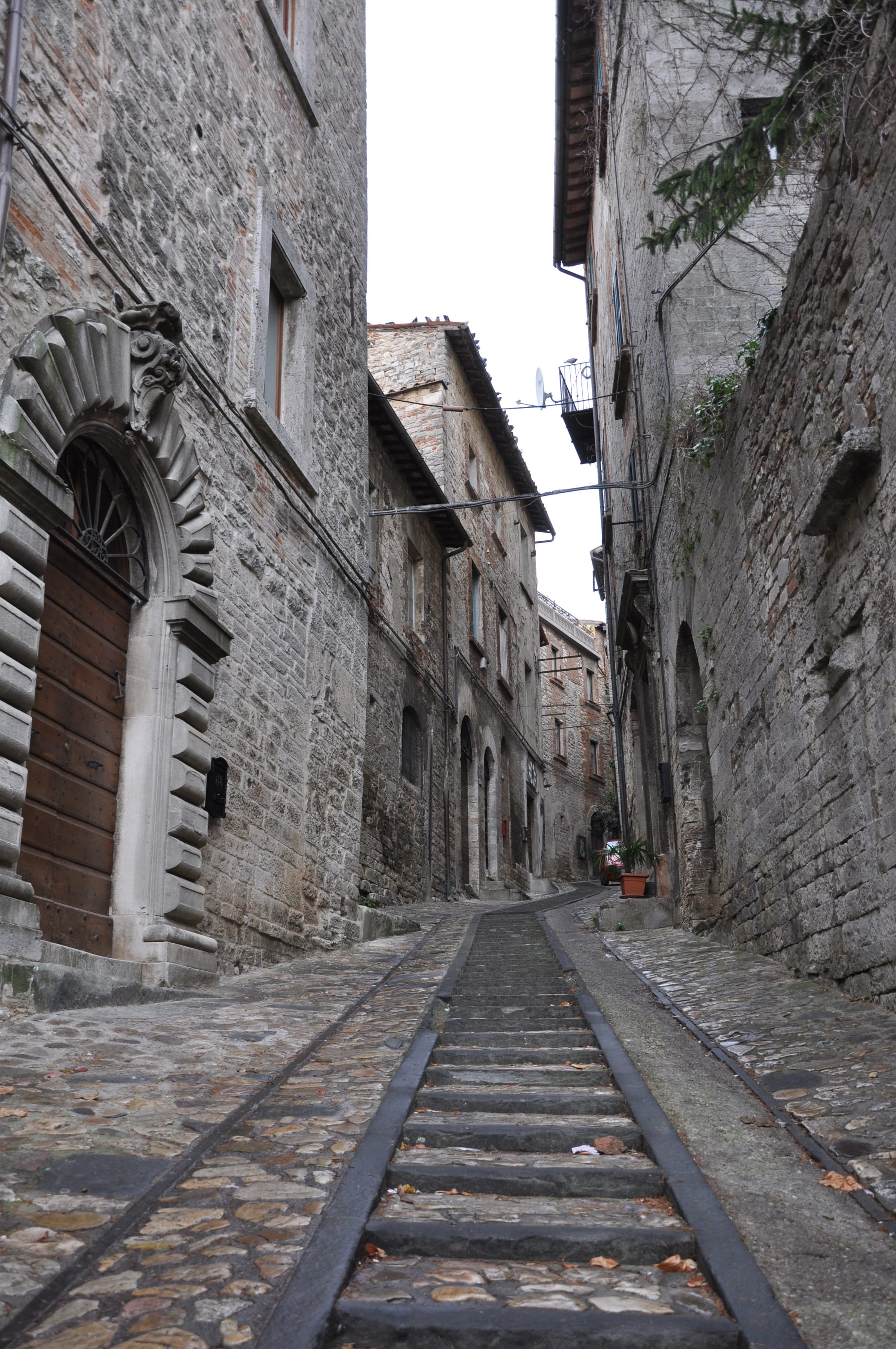
If December gave me solitude, it also gave me something a summer visit might not have: total silence in the loggias along Via San Fortunato, and the chance to stand alone at the top of the staircase and look out over the whole grey-white sweep of the piazza without another person in the frame.
Todi rewards exactly the kind of slow, repeated visiting this blog is built around — once in the cold months, for the architecture and the emptiness; once in summer, for the life the legend was built on when it praised the town's liveability. Neither visit, on its own, tells the whole truth.
Practical Notes
Getting there: By car from Rome approximately 1 hour 30 minutes; from Orvieto approximately 45 minutes; from Perugia approximately 40 minutes. Limited but workable rail connections via the Ferrovia Centrale Umbra; a regional bus network also serves the town.
Parking: Outside the third ring of walls, with several signposted car parks; a funicular and escalator system connects the lower car parks to the historic centre.
The Roman hydraulic galleries: Guided tours depart regularly from Piazza del Popolo; check current times at the tourist office in Palazzo del Capitano.
Santa Maria della Consolazione: Free entry, a short walk outside the walls — follow Via della Consolazione from the historic centre.
San Fortunato: Free entry to the nave; small fee for the bell tower, which offers a 360-degree view over the town and valley.
When to go: Summer for the liveability the study described — the piazza full, the bars open late. Winter, particularly a grey December morning, for something closer to what this post was written from.
Further Reading
The most useful single academic reference on San Fortunato is D. M. Gillerman's monograph (The Gothic Church of San Fortunato in Todi, Ann Arbor, 1987) — thorough on the building's structural history and the question of why Todi chose the hall-church model. Gillerman's 1989 article in the Journal of the Society of Architectural Historians is the shorter version if the monograph is hard to find.
On Todi's liveability and the University of Kentucky study: Richard S. Levine's 1989 research is available at uknowledge.uky.edu — worth reading to understand what the study actually measured, which is more nuanced than the popular version suggests.
For the archaeology beneath the piazza and the Roman hydraulic galleries, the most reliable current resource is the Comune di Todi's official heritage pages at comune.todi.pg.it — dry but accurate.
On the threshold in contemporary architecture, a good popular introduction to the transformation of the entrance hall through the twentieth century is available (in Italian) at benvenutiincondominio.it.