The Slow Architect
About — a manifesto
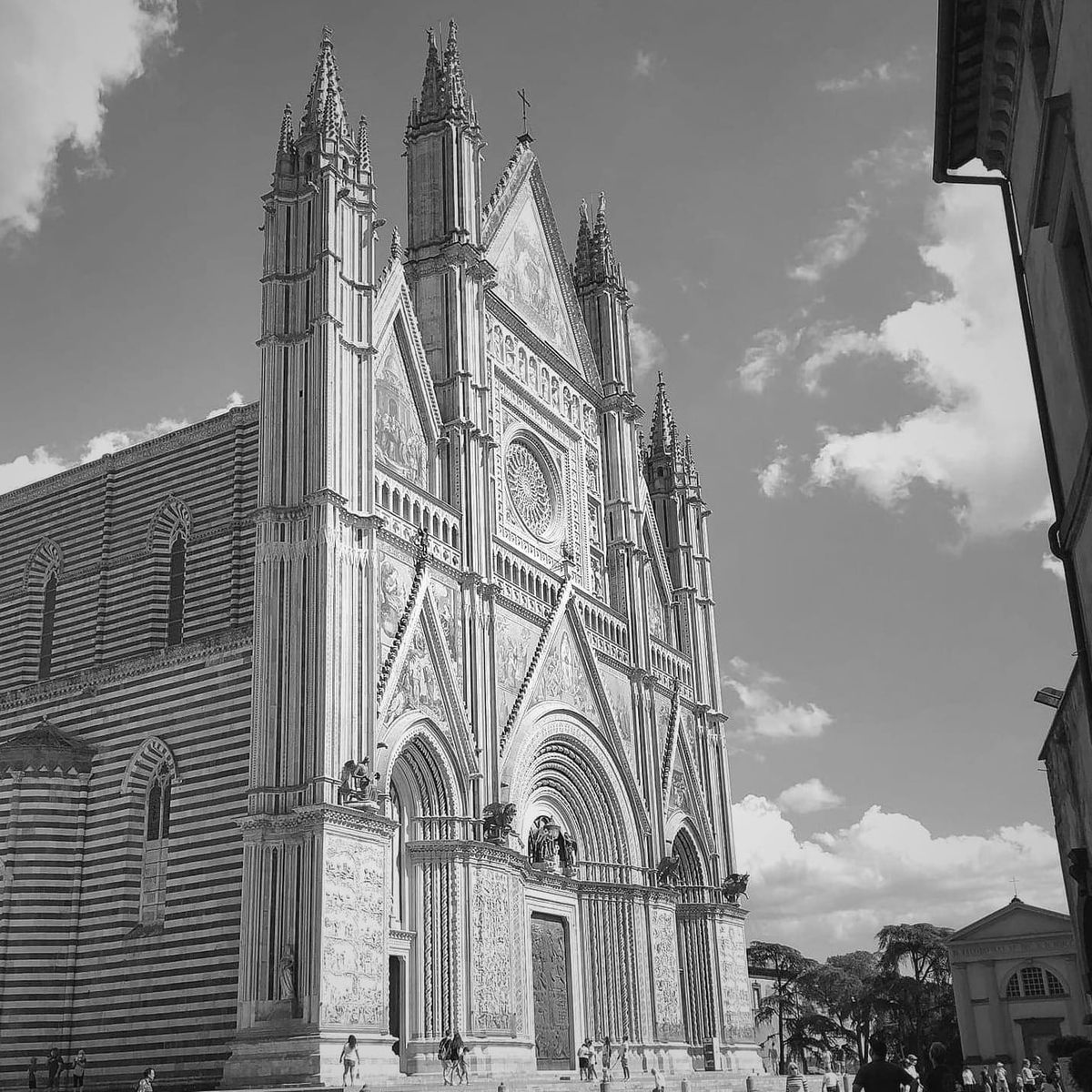
I had studied the Duomo of Orvieto in books. I had stood in front of it four times. And still I couldn't see the most important thing about its façade — even though, on some page in my head, I knew it was there.
The fifth time, I took a step to the side. For no reason — someone was passing, and I shifted a few metres toward the edge of the piazza and looked at the cathedral from the flank instead of head-on. And in that instant I saw it: the spires of the façade rise higher than the roof of the church behind them. The front of the Duomo isn't the front of a building. It's a screen — a manifesto propped in front of a church.
I stood there twenty minutes. I hadn't learned anything new: I had recognised something I already knew. That is the paradox this blog is built on. We study, we read, we accumulate — and some things stay right in front of our eyes without our ever seeing them. A knowledge we already own, but don't yet know how to recognise.
This blog is that step to the side: the distance between knowing a thing and truly seeing it.
Not the façade — the flank. Not the right angle — the wrong one. It comes from a conviction: that the places we think we know always have a profile we haven't looked at yet, and that it shows itself only to those with the patience to slow down enough to find it.
That is what I mean by slow. Not slow as in "avoid the crowds" or "travel authentically" — everyone says that. I mean slow looking. The extra second in front of a doorway. The detail that stays hidden until you stop moving. Reading a building as structure and story at once — why the gold on a cathedral is an optical system and not a decoration, why a staircase can be an argument, why a garden can refuse to have an axis. This is the slowness of an architect, not of a tourist. It changes what you see.
Italy is the heart of it. I keep returning to its overlooked towns — the ones the hurry drives past without stopping. But the gaze knows no borders: wherever there is something to truly see, I follow.
A note on the name. I sign my work Giulio Romano. Giulio is mine; the surname is not — it belonged to an architect far better than me, five hundred years ago. It's a game, of course. But it's also a way of keeping the bar high: carrying that name, every time I sign a piece, reminds me not to write anything unworthy of standing at least somewhere near it. I thought he wouldn't mind lending it to me. I'll do my best not to embarrass him.
If this is your kind of slow, the newsletter — The Slow Letter — is where it continues. No noise, no schedule to keep up with. Just, every so often, another step to the side.
Come in. Look up.
— Giulio Romano