THE VENICE BIENNALE — DO WE REALLY WANT TO GO IN?
In 2004, off the night train, Venice filled our eyes so much that we asked ourselves whether we really wanted to go into the Biennale. Nineteen years later I have the answer: go in, for the pavilions, and come out slowly.
The night train
I had never been to Venice. I had always travelled a lot, I had seen many cities, but I had never got there. It was 2004, my first or second year at university, and we left Rome on the night train: from Tiburtina, I think, the old one, before it became a bridge over the tracks. No couchettes, obviously, and nothing booked. The trains were still the ones from films of the seventies, the Intercity trains with compartments and armchair seats. I couldn't stretch out anywhere, and in the end I lay down on the luggage rack and fell asleep up there, blissfully. My friend didn't: he spent the night talking to a girl he had met on the train, about art, about architecture and about I don't know what else, just for the pleasure of talking about it.
In the morning we arrived to a magnificent dawn, and Venice kept us company like that, in that light. And it was unbelievably cold. I didn't know what to wear: I had a K-Way rain jacket, and I kept it on all day.
Do we really want to go in?
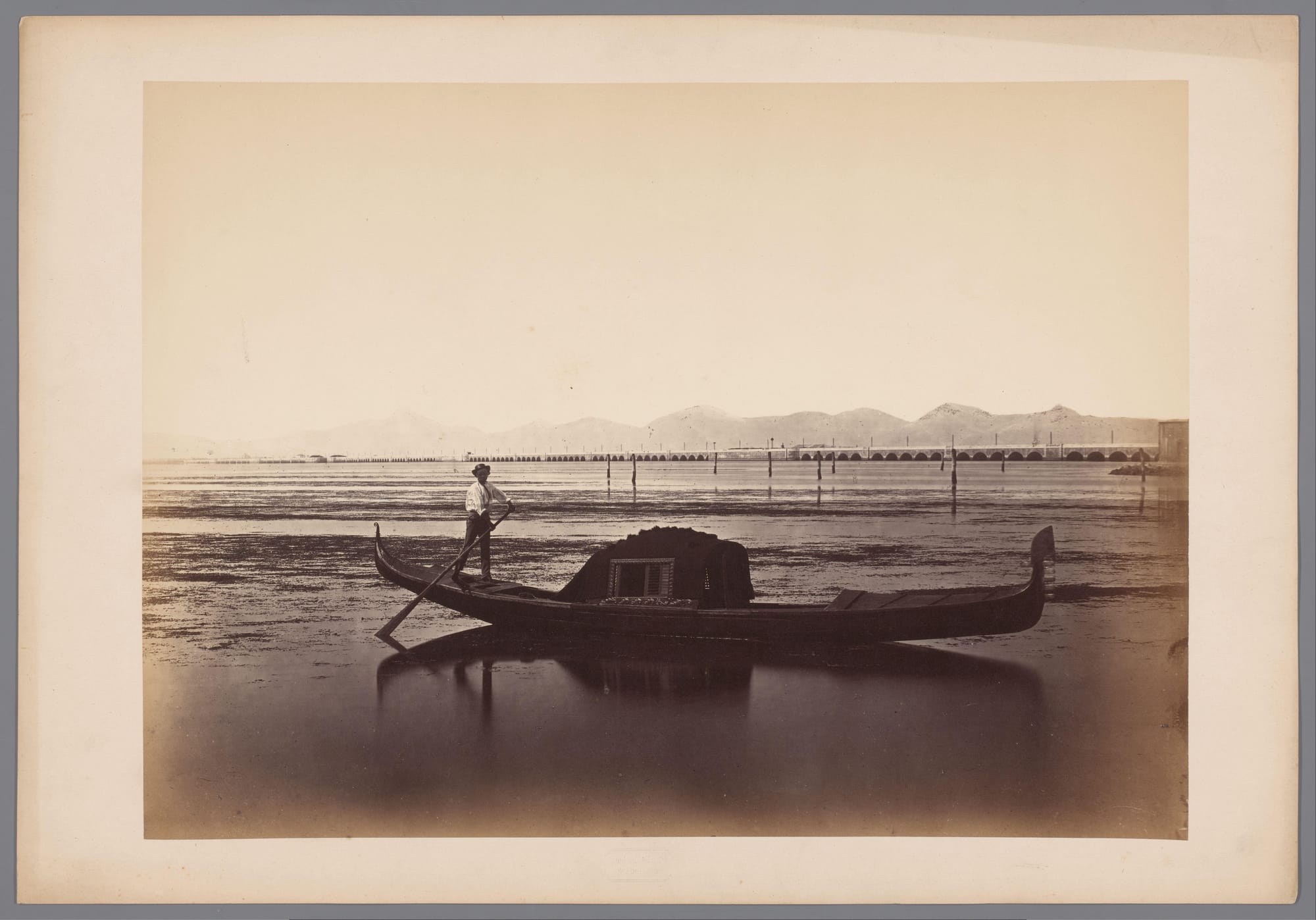
It was a day trip, because we were students and had very little money. We had come for the Biennale, which that year was the architecture one, "Metamorph", curated by Kurt W. Forster, and we were both studying architecture. But first there was Venice. The calli, the water, the gondolas, the boats in front of San Marco: it filled our eyes so completely that at a certain point we looked at each other and said: do we really want to go in and see the Biennale?
In Venice the station puts you straight onto the water. You come down the steps and there is the Grand Canal: no approach, no outskirts, no street to prepare you. The city shows itself all at once, like an exhibition with no entrance that never closes. Two architecture students who had come specially for an architecture exhibition had found themselves inside a bigger one, and the small one seemed superfluous.
It was the right question, as I understood much later. But we asked it for the wrong reason.
Then we went in, at the Giardini, and we made an incredible dash: half a day to see as many pavilions as we could, because in the evening we had the train home. Logistically, a catastrophic day, badly organised. Emotionally, fantastic: an incredible jolt.
The lady on the chair
We had a film in our heads. In Dove vai in vacanza? (Where Are You Going on Holiday?), from 1978, there is an episode directed by Alberto Sordi, Le vacanze intelligenti, the intelligent holidays. Remo and Augusta, Roman greengrocers, are on the cultural holiday their children have organised for them, and at a certain point they end up at the Biennale. In a room of the Central Pavilion Remo finds a chair, sits Augusta down on it next to a palm and goes off to find her a beer. When he comes back, his wife is surrounded by a group of art lovers studying her: they have taken her for a work of art, they call her "Sedia con corpo adagiato", chair with reclining body, they deliver a critical analysis, and one of them says he would buy her for eighteen million lire. Augusta is Anna Longhi, and the scene ends the way it has to, with a Roman curse that cuts the intellectuals down to size.
As we walked among the pavilions, that scene kept coming back to us. It was our key, and not a stupid one: at the Biennale, whatever is inside the frame risks becoming a work of art just because it is there.
The beach
I remember the Israeli pavilion. In the pavilion there was the beach, the deckchairs, the beach umbrellas. Not a model, not a project, not a drawing: a beach. It was an architecture Biennale, and we wondered what we were looking at. It looked like a ready-made, something done in a hurry, and the thought came on its own: anyone can come and exhibit here.
It was a superficial thought, I know. It is the thought a lot of people have, because installations, in art as in architecture, have become so conceptual that for anyone outside the trade they are hard to understand. And we were beginners.
What that beach was I only found out now, writing this piece. The pavilion was called "Back to the Sea". In the courtyard the artist Shelly Federman, with some friends, had rebuilt a piece of the Tel Aviv beach, and inside, on a wall twenty-two metres long, ran a panoramic film of the beach of Tel Aviv and Jaffa. The theme was the beach as a seam between the city and nature: a place of passage between land and sea, between private and public, and the conflict between a beach that belongs to everyone and the value of real estate.
We had spent the morning inside a city made of its edge with the water: the fondamenta along the canals, the rive along the lagoon, San Marco opening onto the basin. In the afternoon, in front of the same idea told by another city, we saw deckchairs.
An exhibition that cannot contain what it shows
There is a basic problem with the Architecture Biennale, and back then I didn't see it. A painting can be hung, a sculpture can be carried in. A building can't. An exhibition of architecture cannot contain what it shows: it can show drawings, models, photographs, fragments, ideas. Or a beach.
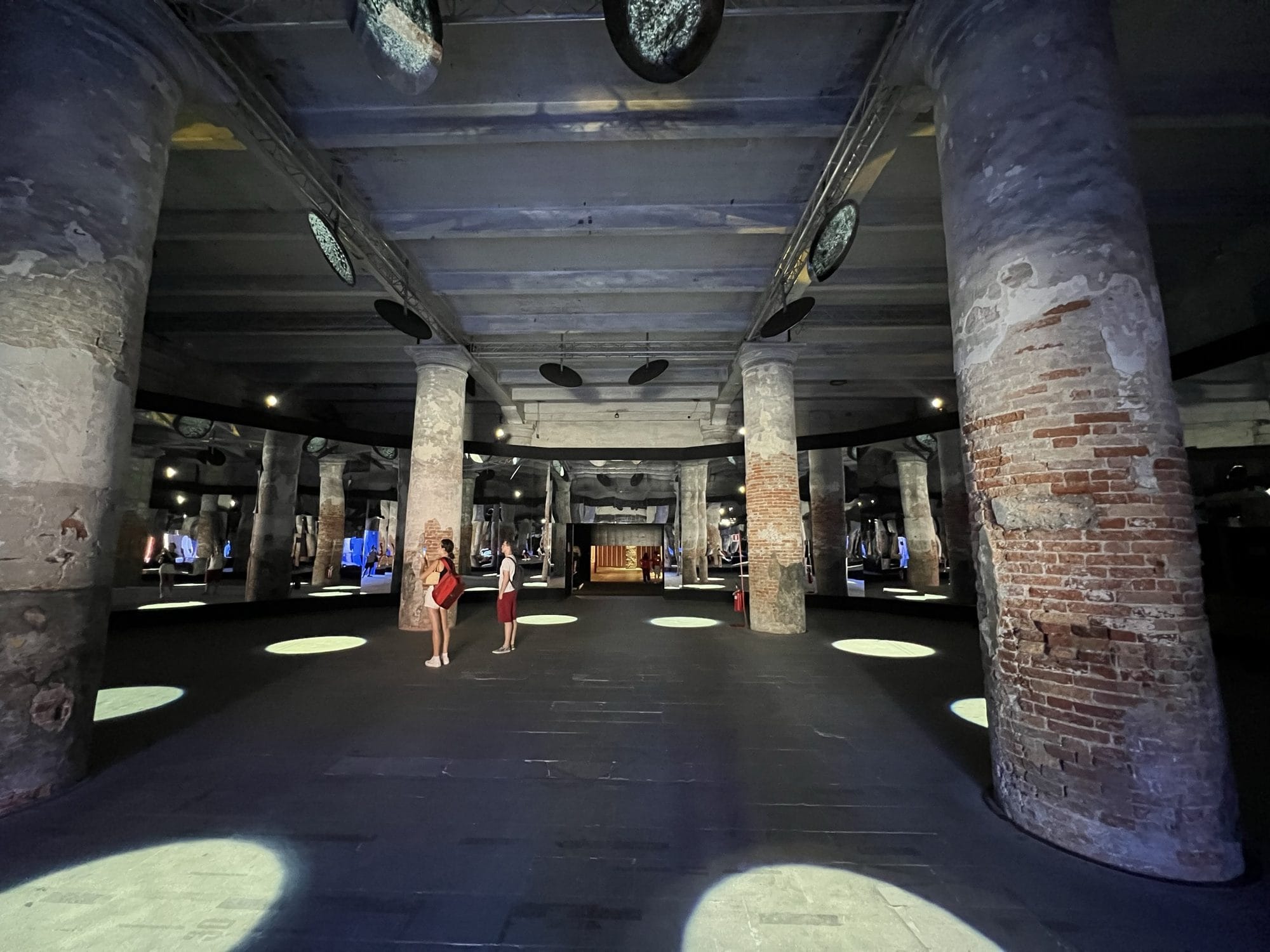
The first time, they really tried. In 1980 Paolo Portoghesi curated the first International Architecture Exhibition, "The Presence of the Past", and for the occasion the Corderie of the Arsenale opened to the public for the first time: the factory, 317 metres long, where the Republic made the ropes for its ships, built in 1303 and rebuilt between 1579 and 1585 by Antonio Da Ponte, the man who built the Rialto Bridge. Inside, Portoghesi built a street, the Strada Novissima: twenty full-size façades, each about nine metres by seven, designed by twenty architects, among them Frank Gehry, Rem Koolhaas, Robert Venturi and Denise Scott Brown, Hans Hollein and Arata Isozaki. It was architecture at full scale, and indeed it was only façades. Behind them, nothing: a stage set. And like a stage set it went on tour, in 1981 to Paris, to the Salpêtrière, and then to San Francisco.
Since then the Biennale has shown almost everything else: projects, models, whole cities, and more and more often ideas. The only real architecture in there is the architecture that holds it.
At the Giardini you see this better than anywhere else. They were Napoleon's idea: Giannantonio Selva laid them out between 1808 and 1812 on land that had belonged to churches and convents. The Biennale has been there since 1895, the first foreign pavilion is Belgium's, in 1907, and today there are about thirty pavilions, each built by a country with its own architect and in its own time. All you have to do is walk.
The Austrian pavilion is by Josef Hoffmann. It went up in 1934 in thirty days, unfinished, and was only completed in 1954, with the verandas, the fountains and the garden walls: symmetrical, almost without ornament, and from the entrance you look straight through the hall to the garden terrace behind. The Dutch one is by Gerrit Rietveld, from 1953: a square sixteen metres by sixteen, lower in the middle, with the windows high up and wooden shutters that soften the light. The Finnish one was designed by Alvar and Elissa Aalto for a single Biennale, that of 1956: a timber pavilion prefabricated in Finland, meant to be taken down and put up again around the Mediterranean. A few manufacturing errors made it impossible to dismantle, and there it stayed.
The Venezuelan one is by Carlo Scarpa. Commissioned in 1953, it was due to be ready for May 1954, and was finished in June 1956: three staggered rooms, a patio, a hollow reinforced-concrete slab on six pairs of slender steel columns, walls of white marmorino, the Venetian lime plaster, and ceilings in yellow and blue. In 2021 the scholars studying it found it closed, the concrete decaying and plants invading the rooms on the lagoon side; this year, at the Art Biennale, it was closed again, with a sign in three languages saying it would soon be reborn. And then there is Sverre Fehn, for the Nordic countries, in 1962. I'll come to him.
It is an accidental museum of architecture, in the open air, among the trees, and no exhibition ever puts it on the cover.
Nineteen years later
I went back in July 2023, with Kat, who was pregnant. I have already written about that trip: the evening of the concert under the campanile. What matters here is something else: this time we had decided to take the city slowly. We stayed in the centre, among the calli, and we walked a lot.
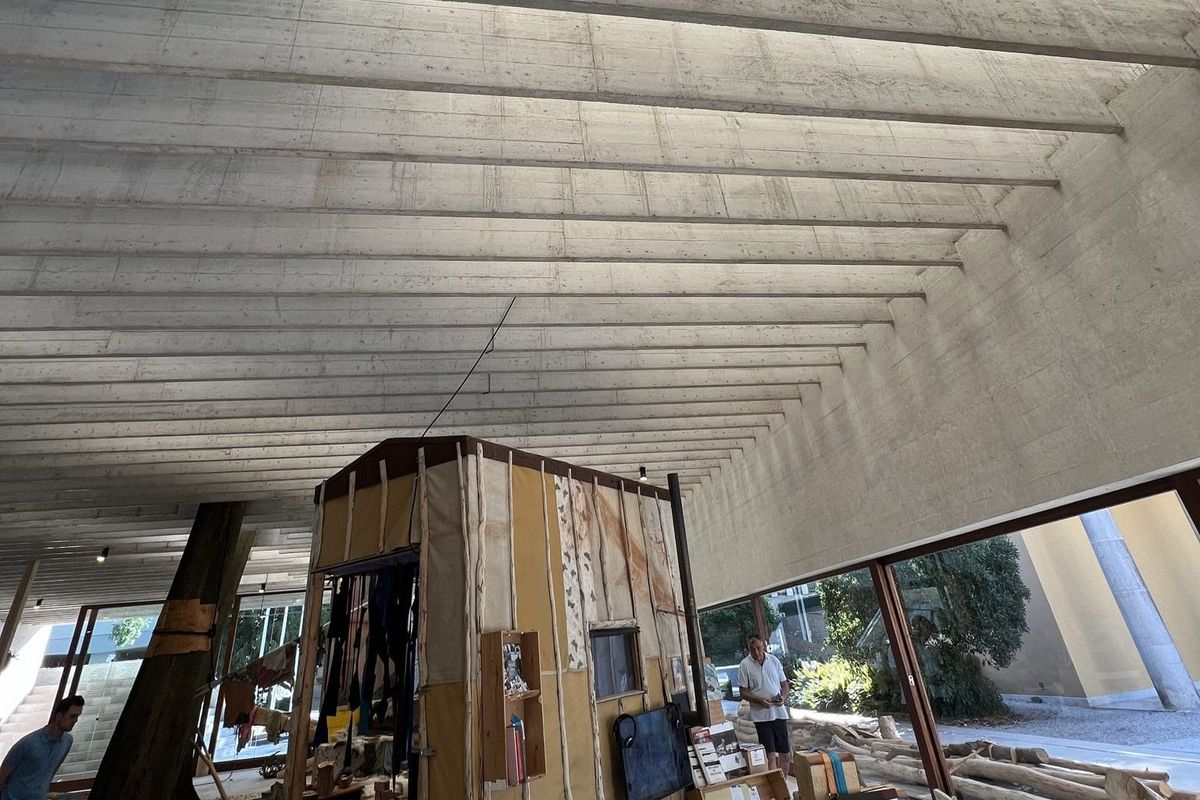
We went into the Giardini together. The walk was beautiful, and the pavilions magnificent. In one of my photos from that afternoon is Sverre Fehn's pavilion for the Nordic countries, the one at the top of this piece: a roof made of two layers of concrete ribs, a metre deep and six centimetres thick, one every fifty-two centimetres, letting in a soft light, and the trees growing up through it. That year it held Joar Nango's library of Sámi architecture, more than five hundred books in a structure made to travel.
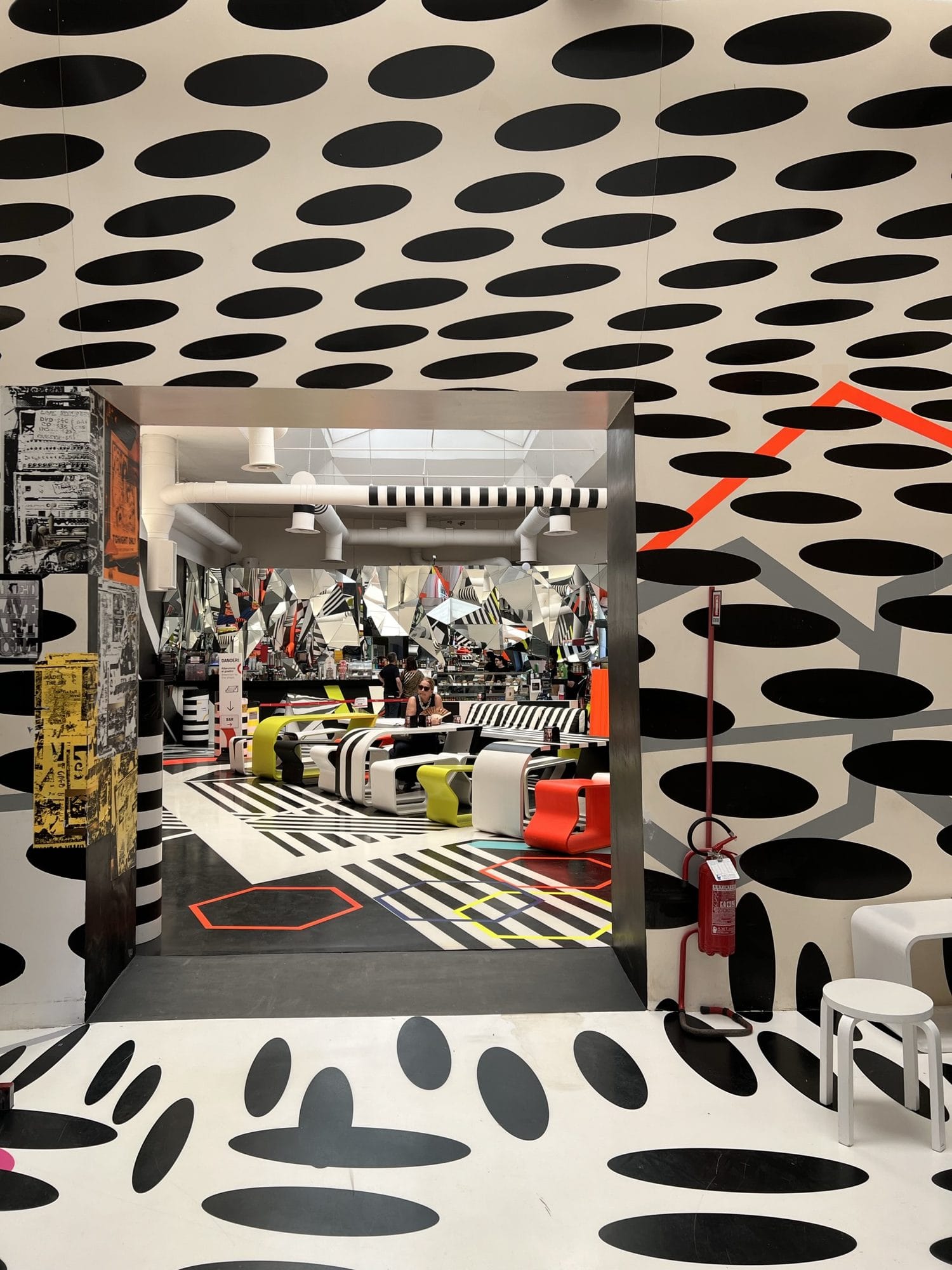
And we had an ice cream sitting in a café that looked like an exhibition: coloured tables and chairs, black and white stripes everywhere, mirrors on the ceiling. It was one. It was the café of the Central Pavilion designed by Tobias Rehberger, "Was du liebst, bringt dich auch zum Weinen", what you love also makes you cry: in 2009 it had won him the Golden Lion for best artist, and it had just been restored for the 2023 Biennale. Forty-five years after Augusta, in the same building, sitting inside a work of art had become normal. In 2026, with the renovation of the Central Pavilion, Rehberger's café was removed.
The Arsenale, alone
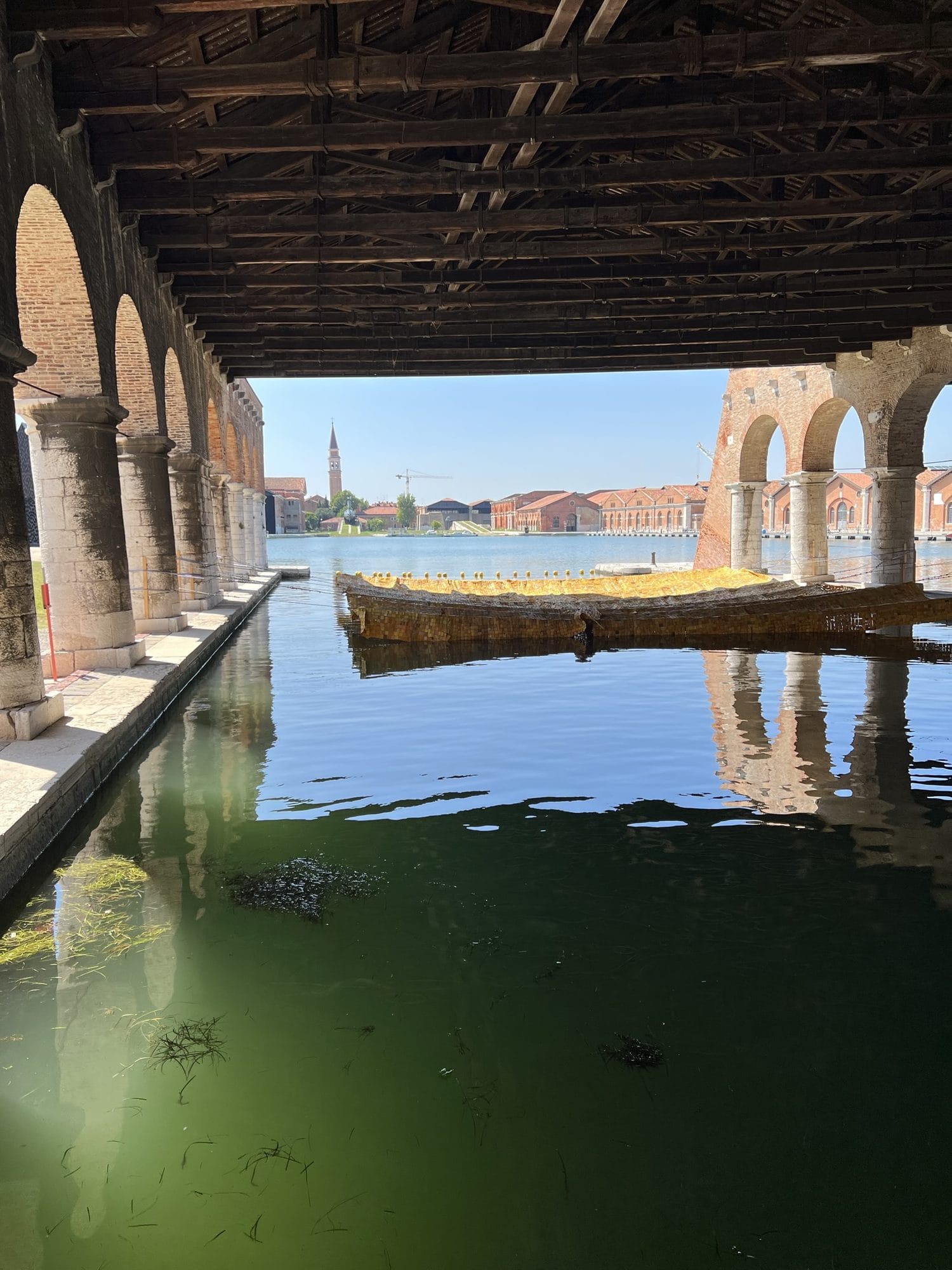
On the Sunday Kat stayed in the room to rest, and I went to the Arsenale on my own, under the July sun, in incredible heat, with my sheets of paper and my notes. I had never been and I was curious. I didn't like it. It is less varied than the Giardini, and it feels like a big exhibition in a museum.
That year's exhibition was curated by Lesley Lokko and called "The Laboratory of the Future", and more than half of its 89 participants came from Africa or the African diaspora. It isn't a question of content. It is that the Corderie are a single space 317 metres long, and everything you put inside becomes a sequence: one room after another, as in a museum. At the Giardini every country has its own house, and the house speaks before its contents do. At the Arsenale there is only one house, and it tells of another Venice, the one that built ships.
The grille
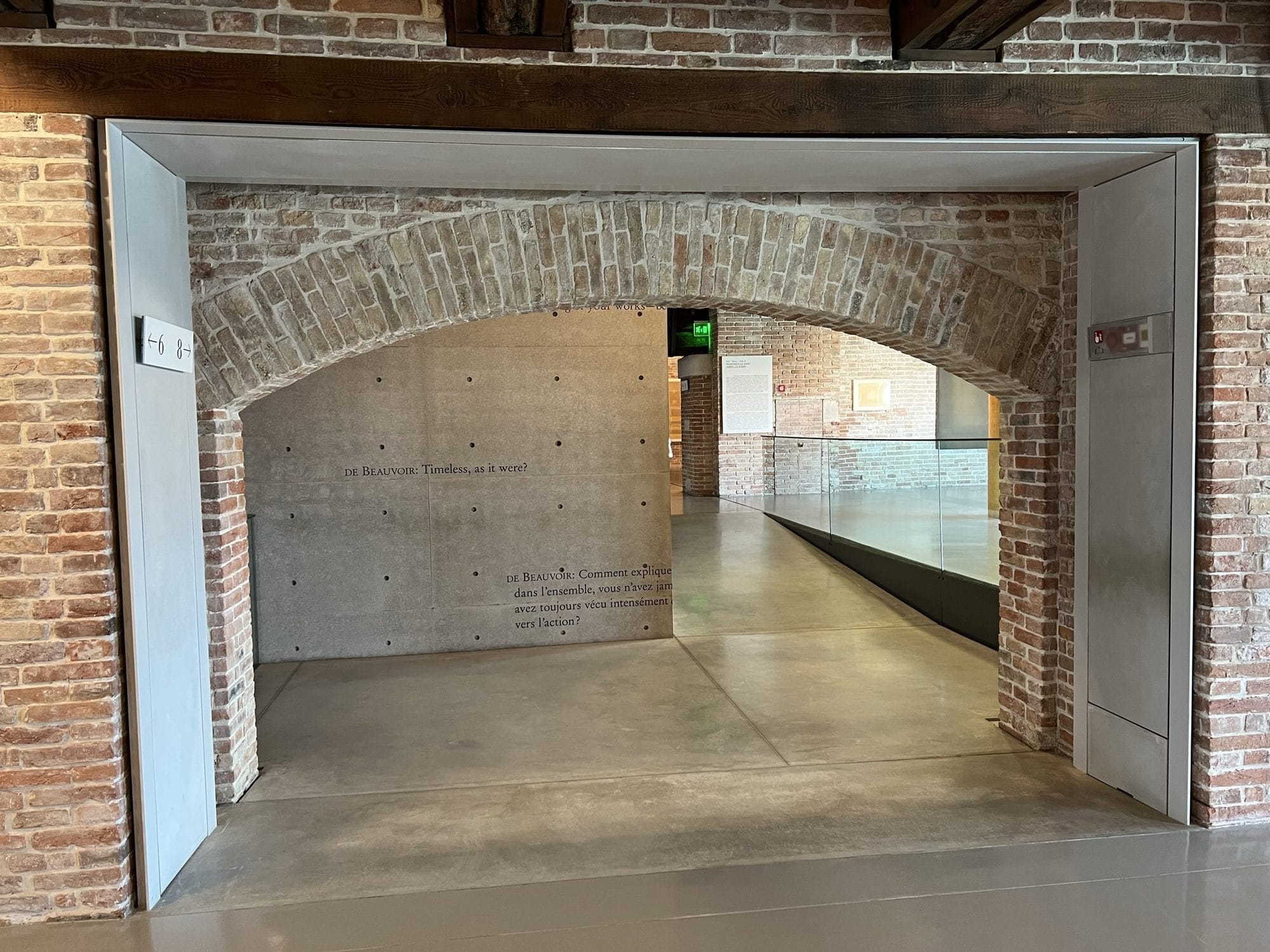
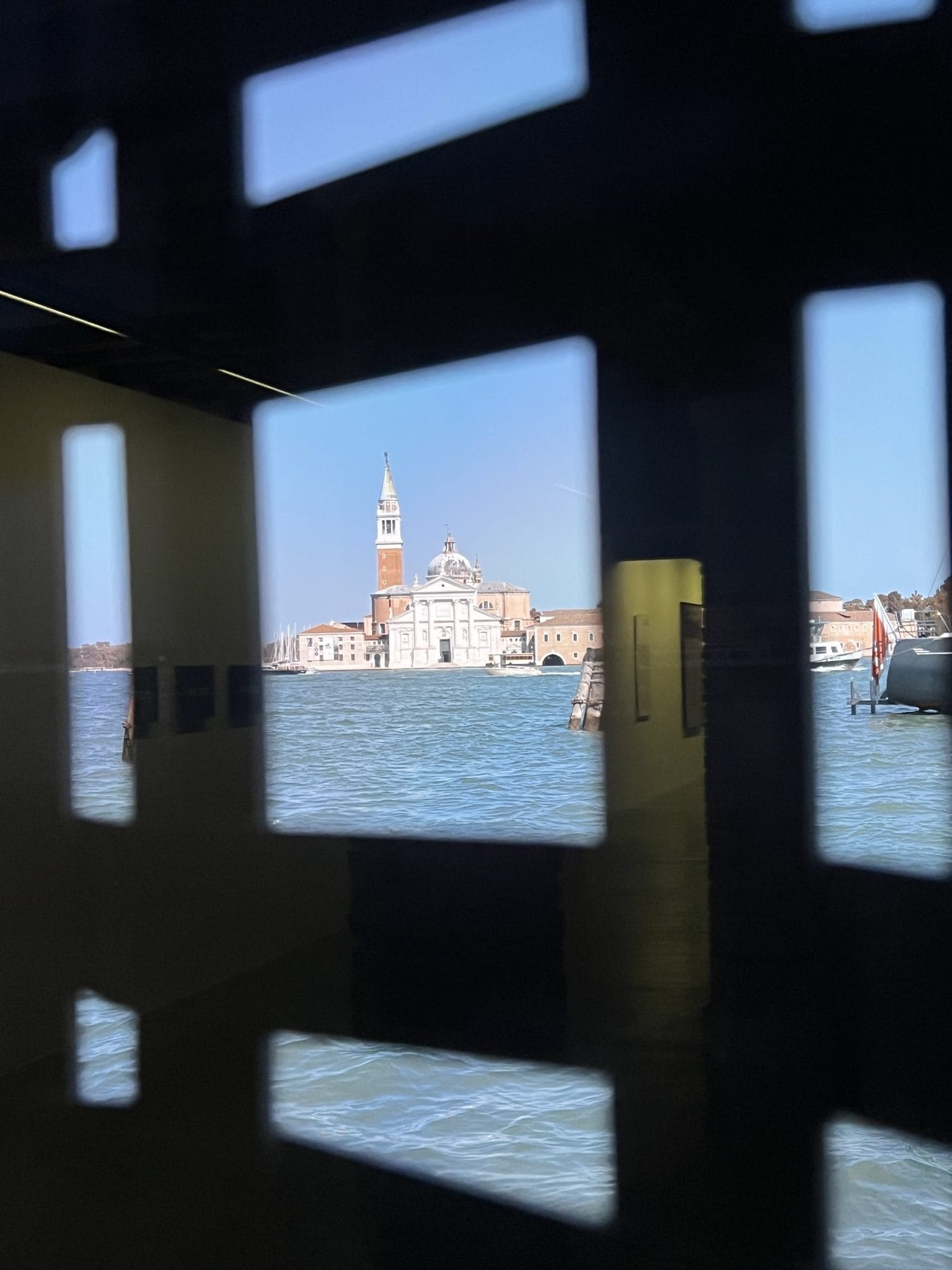
Then I went to Punta della Dogana, to see what Tadao Ando did there, which is magnificent and little known. The Dogana da Mar is the triangular building on the tip of Dorsoduro, finished in its present form in 1682 by Giuseppe Benoni: the warehouses where goods arriving by sea cleared customs. In 2007 the city put its restoration out to tender, François Pinault won with a design by Ando, and by 2009 it was finished. Ando brought the brick walls and the timber trusses back to light, rebuilt the foundations against the acqua alta, took out the modern additions and put in only a few things of his own: walls of exposed concrete and, in the central space, a reinforced-concrete cube. In the openings he fitted steel grilles that quote the door of Carlo Scarpa's Olivetti shop, in Piazza San Marco.
It is an architecture inside an architecture, like the Biennale. But here the container isn't a pretext: it is the exhibition. And through the grille, across the water, there is San Giorgio Maggiore.
Then I went back to Kat, through the calli of Dorsoduro, less touristy and more real.
The answer
That summer the question we had asked ourselves in 2004 was asked by someone else too, the other way round. The Austrian pavilion, curated by the AKT collective and Hermann Czech, had asked to build a bridge over the Giardini wall, to give half of its rooms, free, to the people of Sant'Elena, the neighbourhood on the other side. The Biennale and the city said no, so as not to set the precedent of an entrance outside the enclosure. The pavilion was left with half a bridge, from which you could look over the wall, and half the hall empty. The Biennale occupies about two thirds of the Giardini, forty-two thousand square metres behind a gate, in a city that is losing its inhabitants. We had wondered whether to go in; they were asking to let the city in.
To the question of that morning, today, I answer yes. Go in. Not to understand everything inside, which is a laboratory, and like every laboratory is also made of attempts. Go in for the pavilions: in the end they are still the most beautiful thing, about thirty houses built by different countries over more than a century, in a garden on the water. And when you come out, come out slowly, through the calli, the way you leave an exhibition once you have understood that it carries on outside.
The Tel Aviv beach, in 2004, was trying to say the same thing. It took me nineteen years to hear it.
Further reading
Léa-Catherine Szacka, Exhibiting the Postmodern: The 1980 Venice Architecture Biennale (Marsilio, 2016). The story of the Strada Novissima, and of how an exhibition helped make postmodernism.
Aaron Levy and William Menking (eds), Architecture on Display: On the History of the Venice Biennale of Architecture (AA Publications, 2010). The directors of the Architecture Biennale interviewed one by one, among them Portoghesi and Forster, the curator of 2004. The right book for understanding why showing architecture is so hard.
And the film: Dove vai in vacanza? (1978), the episode Le vacanze intelligenti, directed by and starring Alberto Sordi. In Italian.