Val d'Orcia by Car: Montepulciano, Pienza, San Quirico and Montalcino in One or Two Days
One road, four towns and the hot springs of Bagno Vignoni: the right order for a day in the Val d'Orcia by car, where to park, what to book, and the road back to Siena.
One road, four towns, one of the most beautiful corners of Italy. The right order for the day, where to stop along the way, where to bathe in hot spring water, what to book, and the right road back to Siena.
Is the Val d'Orcia worth it? The short answers
Is it worth the trip? Yes. One road, one day, one of the most beautiful corners of Italy, in any season: I have driven it in spring, in summer, in autumn and in winter, and each time it was a different valley.
How long? A long day from Siena, two days from Rome. Three, if you add the hot springs.
Car or public transport? The car, or a motorbike. There are buses, but they run on school timetables and are not made for a day like this (see "Getting there").
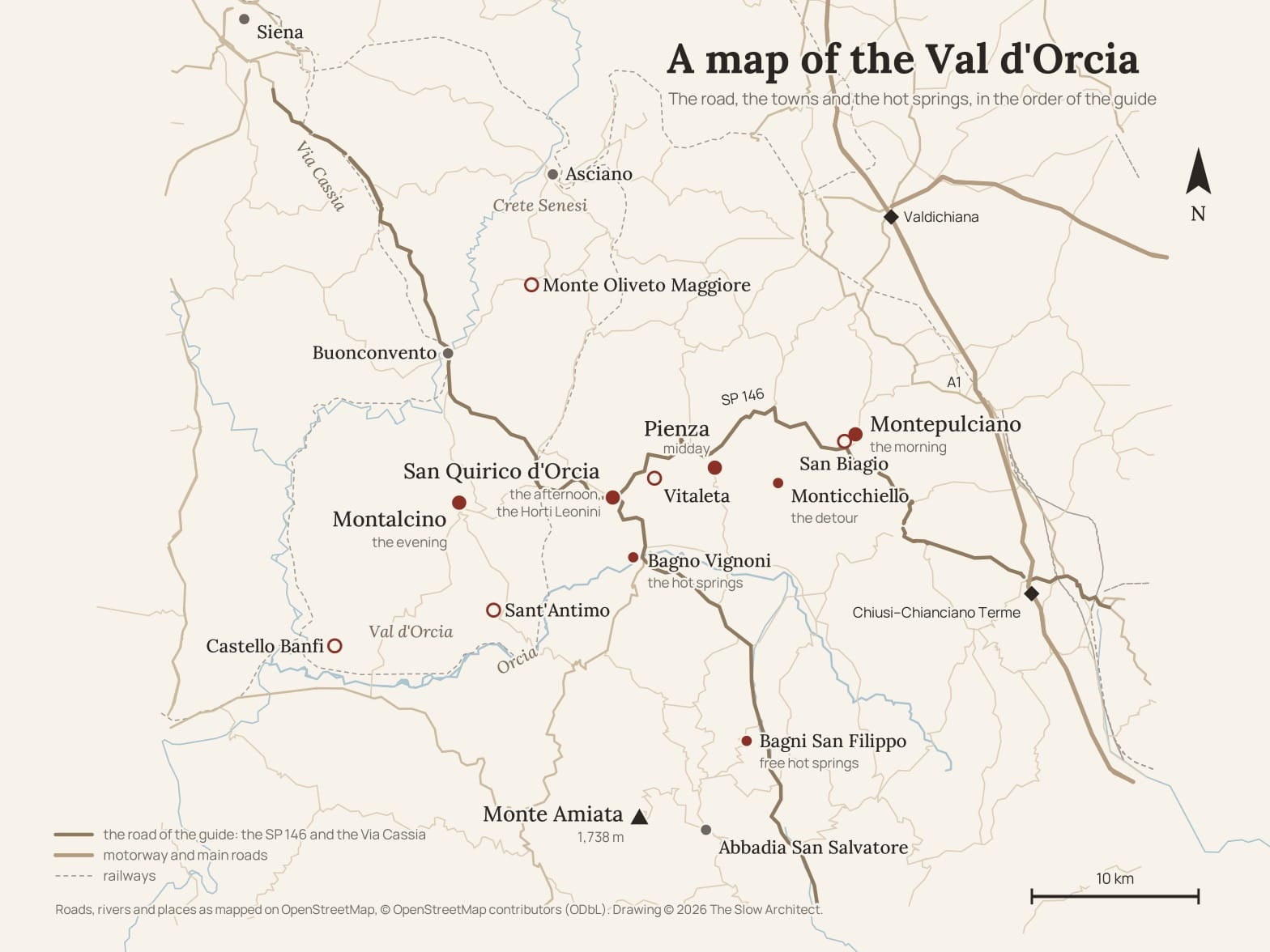
In what order? Montepulciano in the morning, Pienza around midday, San Quirico in the afternoon, Montalcino in the evening. The next day, if you have it, the hot water of Bagno Vignoni, or the Crete Senesi on the way back to Siena.
Don't miss: San Biagio, below Montepulciano; the road from Montepulciano to Pienza, driven slowly; the square in Pienza and the loggia of Palazzo Piccolomini; the Horti Leonini in San Quirico; the square of water in Bagno Vignoni.
Avoid: driving into the old towns, above all in Montepulciano, where the limited traffic zone is watched by cameras; and the famous wineries without a booking.
This is the practical guide. Why Pienza is the way it is, and what Pius II wanted to look at from his loggia, is in the essay.
Getting there, and the order of the day
From Rome. The A1 motorway as far as the Chiusi–Chianciano Terme exit, then the road to Montepulciano: about two hours in all. From Florence and the north, take the Valdichiana exit.
From Siena. For Montalcino, drive down the Via Cassia to Buonconvento, about forty kilometres; for Pienza and Montepulciano, carry on towards San Quirico d'Orcia and take the SP 146 there.
Without a car. Autolinee Toscane runs line 112 between Buonconvento and Montepulciano and line 114 between Montalcino and Buonconvento, but on weekday and school timetables. The train stops at Chiusi–Chianciano Terme, and the little station of Montepulciano is about ten kilometres from the town. To cross the valley you can manage without one; to see it, you need the car.
Where to leave it. In Montepulciano the car parks closest to Piazza Grande are San Donato and the Fortezza, two hundred metres away; Piazzale Nenni, further down, is pay and display from 8am to 8pm, except on Thursday mornings, when the market is on. In Pienza you park outside the walls, in Via degli Archi, about three hundred paid spaces, or in Via Mencattelli. In Montalcino the handiest car park is Piazzale della Fortezza; Porta Cerbaia is bigger, and lower down.
The order. Set off early, with a clear sky, and Montepulciano will still be half asleep when you arrive. Pienza around midday, San Quirico in the afternoon, Montalcino at sunset and into the evening. In winter the dark comes early: in mid-December the sun sets at about a quarter to five, so shorten the day rather than cramming it.
Montepulciano, in the morning
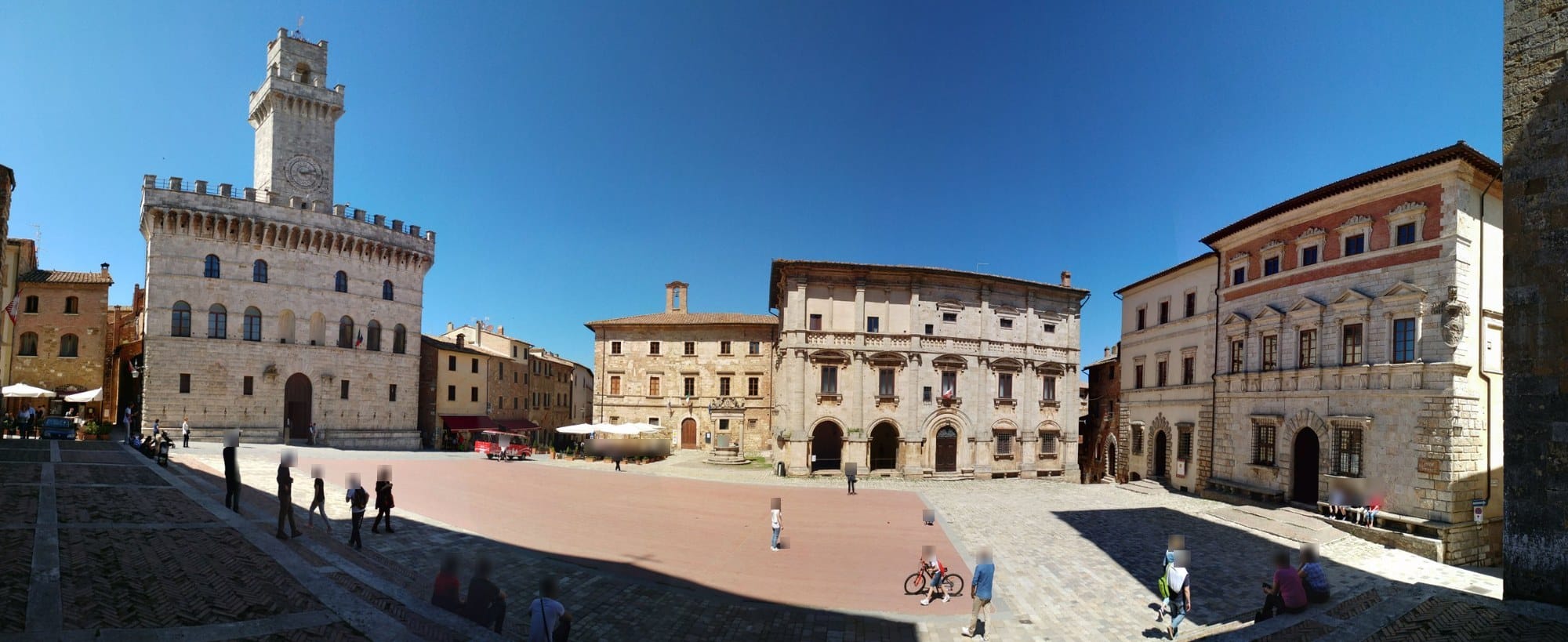
The walk around the walls is the perfect way to begin: from the bastions you see the Valdichiana and the Val d'Orcia at once. Below the walls the Passeggiata Poliziana runs for a couple of hundred metres, from Porta delle Farine to Santa Maria dei Servi. At the top is Piazza Grande, with the cathedral and the Palazzo Comunale, whose façade is attributed to Michelozzo; from the terrace and the tower you can look out over the valley. Under the town are the cellars cut into the tufa, and the ones in the centre can be visited without a booking.
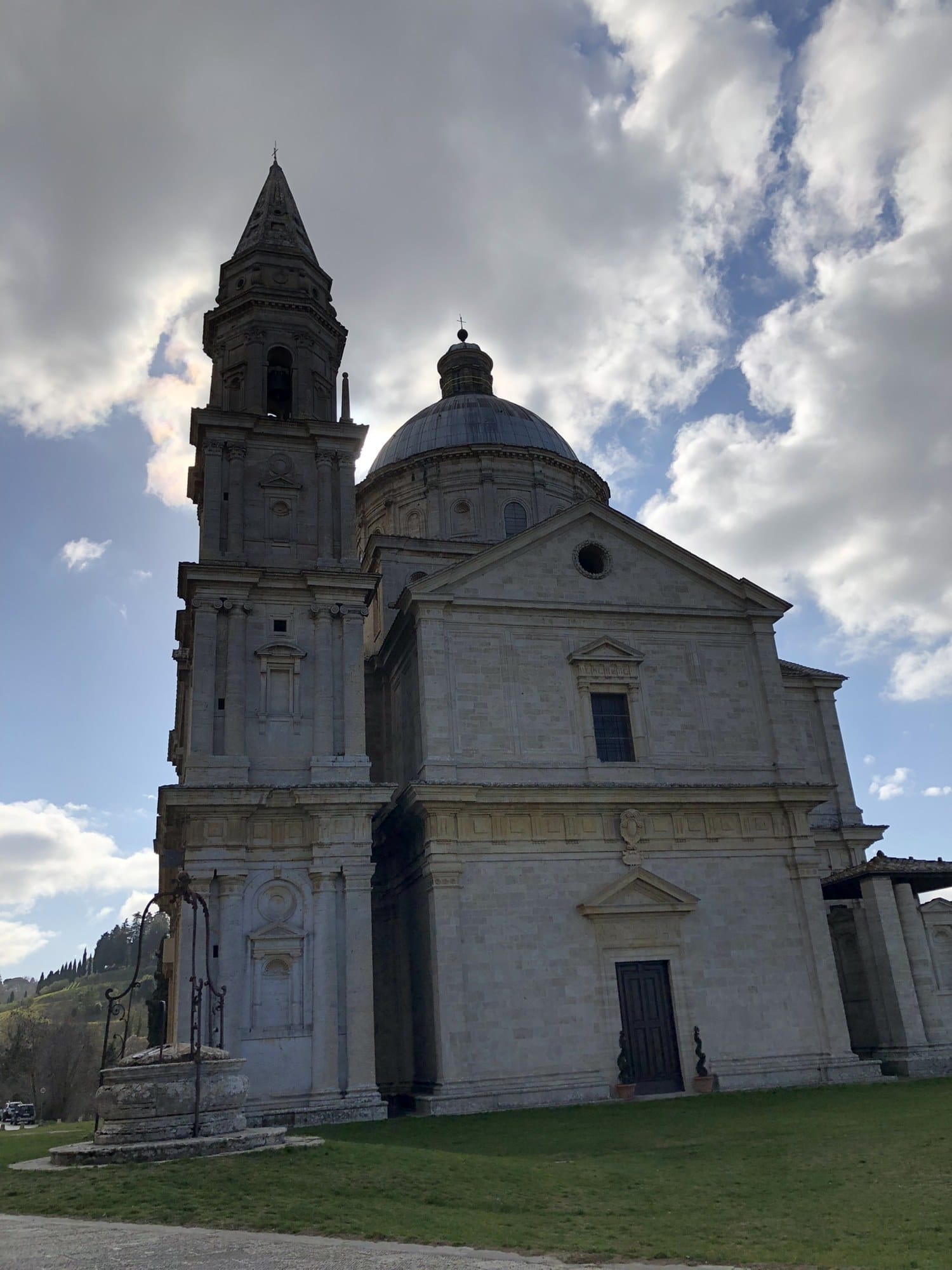
But the real reason to stop is just outside the walls: San Biagio, by Antonio da Sangallo the Elder, alone on a natural spur below the town. It is a building made to be seen against the landscape, and it knows it. In the morning light the travertine looks golden, almost luminous, and the Greek-cross plan with its dome brings to mind Bramante's designs for St Peter's. Only one bell tower was finished, in 1564: the second, on the right, stopped halfway. It is one of those rare cases where the architecture makes no sense without the landscape around it, and the landscape is not the same without the building. They were made to stand together. The church was built from 1518 to about 1545; you visit it with a ticket that includes an audio guide, and on Sundays and holidays you cannot go in during the 11 o'clock Mass.
The road to Pienza
You take the SP 146 again, the old state road, towards Pienza, and you find yourself in a hurry to arrive. I have driven it, and I have ridden it on a motorbike: on a motorbike it is something else, the cypresses, the long curves, the smell of the Tuscan countryside coming at you from every side. However you get there, take it slowly.
Monticchiello, the detour. Just before Pienza a road climbs to Monticchiello, a village that belongs to the municipality of Pienza and has kept its ring of walls whole, with the tower of the keep at the top of the hill: it was one of the castles that defended the Republic of Siena. In the church of Santi Leonardo e Cristoforo there are Sienese frescoes of the fourteenth and fifteenth centuries. In summer the village puts itself on stage: the Teatro Povero is a play written and acted by the people who live there, which starts from their own history to talk about today.
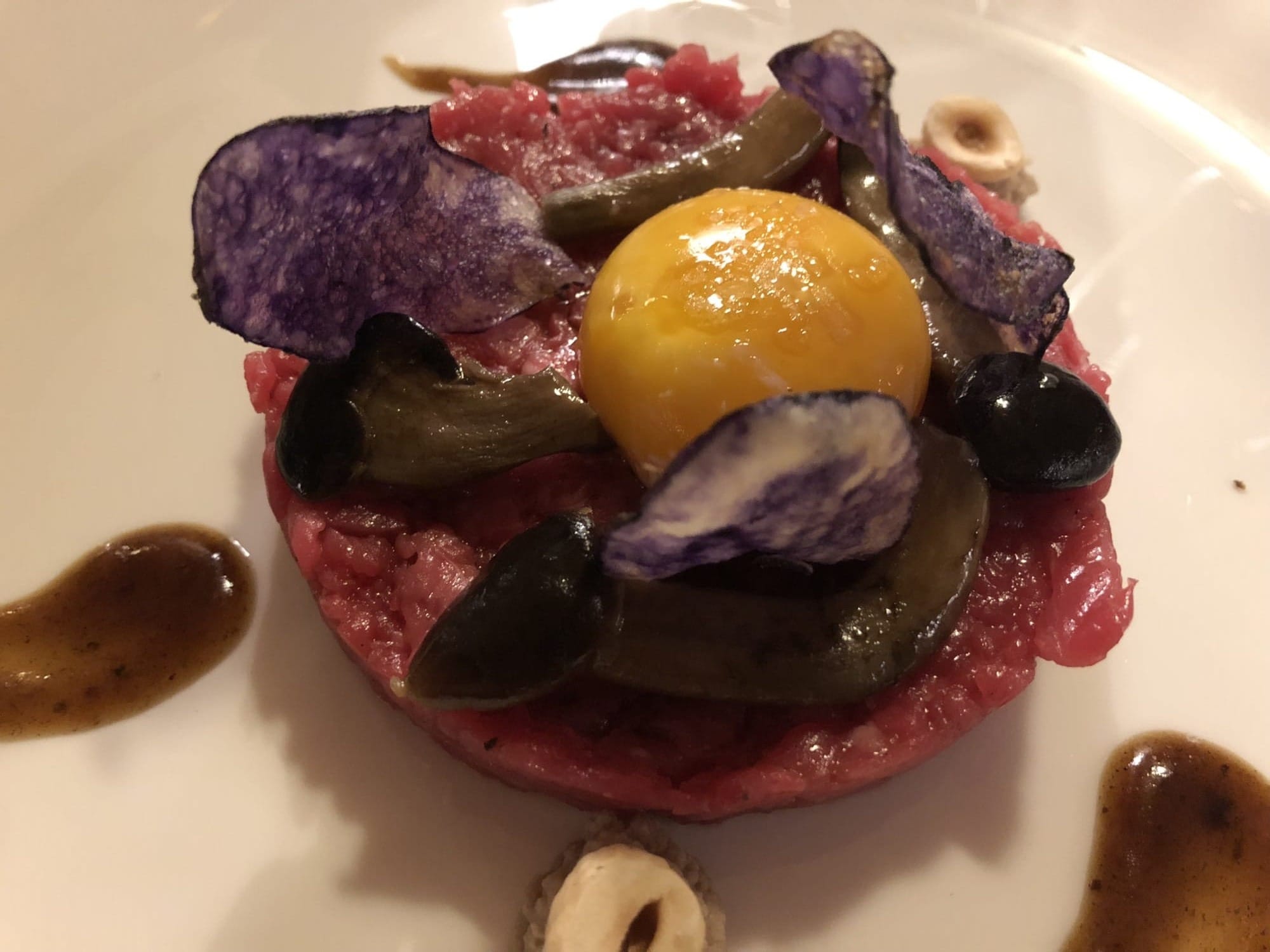
In Monticchiello I had dinner at Daria, and what I remember best about that evening is two reds, both of them exceptional: a Vino Nobile di Montepulciano from La Ciarliana, the Vigna Scianello 2015, and a Rosso di Montalcino from Terre Nere, the 2018. The two towns of the valley, one after the other on the same table. And a beef tartare, which is my weakness, with an egg yolk on top and purple crisps.
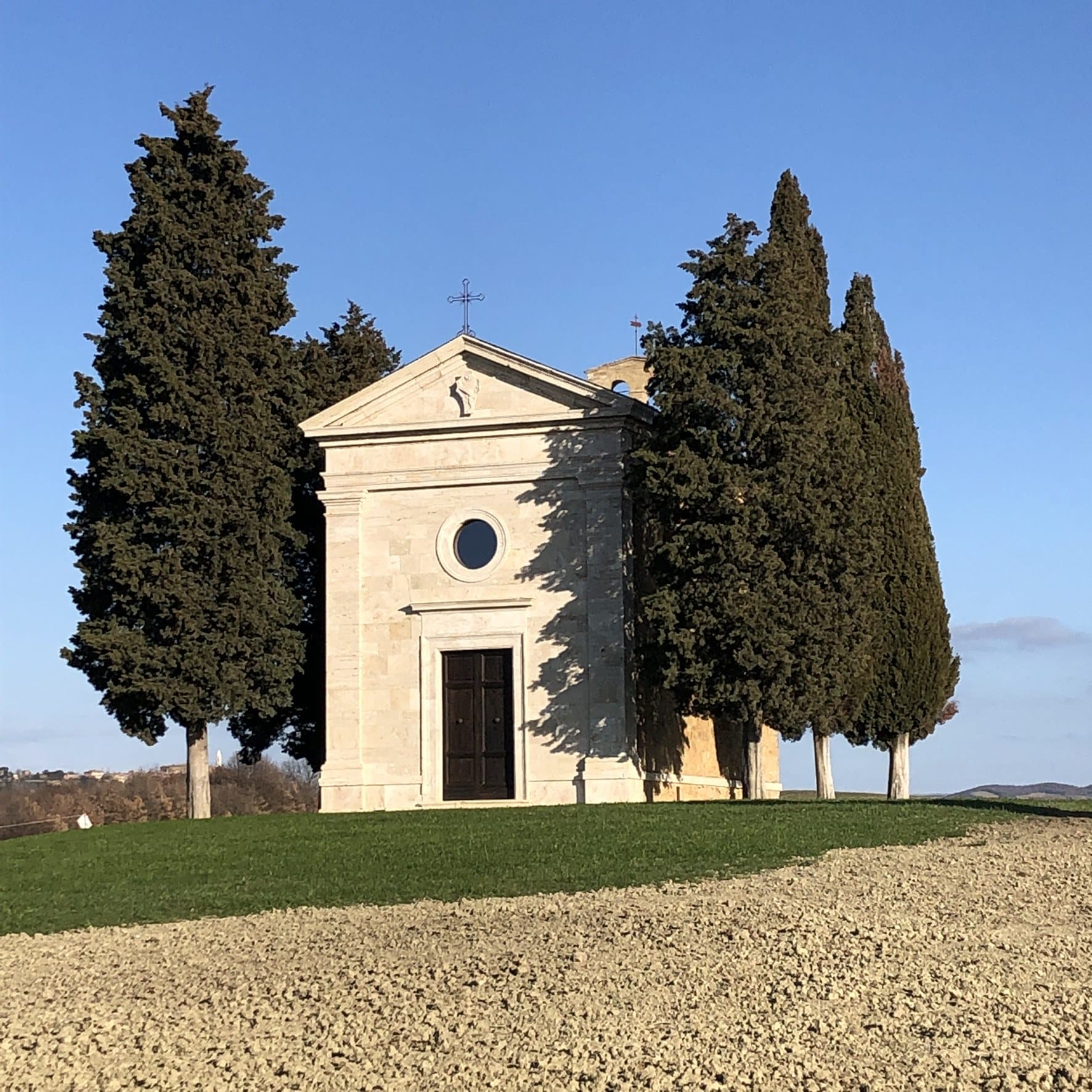
Along the SP 146 there are also the stops you see in every photograph, and I stopped at Vitaleta too. Palazzo Massaini, with its avenue of cypresses, stands right on the road. The chapel of the Madonna di Vitaleta, between Pienza and San Quirico, is reached from a car park along a white gravel road and then on foot, about a kilometre; it is privately owned and opens without fixed hours, and you don't need to go in for the photograph.
From Pienza, from the Pieve di Corsignano, starts the cypress-lined road to the Terrapille farmhouse, the one from Gladiator.
Pienza, around midday
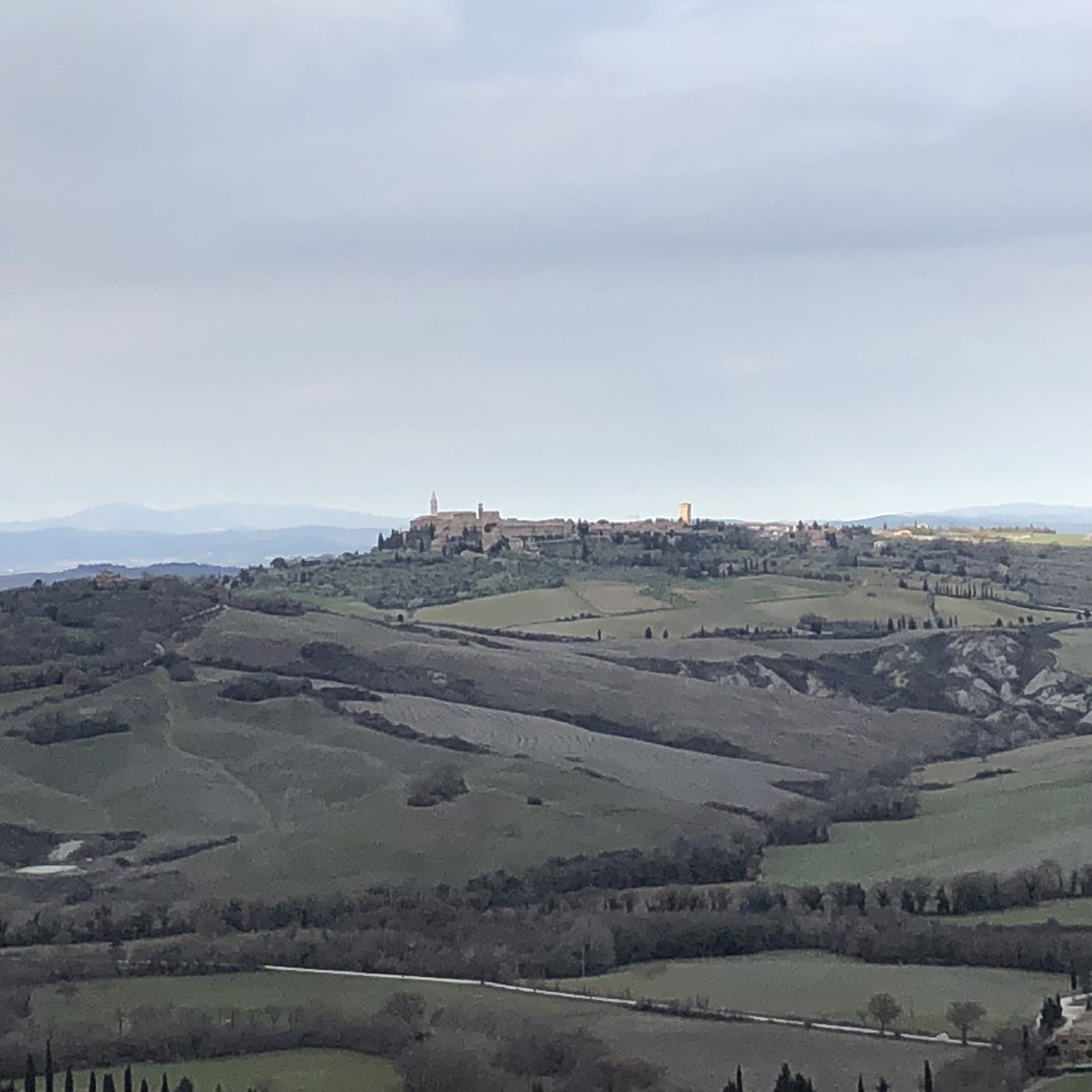
Pienza's square makes you feel it before it makes you understand it, and the essay tells you why. Here you need the instructions. On Piazza Pio II stand the cathedral, consecrated by Pius II on 29 August 1462 and reopened in 2022 after work on the bell tower; Palazzo Piccolomini, with its courtyard, its apartments, the hanging garden and the loggia over the valley, which you visit with an audio guide in half-hourly slots; and Palazzo Borgia, with the Diocesan Museum. A combined ticket, "Pienza Città di Luce", is valid for two days for the palace, the museum, the cathedral, the crypt and the labyrinth. Prices and closing days vary from source to source: check them on the palace's website before you go.
Then leave the square and walk around the walls, which at sunset are the finest part of the town. The little streets with the romantic names, Via del Bacio, dell'Amore, della Fortuna, the streets of the Kiss, of Love and of Fortune, are not medieval: the names date from the nineteenth and twentieth centuries. If you have a quarter of an hour on foot, walk down to the Pieve di Corsignano, a twelfth-century church with a round bell tower: it is where Enea Silvio Piccolomini was baptised, before he became Pius II and turned his village into Pienza.
Buy the pecorino from the producers in the centre. Just know that pecorino di Pienza is not a DOP: the DOP is Pecorino Toscano, and the Pienza pecorino aged in barriques is a traditional product recognised by the Region of Tuscany. The cheese fair, the Fiera del Cacio, is on the first Sunday of September.
San Quirico d'Orcia, in the afternoon
San Quirico is easy to skip. Don't.
The medieval centre is intact, and the Romanesque Collegiata deserves a stop: the main portal, from the twelfth century, has columns resting on lions, and the side portal of 1288 is attributed to Giovanni Pisano. But the real surprise is the Horti Leonini, an Italian garden laid out around 1580 by its owner, Diomede Leoni, which fills with roses in spring. Quiet, little known, off the tourist routes: open all year, from 8am to 7.30pm, and free. Exactly the kind of place this blog exists for.
Just outside the town, on the Via Cassia, is the most photographed grove of cypresses in the world, I Triboli.
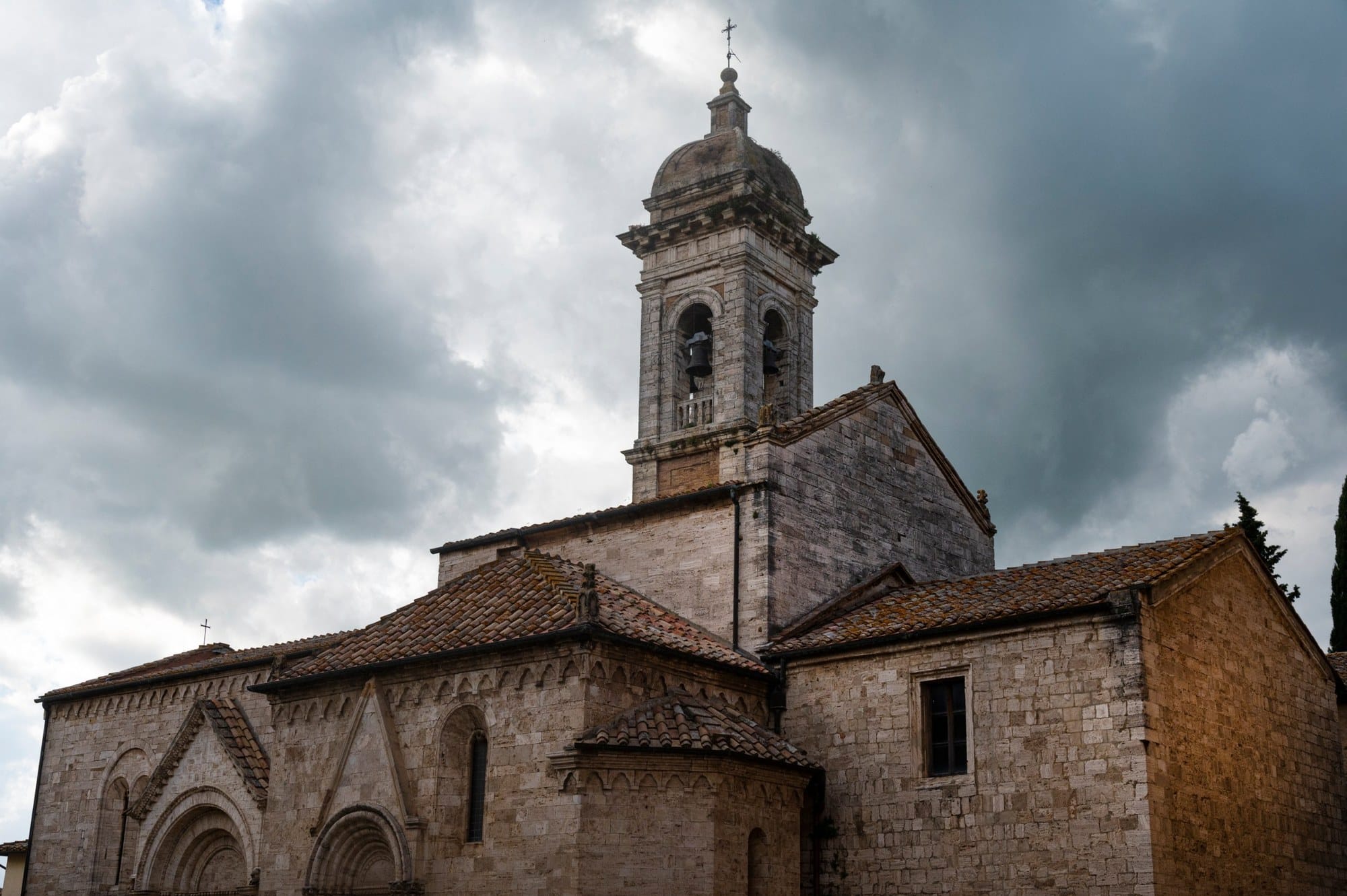
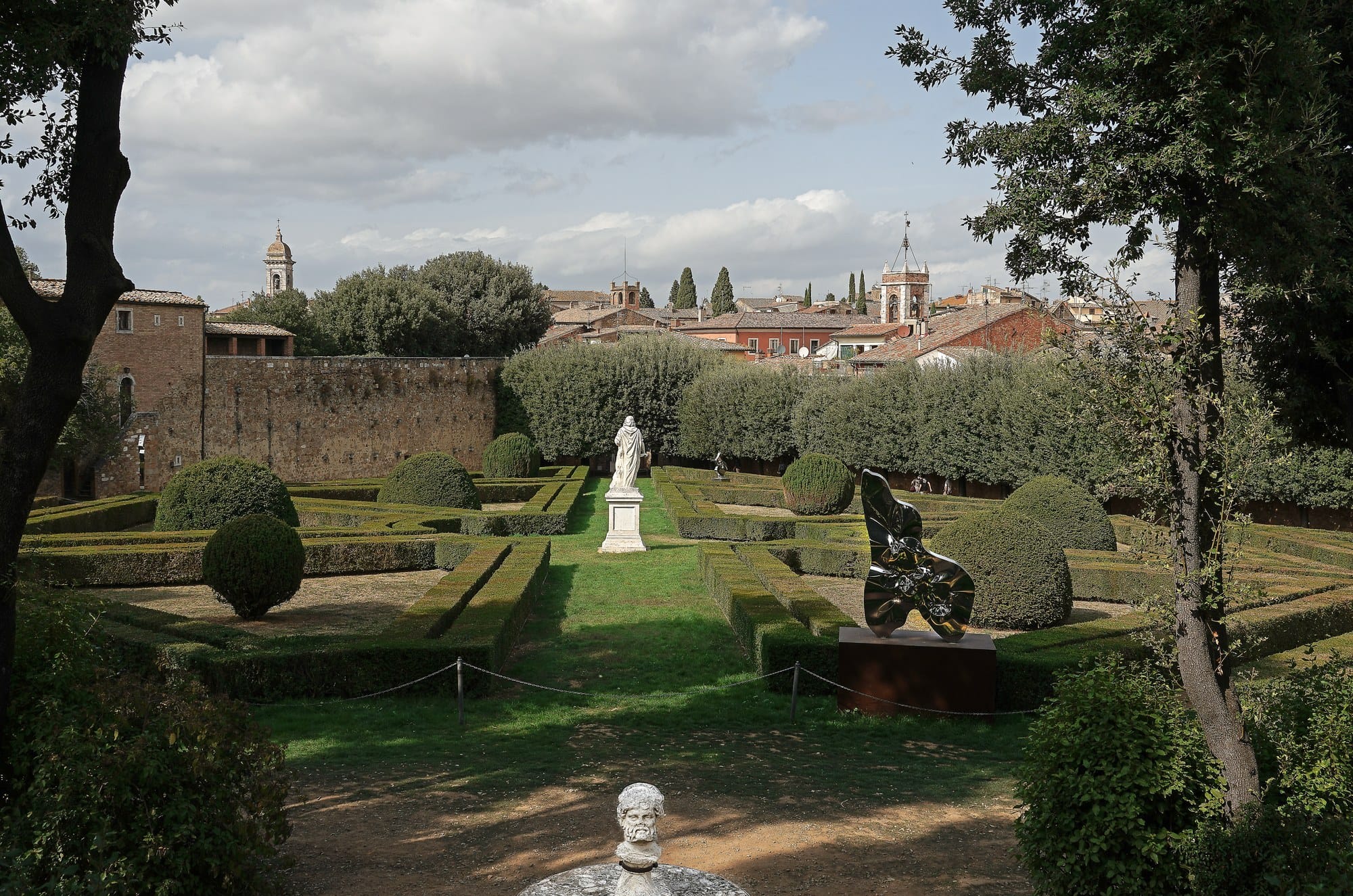
San Quirico: the Collegiata under a storm sky, May 2025, and the Horti Leonini, the Italian garden named after Diomede Leoni, who laid it out. Photos: Costaetrusca and Repuli, CC BY-SA 4.0, via Wikimedia Commons.
Bagno Vignoni: the hot water
Five and a half kilometres from San Quirico, Bagno Vignoni has, instead of a square, a sixteenth-century pool, 49 metres by 29, full of thermal water that comes out of the ground at about fifty degrees Celsius and in winter steams like a pot. You don't bathe in the pool. Catherine of Siena came here, and Lorenzo de' Medici, and Pius II, who between 1459 and 1463 had Bernardo Rossellino, the same architect as Pienza, build him a palace on the edge of the pool. That palace is a hotel today.
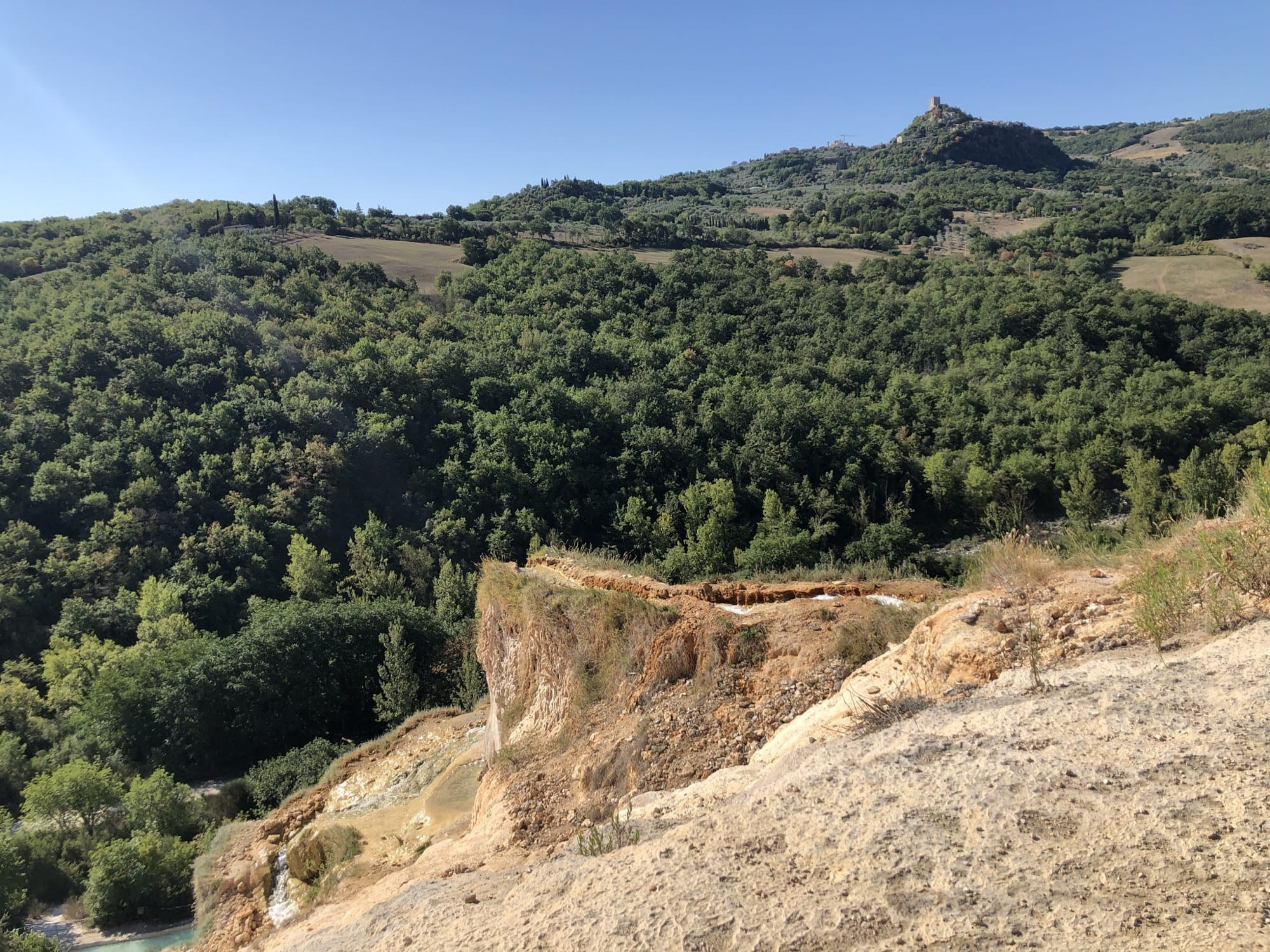
I have come here many times, for weekends at the spa: here the water in the pools is the water of the springs, hot by itself. Below the village, in the Parco dei Mulini, it runs free through rock pools, and dipping your feet in costs nothing. To bathe properly, some of the hotels' thermal pools are open to people who are not staying there, with a ticket you book ahead.
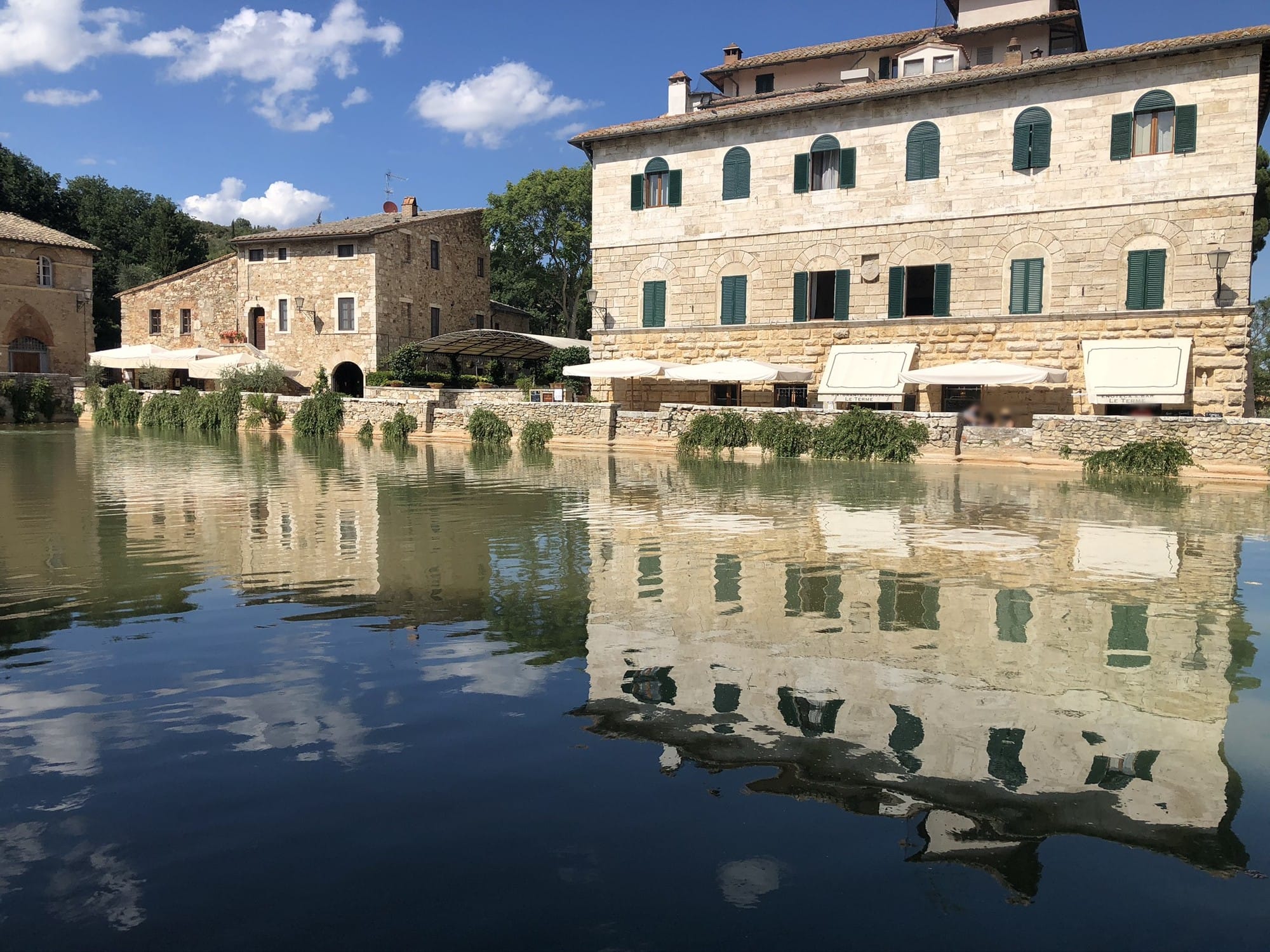
Where to stay. I stayed at the Albergo Le Terme, the one on the square, in Pius II's palace: a little dated, but with a charm money can't buy, and its own thermal pool. It is the one I recommend. If money is no object, there is the Adler Thermae, also in Bagno Vignoni, where I have not stayed: thermal pools indoors and out, a salt grotto, the valley all around.
Bagni San Filippo. Further south, towards Monte Amiata, the hot water is free and wild: the springs of the Fosso Bianco, in the woods, with cascades of white limestone, open to all, all year round, with paid parking along the road. You may not bathe on the great formation they call the Balena Bianca, the White Whale. I have been there too.
Montalcino, in the evening
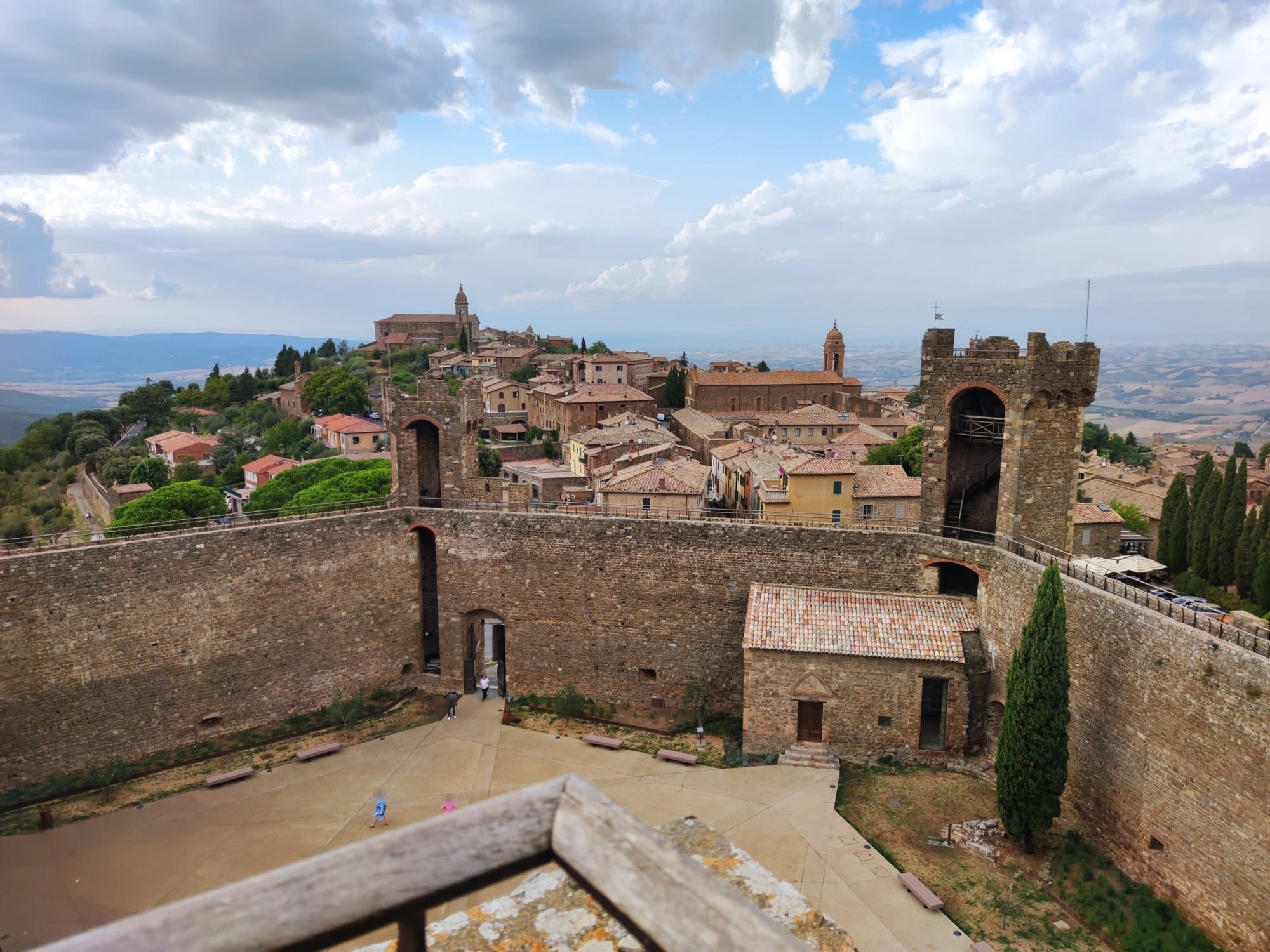
You reach Montalcino in the late afternoon. The Fortezza, begun by the Sienese in 1361, watches over the town from above: it is the symbol of a town that was the last to hold out when the Republic of Siena fell. Siena surrendered in 1555; the Republic carried on in Montalcino until 1559. The courtyard is free; you climb the ramparts with a ticket of a few euros, bought at the wine shop inside the Fortezza, the first public enoteca in Italy.
I didn't manage to visit any winery, but that evening I allowed myself a glass of Brunello in a trattoria near the cathedral, with a piece of pecorino bought in Pienza that morning. The moon rose above the battlements of the Fortezza. There is a way of travelling in which architecture, landscape, history and food become the same thing. This is that way.
The wineries. Brunello is made only from Sangiovese, spends at least two years in wood and four months in the bottle, and cannot be sold before the first of January of the fifth year after the harvest. To see where it is made, book. Castello Banfi offers tastings and tours to the public, by booking only, and you follow the guide in your own car for a few kilometres. Biondi-Santi, at the Tenuta Greppo, and Casanova di Neri receive visitors by appointment only, by email or by phone.
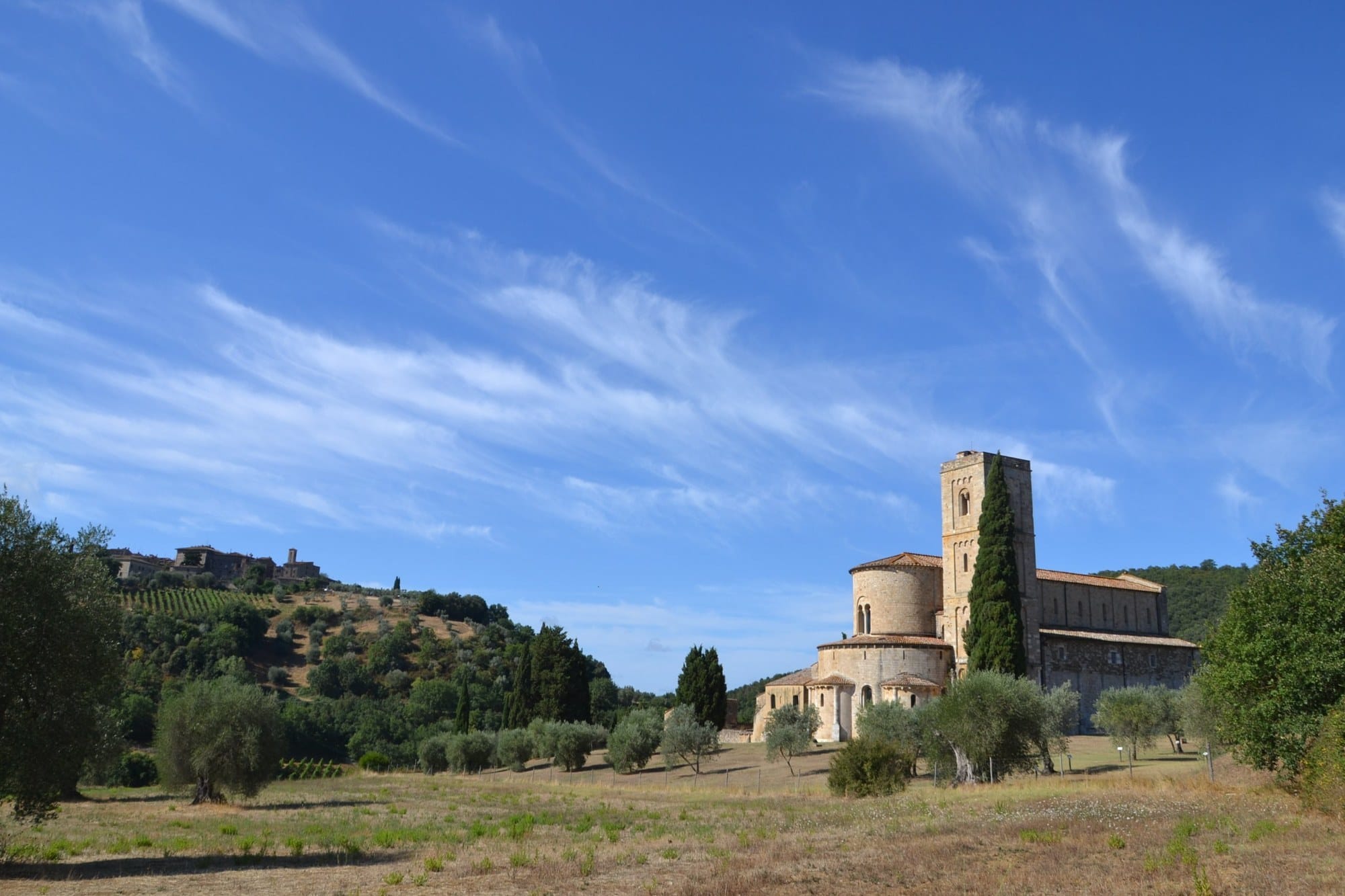
Sant'Antimo. South of Montalcino, the abbey of Sant'Antimo is one of the most refined Romanesque churches in Tuscany, from the twelfth century. The church is free to enter; it is open every day, with hours that change with the seasons.
If you have an extra day: Monte Amiata
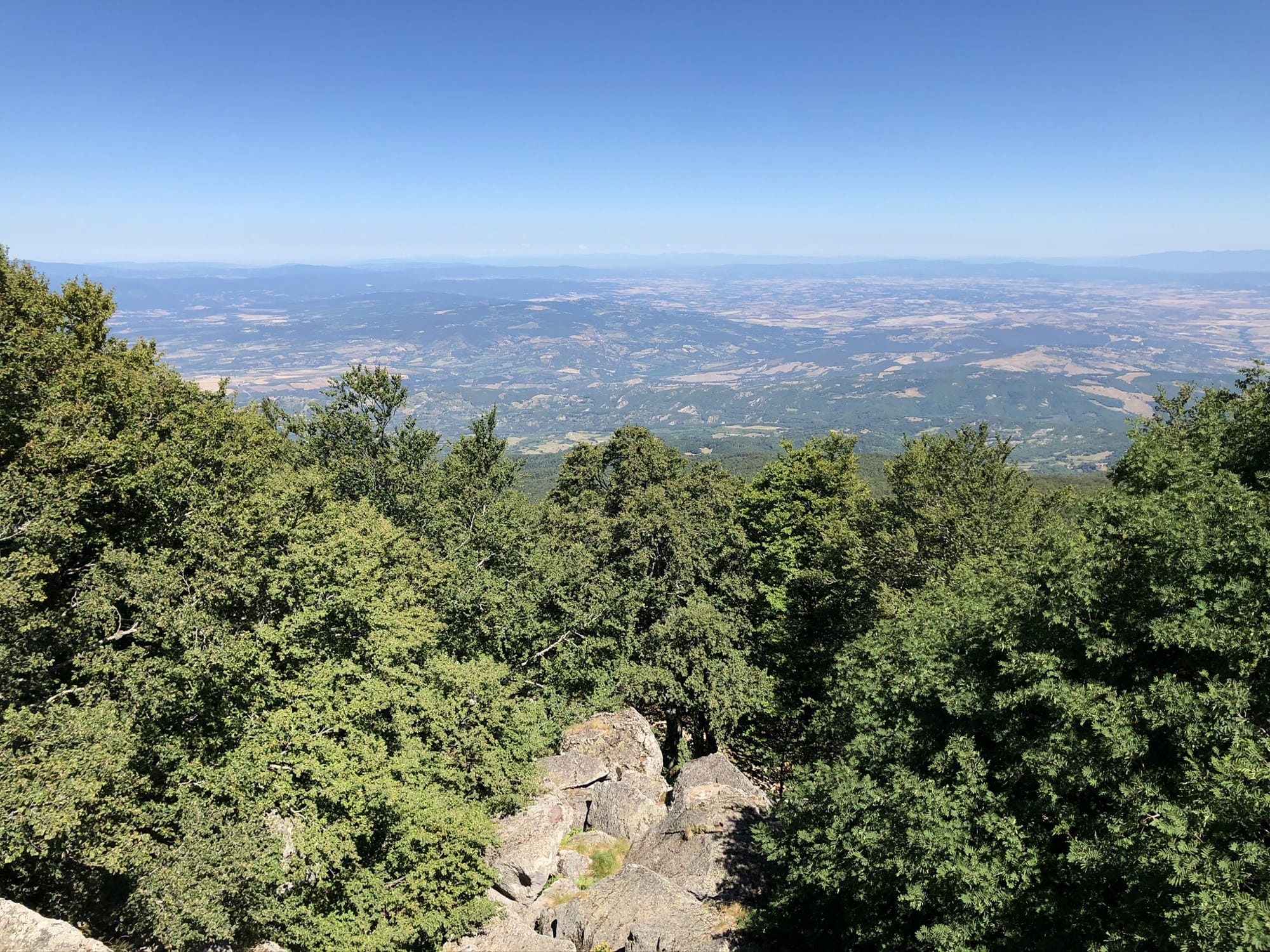
South of the valley is the mountain you see from every bend: Monte Amiata, 1,738 metres, what remains of an extinct volcano. From Bagno Vignoni you take the Via Cassia south and then climb through Abbadia San Salvatore, the largest town on the mountain, with its medieval abbey and its past of mercury mines, almost to the summit, through chestnut woods and then beech. On a motorbike it is fantastic: curves, forest, and cooler than the valley in summer. Come down by way of Bagni San Filippo, and the loop ends in hot water.
Towards Siena: the Crete Senesi
If you are going on to Siena, resist the dual carriageway. Go through Buonconvento and Asciano, past the abbey of Monte Oliveto, into the Crete Senesi. Here the landscape looks like no other part of Tuscany: badlands of grey clay, carved shapes that turn orange in the morning, broken by rows of cypresses and the odd lonely farmhouse. Clay sculpted by centuries of rain. Orange at dawn, silver at noon, rust at sunset. Mario Luzi, the poet, who was from Florence and loved this countryside, called it "the land without the sweetness of trees, the arid land". Drive through it slowly.
Monte Oliveto Maggiore is on the way: entry is free, and in the great cloister are the thirty-six scenes from the life of Saint Benedict painted by Luca Signorelli, from 1497, and by Il Sodoma, from 1505. The monks keep strict hours, with a break at lunchtime: arrive in the morning or the afternoon, not at midday.
When to go
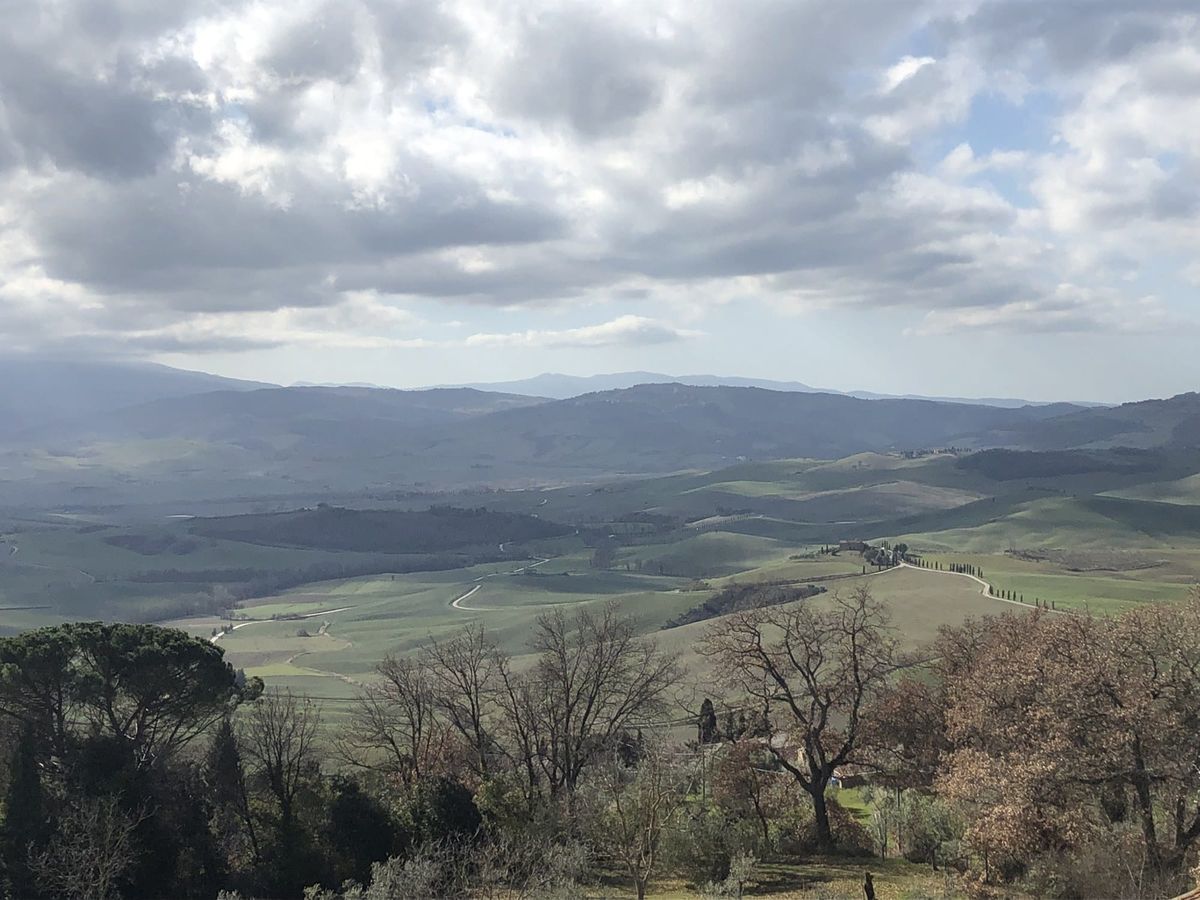
Any time, but every season gives you a different valley. In April and May the hills are a bright green, with poppies in the fields. In summer the wheat is ripe and the valley turns yellow, but it is hot, and at midday there is nobody in the towns. From September to November come the grape harvest, the ploughed fields and the warm colours. In winter the mist lingers in the bottom of the valleys in the morning, and the pool at Bagno Vignoni steams. Almost all the photographs on this page were taken in February: the Val d'Orcia green in winter is the one people see least, and it is beautiful.
Eating
On the menus of the valley you will find pici, thick spaghetti rolled by hand from flour and water, often all'aglione, with a big, mild garlic from the Val di Chiana. Buy the pecorino in Pienza, drink the Vino Nobile in Montepulciano and the Brunello in Montalcino; Rosso di Montalcino, younger and cheaper, is the everyday choice. For a dinner worth the detour, Daria in Monticchiello: mine is in the section on the road to Pienza.
Pitfalls
The Montepulciano traffic zone. It has cameras, and from May to September it is in force day and night; in April and October from 8am to 8pm, in winter from 8am to 5pm. Park outside and walk up.
Wineries without a booking. The famous ones will not open their doors to you.
Mass at San Biagio. On Sundays and holidays, at 11, there are no visits.
The short days. From November to February the light is gone before five: drop a stop rather than racing along the SP 146.
The spas without a booking. At weekends the hotel pools in Bagno Vignoni fill up: book your entry, or go midweek.
The photograph instead of the valley. Vitaleta and the famous cypresses are beautiful, but the whole valley looks like that: stop where there is nobody else, too.
One day, two, or three
One day, from Siena. An early start towards Montepulciano, San Biagio and the walls; the SP 146 to Pienza, the square and the palace; San Quirico and the Horti Leonini in the afternoon; Montalcino at sunset, and dinner. Back to Siena along the Via Cassia, in the dark.
Two days, from Rome. The first day as above, leaving Rome at dawn, and the night in Bagno Vignoni, Montalcino or Pienza. On the second, Sant'Antimo in the morning, then Buonconvento, Monte Oliveto, Asciano and the Crete Senesi as far as Siena: from there, back to Rome, or on to Florence.
Three days, with the hot water. The valley on the first day, the night in Bagno Vignoni; on the second the spa, the pool in the morning and Bagni San Filippo in the afternoon, or up Monte Amiata; on the third Montalcino, Sant'Antimo and the road home.