THE COMPANY TOWN
A sleeping-car maker builds a town south of Chicago, a cotton manufacturer a village on the Adda, Henry Ford a rubber town in the Amazon. Chapter III of Utopian Cities: the company town, and what is left of it once the company no longer needs it.
Utopian Cities, III · Pullman, Crespi d'Adda, Fordlândia, Celebration, Starbase: when the city is drawn by a company instead of a king, and lasts as long as the company needs it.
The previous chapter ended at Versailles, with a crowd from Paris taking the king away. This one starts in the century that followed, with a different kind of prince.
In the middle of the nineteenth century, writes Murray Bookchin in The Limits of the City, Europe entered a season of bourgeois paternalism towards workers' housing: Louis Napoleon's cités ouvrières, state-subsidised "model villages" for English workers, Krupp's estates in the Ruhr. Alongside the state, the boss set about building a town for his own employees. He did it out of kindness, out of calculation, out of a need for control, and almost always for all three at once.
Before Pullman
The model was English. In 1851 Titus Salt, one of the great wool manufacturers of Yorkshire, moved his five mills out of Bradford to a site between the canal and the railway, and around the new mill he built a village for his workers, away from the slums of the town. It took him twenty years, until 1871, with two local architects, Francis Lockwood and William Mawson: the houses, the dining hall, the church, the school, the hospital, almshouses for the old, a park. By 1871 there were eight hundred dwellings. The name came from the boss and the river, Salt and Aire: Saltaire. The mill stopped production in 1986, and since 2001 the village has been a World Heritage Site. UNESCO sees in it an example of nineteenth-century philanthropic paternalism, and a model that travelled as far as Italy, to Crespi d'Adda.
In France, in the same years, a stove maker did something stranger. Jean-Baptiste André Godin was the son of a locksmith and had started out as a worker himself; in 1842 he read Charles Fourier, the philosopher of the phalanstery, a community meant to live all together in one great building. From the late 1850s, next to his foundry at Guise, he built the Familistère, which he called the Social Palace. He had no time for little houses: one step down from the little house, he wrote, and you reach the savage's hut. Instead he put up large blocks of flats around covered courtyards, with water on every floor, and facing them the schools, compulsory up to the age of fourteen at a time when the law let children work from ten, a theatre, a laundry with showers and a swimming pool, and the cooperative's shops. In the 1870s and 1880s about twelve hundred people lived there. In 1880 Godin turned the business into a cooperative, and little by little the workers became its owners.
In 1872 Friedrich Engels named it as the only case in the world: a colony built by a Fourierist, he wrote, as a socialist experiment rather than as a way to make money. In the second edition of the book he added a note: even that one, in the end, had become just another place where workers were exploited. The cooperative that ran the Social Palace was dissolved in 1968, and the flats were sold. Since 2010 the Familistère has been a museum.
The sleeping-car town
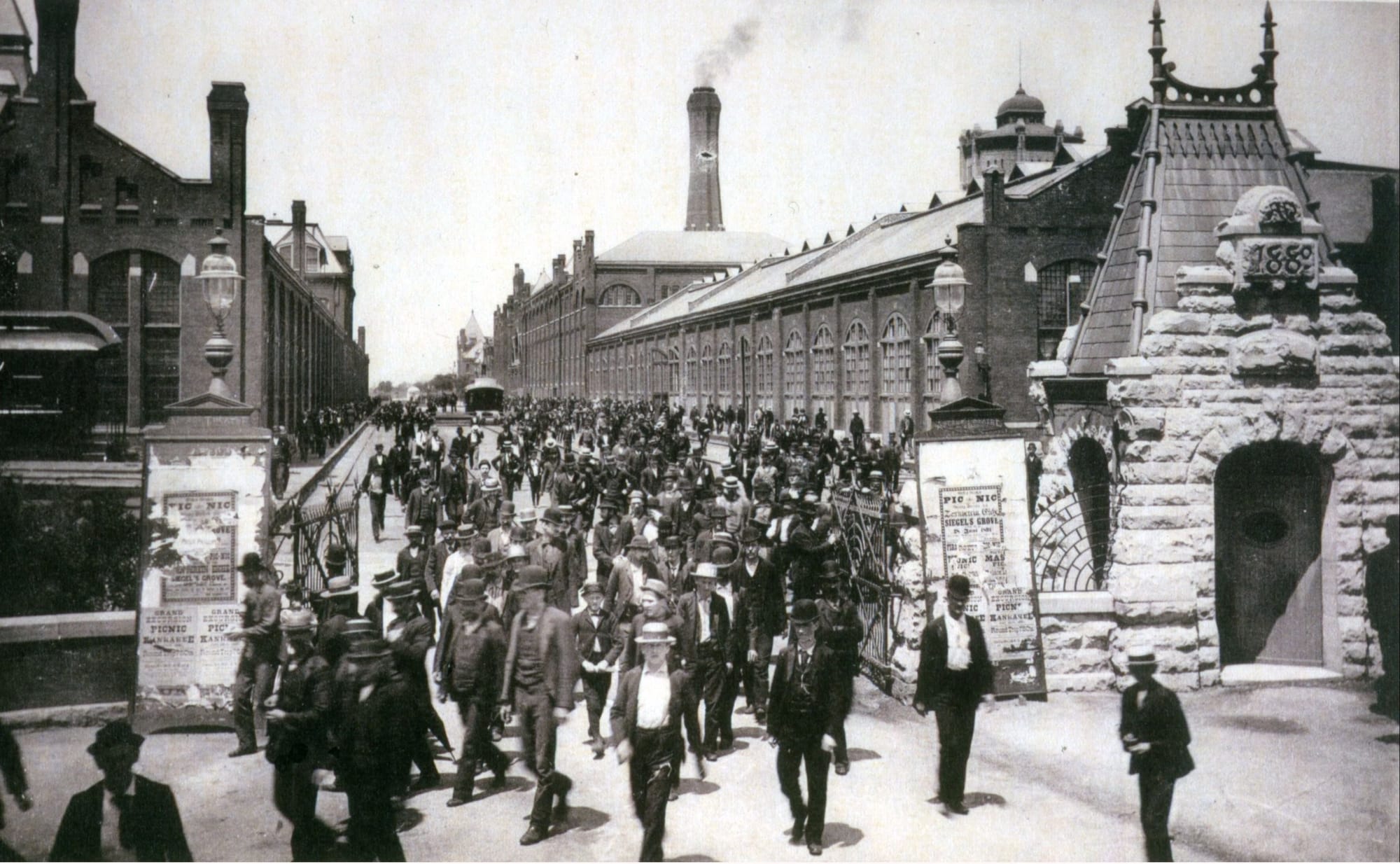
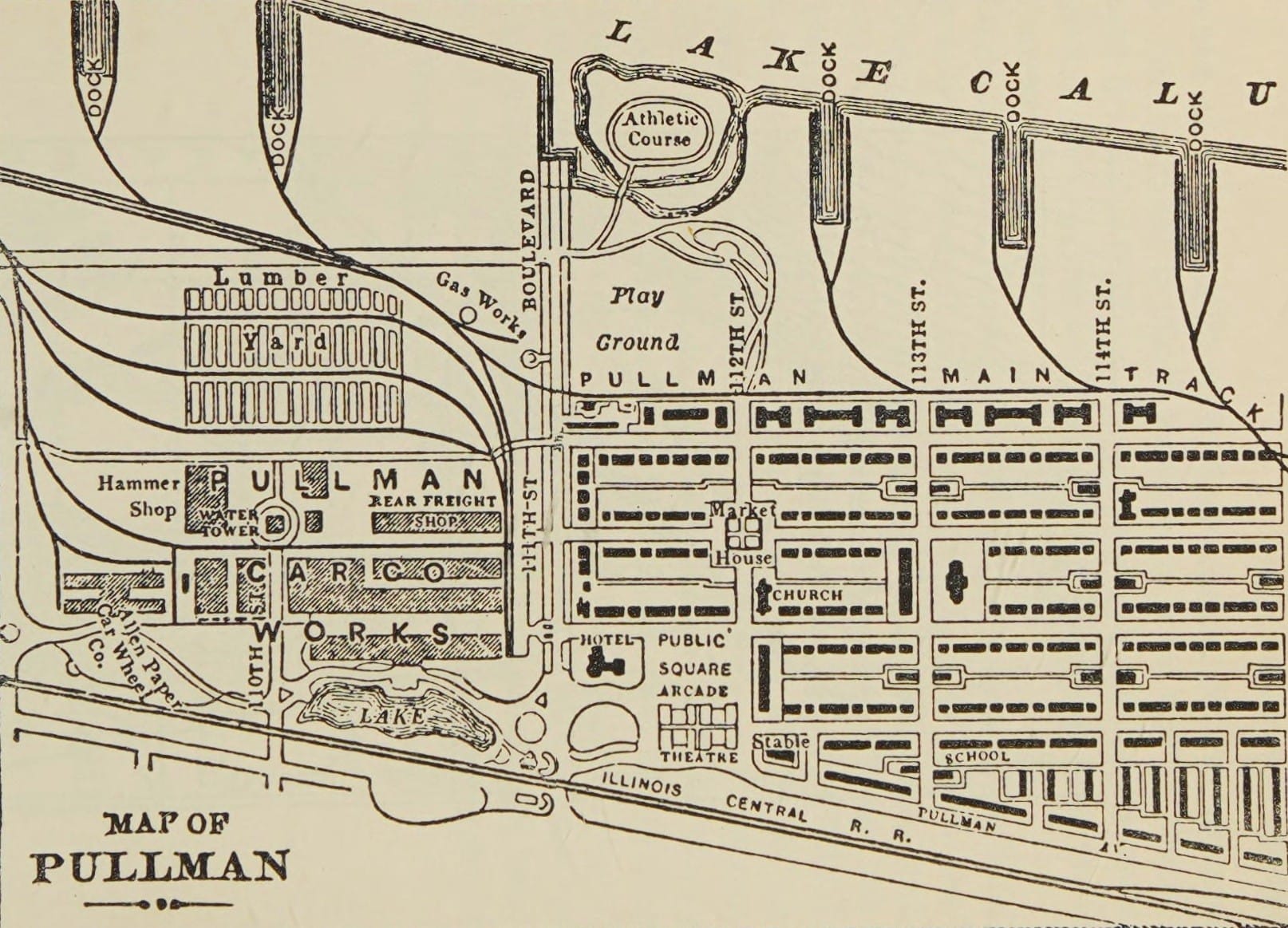
On 26 May 1880, south of Chicago, George Pullman, the sleeping-car man, began building a town for his workers: brick houses, a church, a market, a theatre, with the buildings designed by an architect not yet thirty, Solon Beman, the landscaping by Nathan Barrett, and all of it owned by the company. It was a model town, clean and orderly, and the rent went to the boss. In 1893 came the slump, and Pullman cut wages but not rents. The strike began on 11 May 1894 and spread to 250,000 workers in 27 states; federal troops stopped it. In 1898 the Supreme Court of Illinois ordered the company to sell all the property in the town that the factory did not need.
Today Pullman is a national historical park, and people live in the houses. The town outlived the boss as soon as the boss left.
The village on the Adda
In Italy the most complete example is Crespi d'Adda, the village that Cristoforo Benigno Crespi began in 1878 next to his cotton mill on the Adda, between Bergamo and Milan: the mill, the workers' houses, the church, the school, the cemetery, the boss's villa. It has been a World Heritage Site since 1995, and UNESCO calls it "an outstanding example of the 19th- and early 20th-century 'company towns'". The mill closed in 2003; about three hundred people still live in the village.
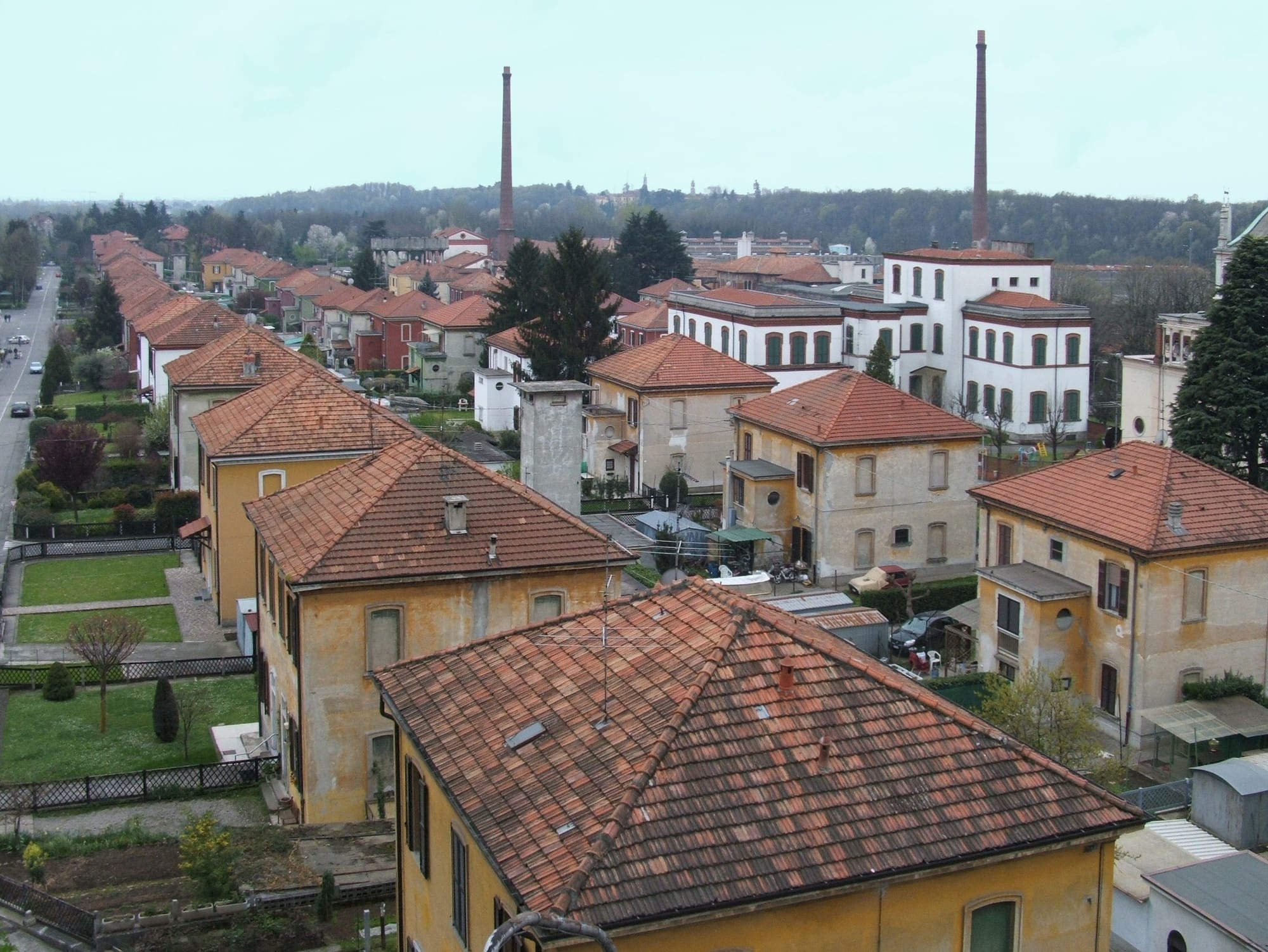
The village has a precise order. The mill stands on one side of the road and the houses on the other, in parallel rows on a grid, with a tree-lined avenue between them and the mill. The order came from Silvio, Cristoforo's son, who after graduating in 1889 had toured the cotton mills of France, Germany and England and worked for a while at Oldham, near Manchester. It was he who, in the 1890s, gave up the big blocks for several families and chose small houses instead, for one, two or three related families, each with its own garden and vegetable plot. The houses also told you a man's rank: bigger villas with wide gardens for the managers, and a house of its own for the doctor. Then the school, and the church, a copy of the sanctuary of Santa Maria di Piazza at Busto Arsizio, the town where Cristoforo was born. And the boss's villa, a castle with a tower.
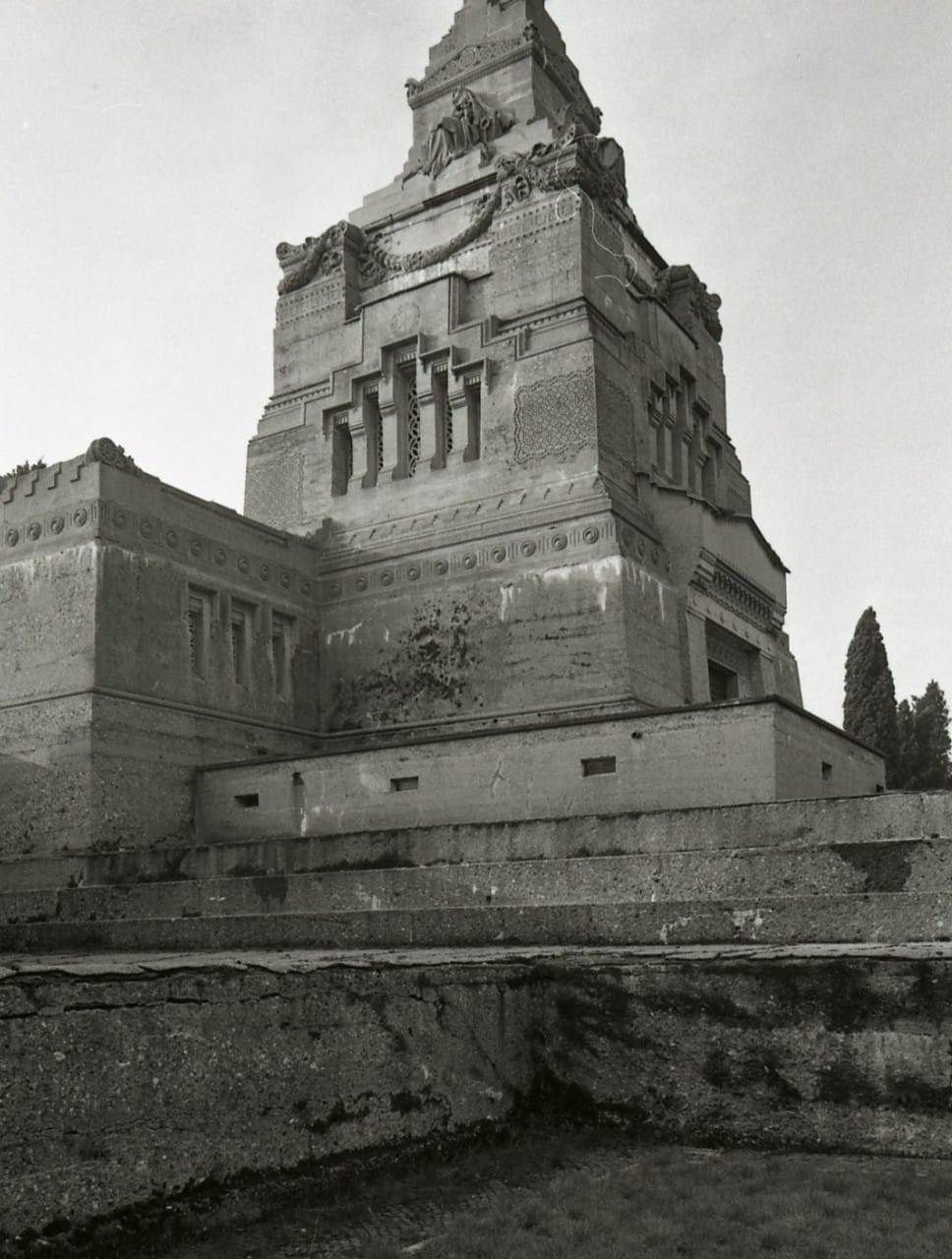
At the far end of the village, at the end of an avenue of its own, is the cemetery. Gaetano Moretti designed it after winning the competition in 1896, and it was built between 1905 and 1908. In the middle stands the Crespi mausoleum, towering over everything; in front of it, at ground level, rows of identical crosses in the local river stone, each with a photograph, a name and two dates. The company paid for a simple burial, and anyone who wanted a family tomb had to build it along the boundary wall. Even in death, the boss up high and the workers in rows in front of him.
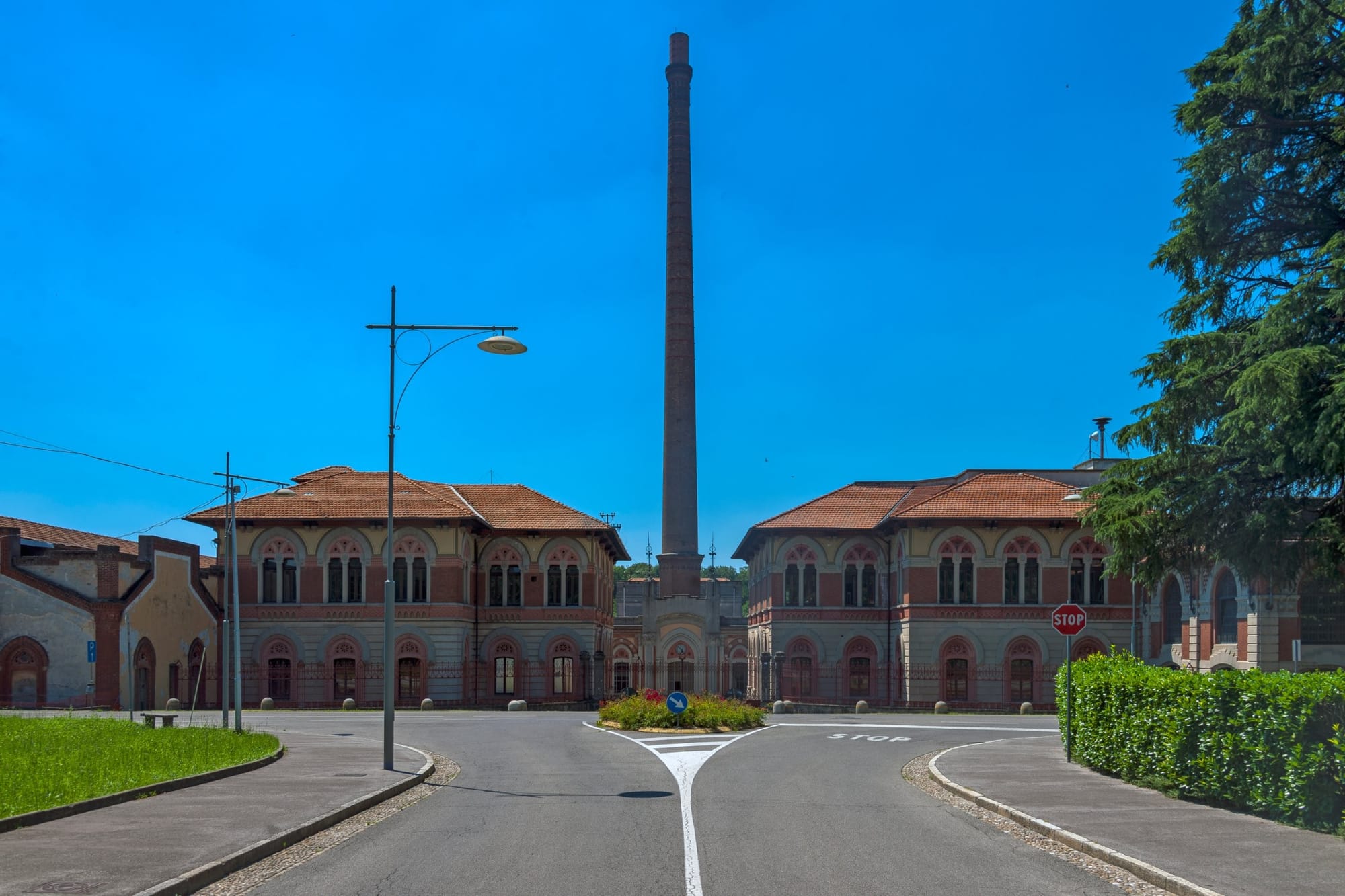
I went in 2021, on a trip that also took in Trezzo. It was a Sunday or a public holiday, or perhaps the day before one, and everything was shut. I remember a village where the houses all look like little villas, the kind that later spread across the outskirts of Italian towns: houses that looked as if they were lived in by who knows who. The layout disappointed me a little. What disappointed me more was that the place is rather desolate, left to fend for itself, even though it holds a piece of Italian history. It looks as if it was used and exploited for as long as it was needed, and then put aside. There was nothing to see and nothing to do, so we went for a walk along the river instead. That day it seemed to me that they hadn't even managed to make a proper museum of it, and yet the space is there, and so is the history.
Since then, things have started to move. Antonio Percassi had bought the mill back in 2013; in 2022 the regional government of Lombardy approved the draft agreement to restore it, a project of more than a hundred million euros that will take at least ten years, and his company expects to open a first part to the public in 2027. Meanwhile, tours of the village are run by an association on behalf of the local council, and it sells about thirty thousand tickets a year. If they really are turning it into a museum, I'm glad, and I'll go back. The Crespis had lost the village long before. With the crisis of 1929 they had to sell everything, the mill and the village, and whoever owned the mill went on owning the houses until the 1970s, when they began to be sold off.
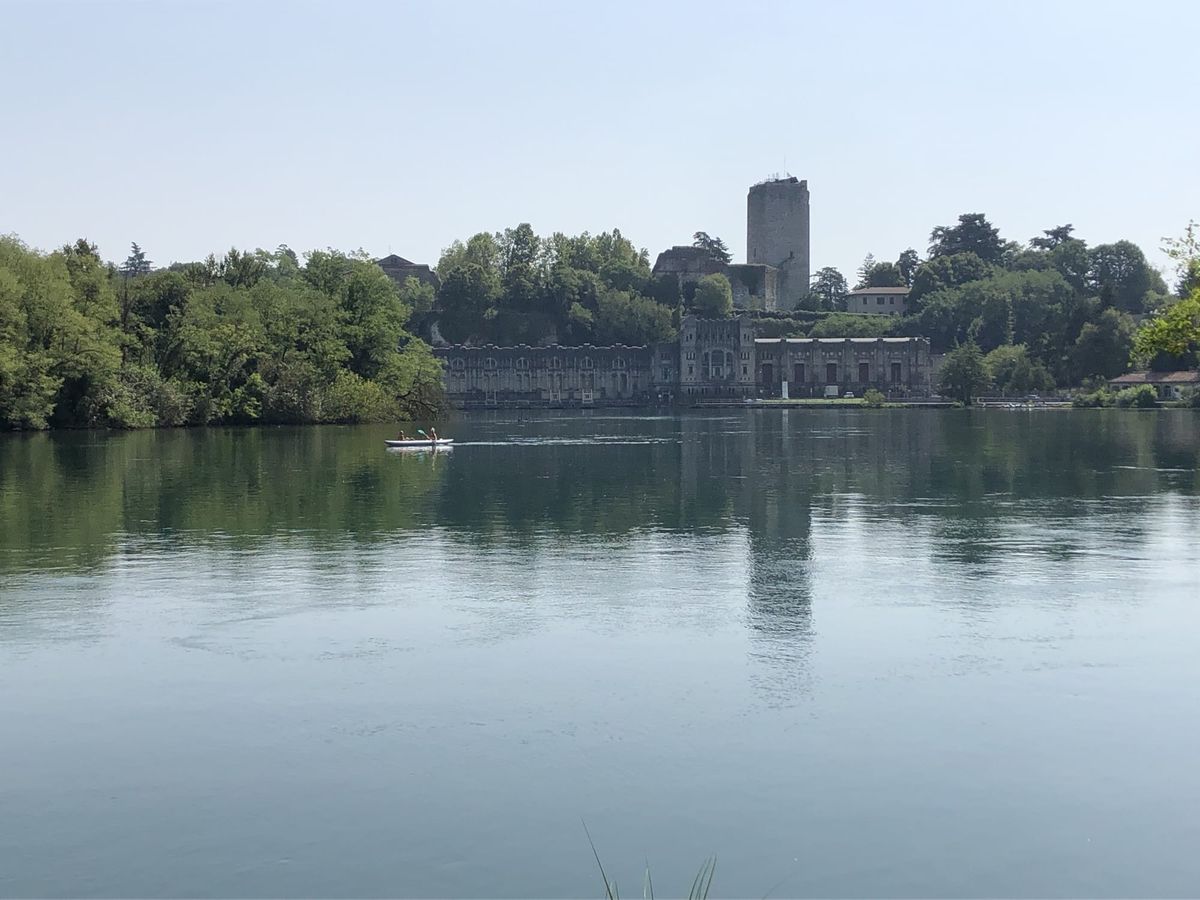
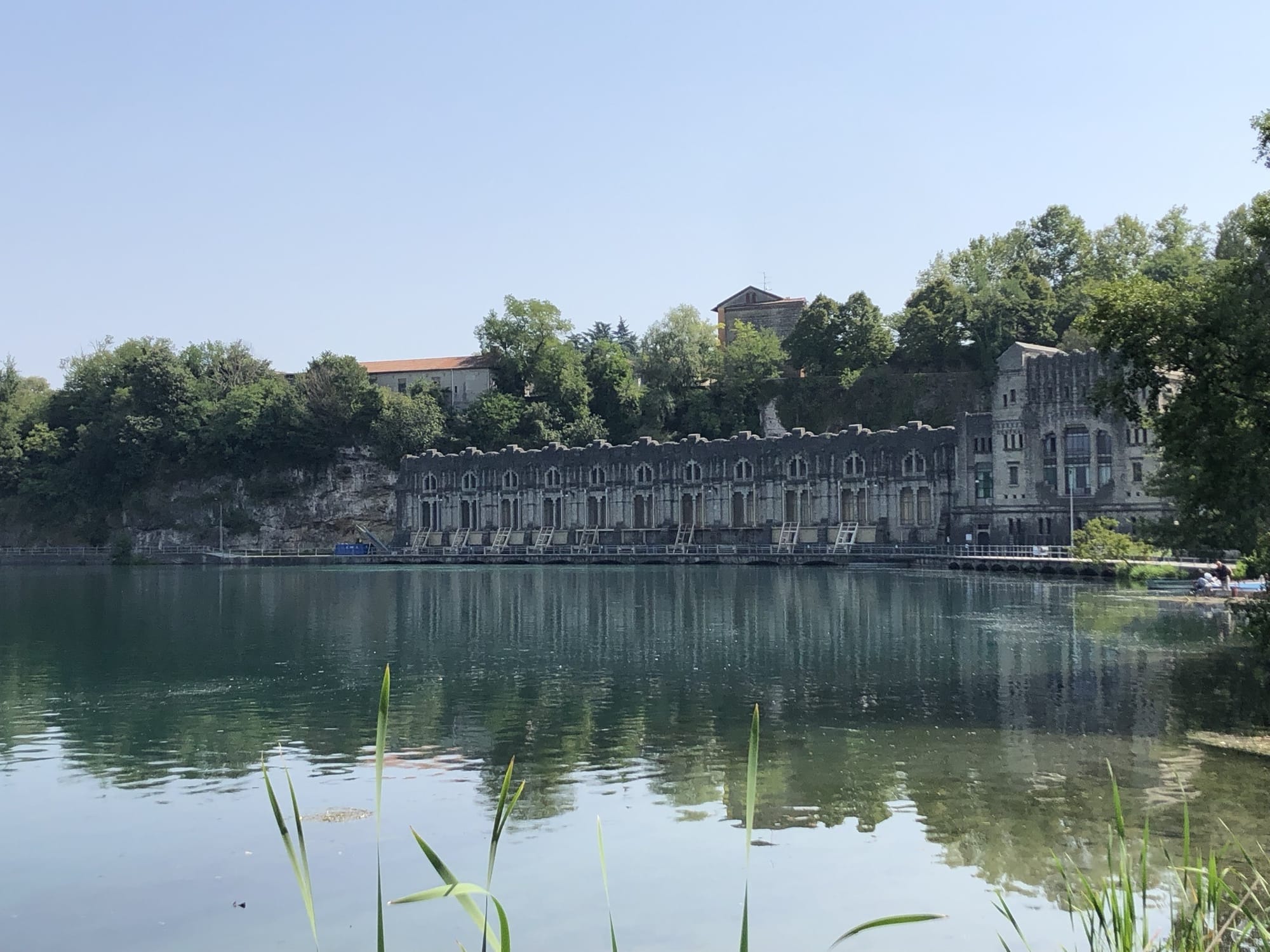
I didn't take any photos in the village. I took them at Trezzo, a little further upstream, at the power station that supplied the mill with electricity. Cristoforo Benigno Crespi commissioned the Taccani power station: foundation stone laid on 11 July 1904, in service from 1906, designed, once again, by Gaetano Moretti. It stands below the Visconti castle, and to match the castle's fourteenth-century tower Moretti faced it in ceppo dell'Adda, the river's own stone, and crowned it with battlements. It is a power station dressed up as a castle, and the most beautiful thing the boss built is not in his village.
The rubber town
Henry Ford tried it in the Amazon rainforest. In 1928 he obtained a huge concession from Brazil to grow rubber for his tyres, and there he built a small American town, planned for ten thousand people and run by the rules of his factories, down to the canteen. He called it Fordlândia. The trees, planted close together like an orchard, fell sick; the managers knew nothing about tropical farming; in 1930 the workers rioted over the canteen. Ford never went there. In 1945 Ford's company sold it back to Brazil for a fraction of what it had spent. Today two or three thousand people live there.
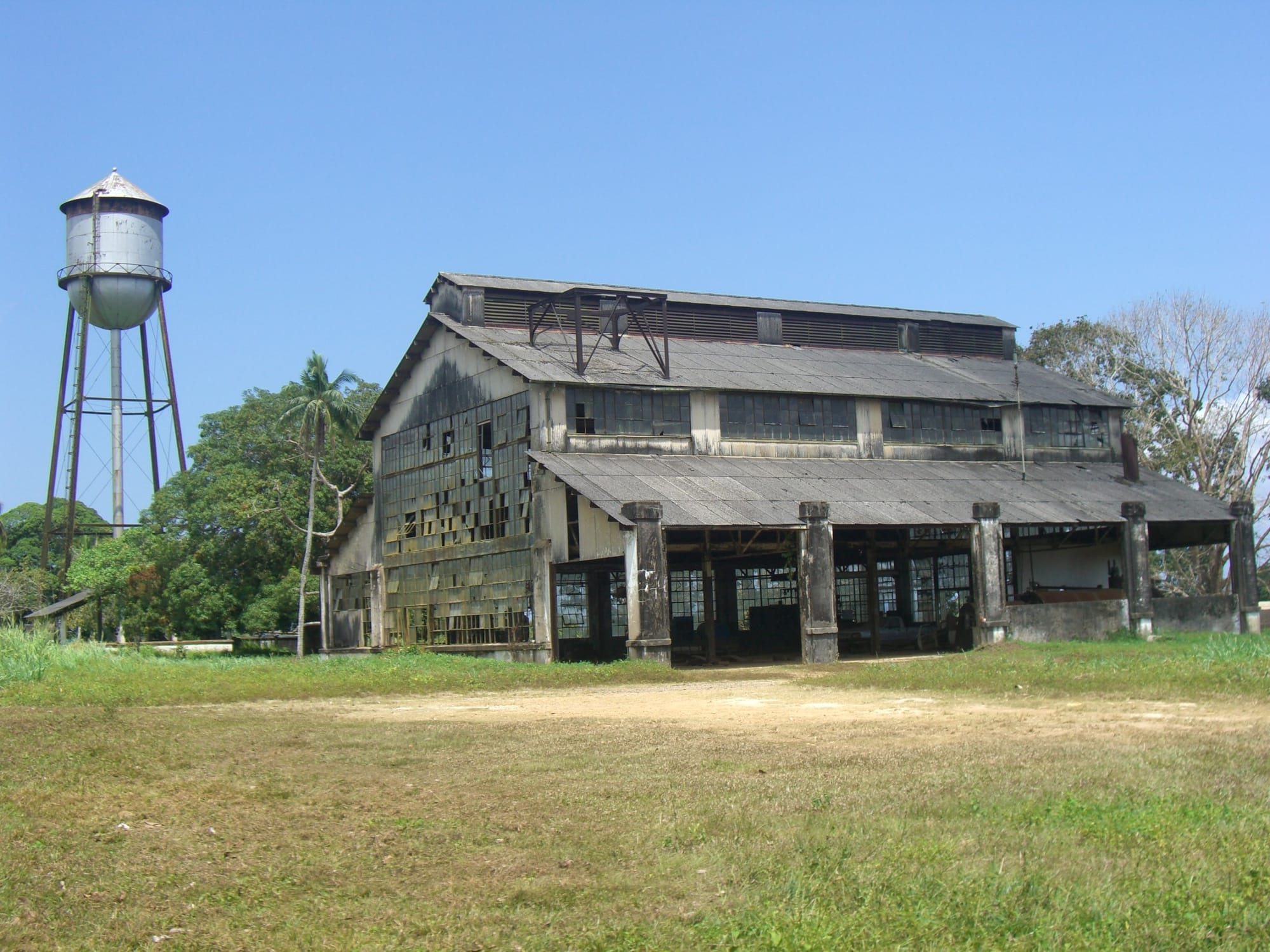
Fordlândia had a boss, a plan and one of the most powerful companies in the world. It had no reason to be there, apart from the trees, and the trees would not grow.
Two more in Italy
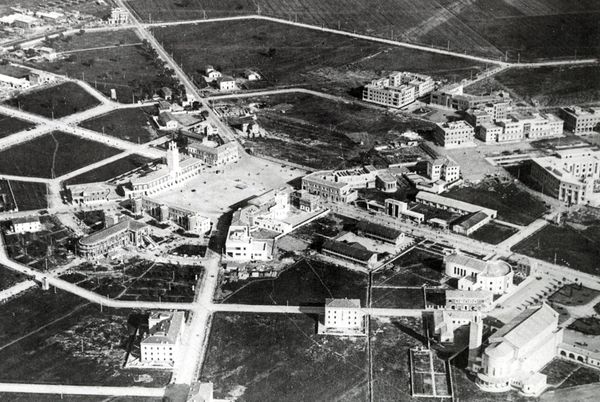
Colleferro, south-east of Rome, owes its existence to an explosives factory. In 1912 the Bombrini Parodi Delfino company turned an old sugar factory into a gunpowder works, a workers' village grew up beside it, and in 1935 the village became a municipality of its own. Part of the town bears the name of the engineer Riccardo Morandi, the città morandiana: buildings for the factory's staff in the 1930s, the church of Santa Barbara, a second plan in the 1950s.
Ivrea is the opposite case. Olivetti's industrial city, largely the work of some of Italy's best planners and architects between the 1930s and the 1960s, has been a World Heritage Site since 2018, and UNESCO calls it "a model social project". There the boss built well, and the city has lasted.
The Disney town
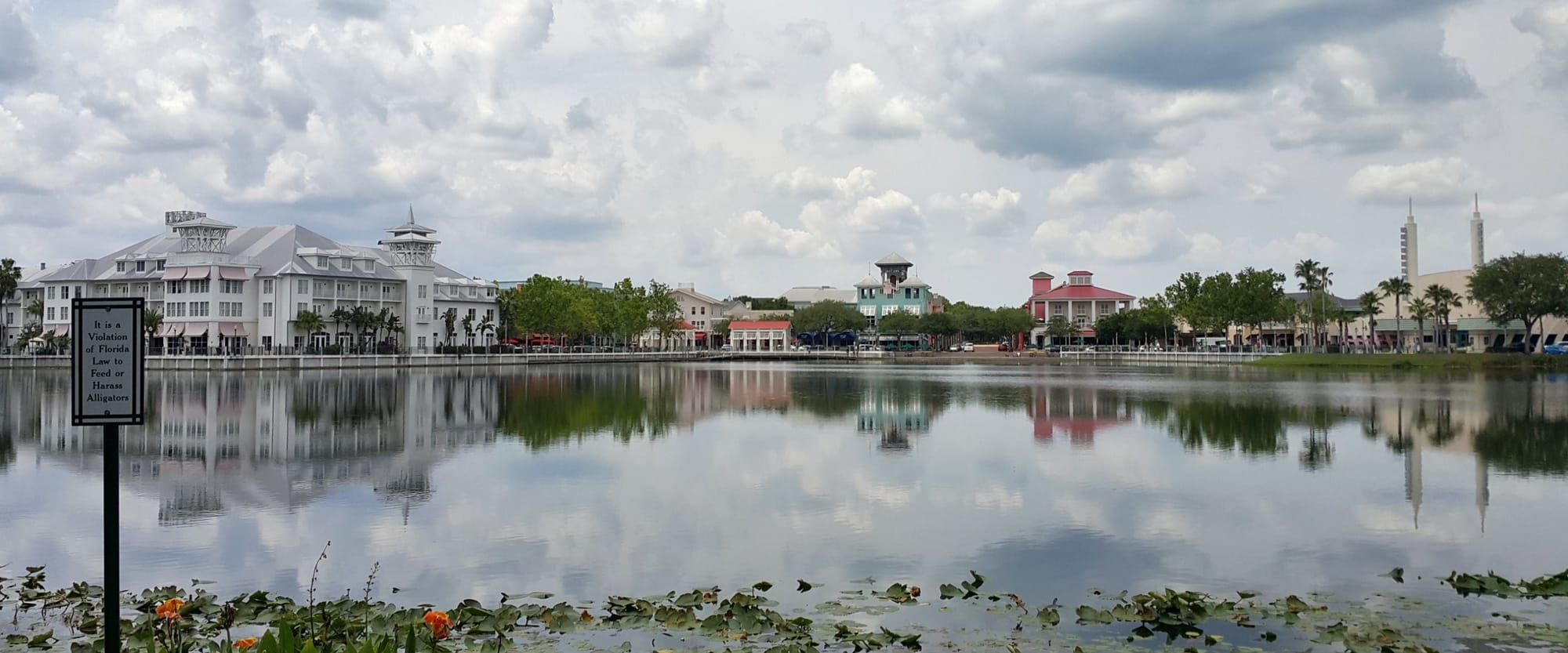
In 1996 Disney opened Celebration in Florida, a small town designed like a piece of pre-war America, on a plan by Jaquelin Robertson and Robert A. M. Stern. Within a few years the company began to pull out, and in 2016 The Wall Street Journal was reporting leaking roofs and balconies coming away from the buildings. Here the boss sold neither sleeping cars nor cotton. Disney sold the very idea of a town.
The rocket town
And the new century has new ones of its own. On 3 May 2025, on the stretch of Texas coast where SpaceX launches its rockets, the people who lived there voted, 212 to 6, to make the area a city, Starbase; the mayor is a vice-president of Elon Musk's company. In 2026 the city voted to annex more than seven thousand acres around it, against the wishes of some landowners. It is Pullman with rockets instead of sleeping cars: the company, the city and city hall are, more or less, the same people.
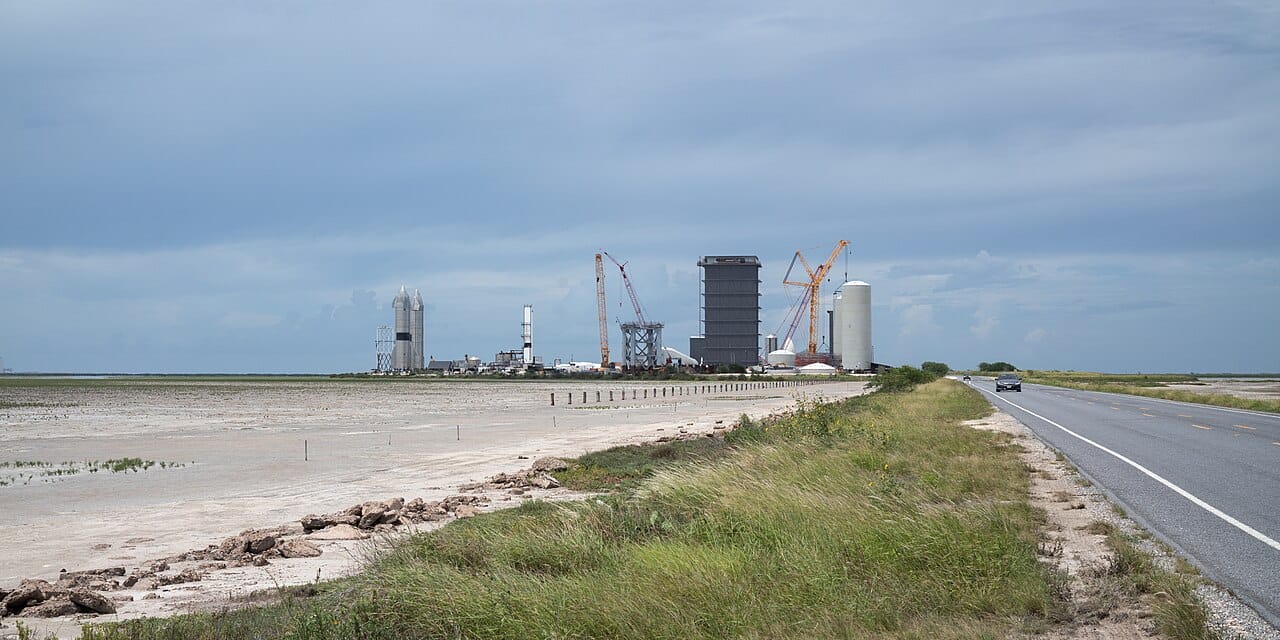
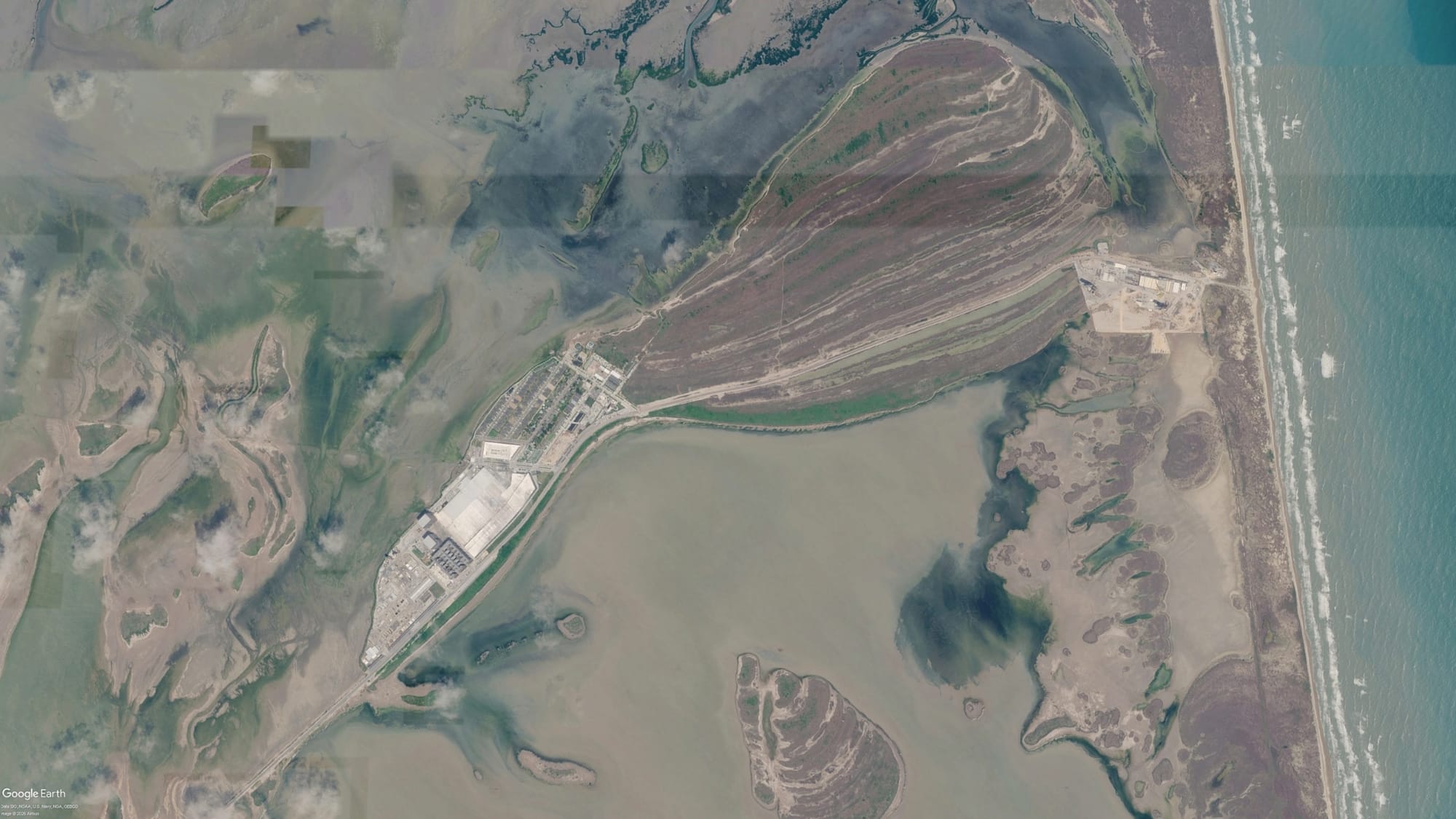
This is not a judgement on any of them. It is the same gesture as Pius's, Louis's and Peter's, by other means and with a different balance sheet.
As long as it's needed
Line them up, and these towns say something simple. The king's city outlives the king because the king had put it where the world went by, or next to a city that was already there. The boss's town outlives the boss only if there was something else underneath. Pullman had become part of Chicago, and when the company sold the houses, the houses stayed in Chicago. Crespi had only the river and the mill, and when the mill stopped, the village stayed where it was, intact, with people in the houses and the mill empty, and it tells its story to whoever passes by. Fordlândia didn't even have that.
The next chapter changes scale. Instead of a factory owner, the state, drawing a whole city on a blank sheet of paper.
Further reading
Greg Grandin, Fordlandia: The Rise and Fall of Henry Ford's Forgotten Jungle City (Metropolitan Books, 2009).
Murray Bookchin, The Limits of the City (Harper & Row, 1974). Chapter 4, "Community and City Planning", on nineteenth-century paternalism.
The village's own website, crespidadda.it, with its history and the tours.