HOW IS VENICE BUILT ON WATER?
It does not float, it does not stand on long piles, and the wood has not turned to stone. What is really under a Venetian house, from the brick down to the caranto
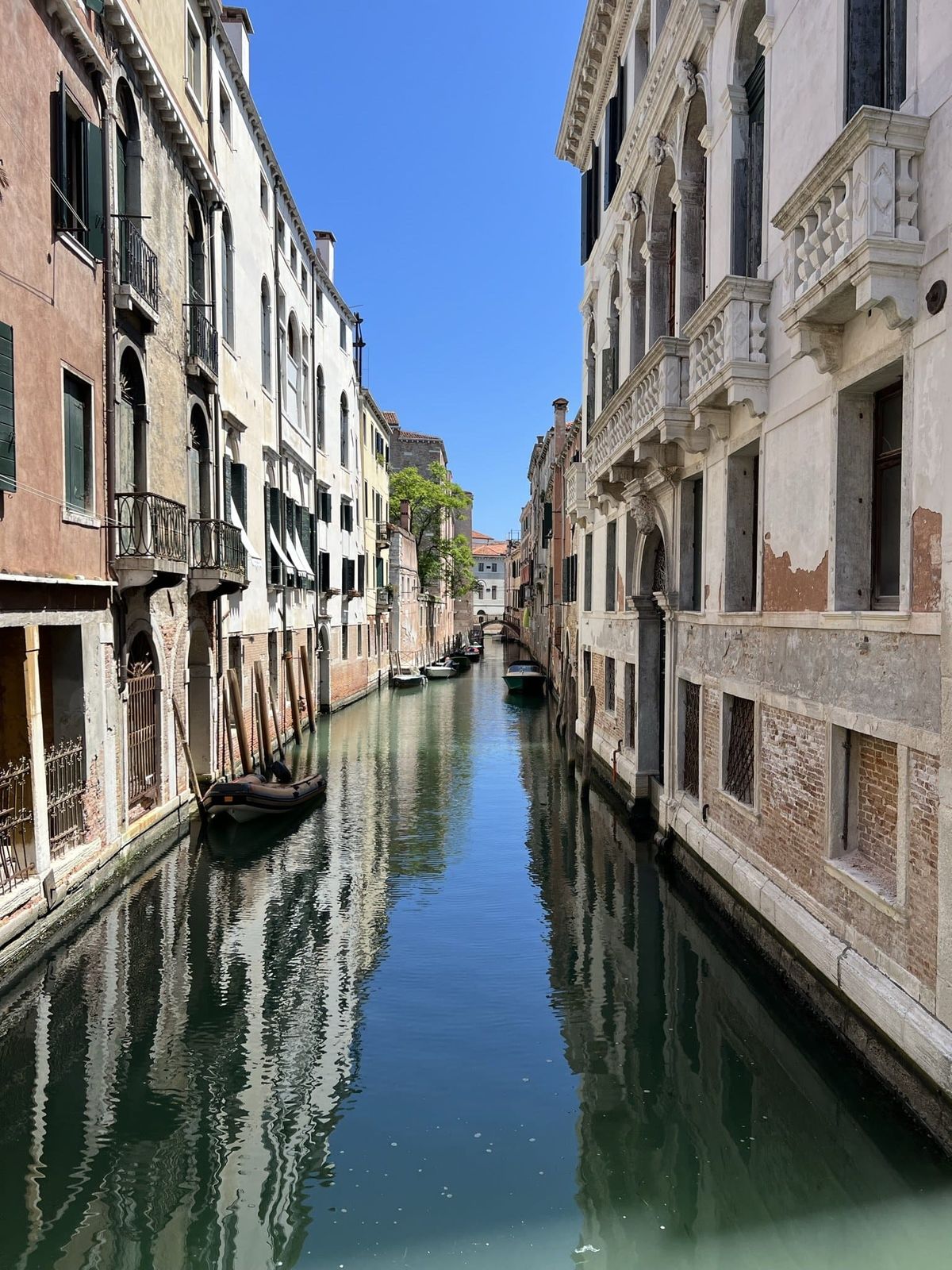
How, exactly? · It does not float, it does not stand on long piles, and the wood has not turned to stone. It stands on compacted mud, a raft of planks and a course of Istrian stone.
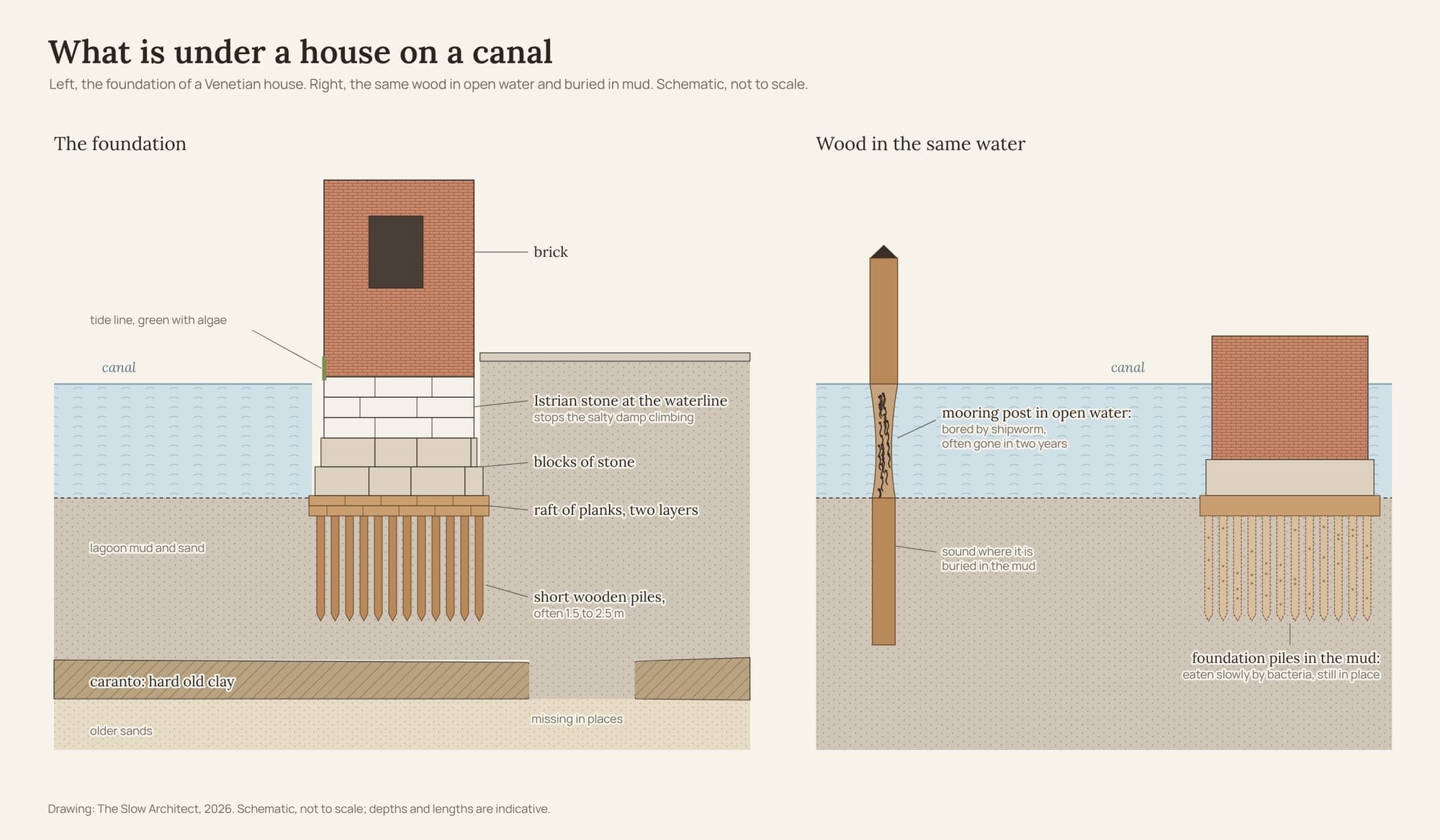
The short answer. Venice is not built on water. It is built on mud, the mud of the islands of a lagoon. Under almost all the old buildings there are short wooden piles, often only a metre and a half to two and a half metres long, driven in close together to compact the soft top layer of ground. On the piles, a raft of planks; on the raft, large blocks of stone; and where the wall meets the water, a few courses of Istrian stone, laid to stop the salty damp before it climbs into the brickwork. A few metres further down, though not everywhere, there is a hard layer of ancient clay, the caranto. The wood lasts because underground, without oxygen, fungi and insects cannot get at it. But it is not eternal, and it has not turned to stone: bacteria eat it, slowly, and many of the piles sampled have lost most of their strength. The houses stay up all the same.
That is the short answer. The one you usually hear has a million piles, wood that turns to stone, and a city that floats.
The textbook answer
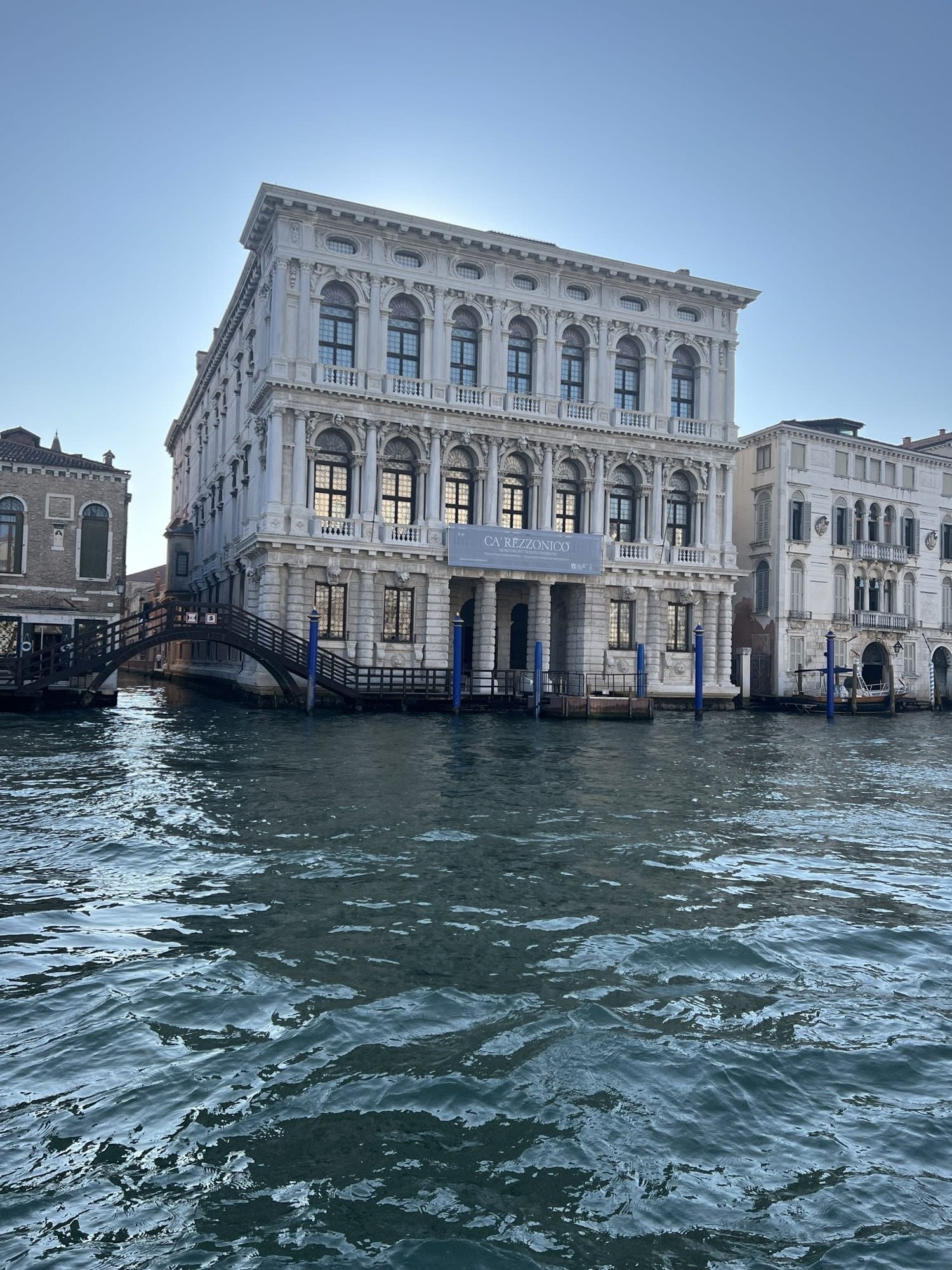
Venice rests on millions of wooden piles driven down to a layer of hard clay, the caranto. Under water, without oxygen, the wood does not rot; if anything it hardens with minerals, and over the centuries it has become almost stone. The church of the Salute alone is said to stand on 1,106,657 piles.
It is a good story, and part of it is true: the caranto exists, the piles exist, and without oxygen wood lasts far longer. The rest needs correcting.
Where the textbook goes wrong
The piles are not long. Excavations and boreholes almost always find short piles: a metre and a half, two and a half, five at the most, between ten and thirty centimetres across. Most studies describe their main job as compacting the soft ground near the surface, not reaching down to something firmer. Whether they reach the caranto depends on where you are. Under St Mark's Campanile, according to the Procuratoria, the body that looks after the basilica, they were a metre and a half long, and there they were driven into a dense layer of clay some five metres down. Under the bell towers of the Frari and of Santo Stefano, when they were studied, there was no trace of the caranto at all, and the piles stopped short of the firmer sand below.
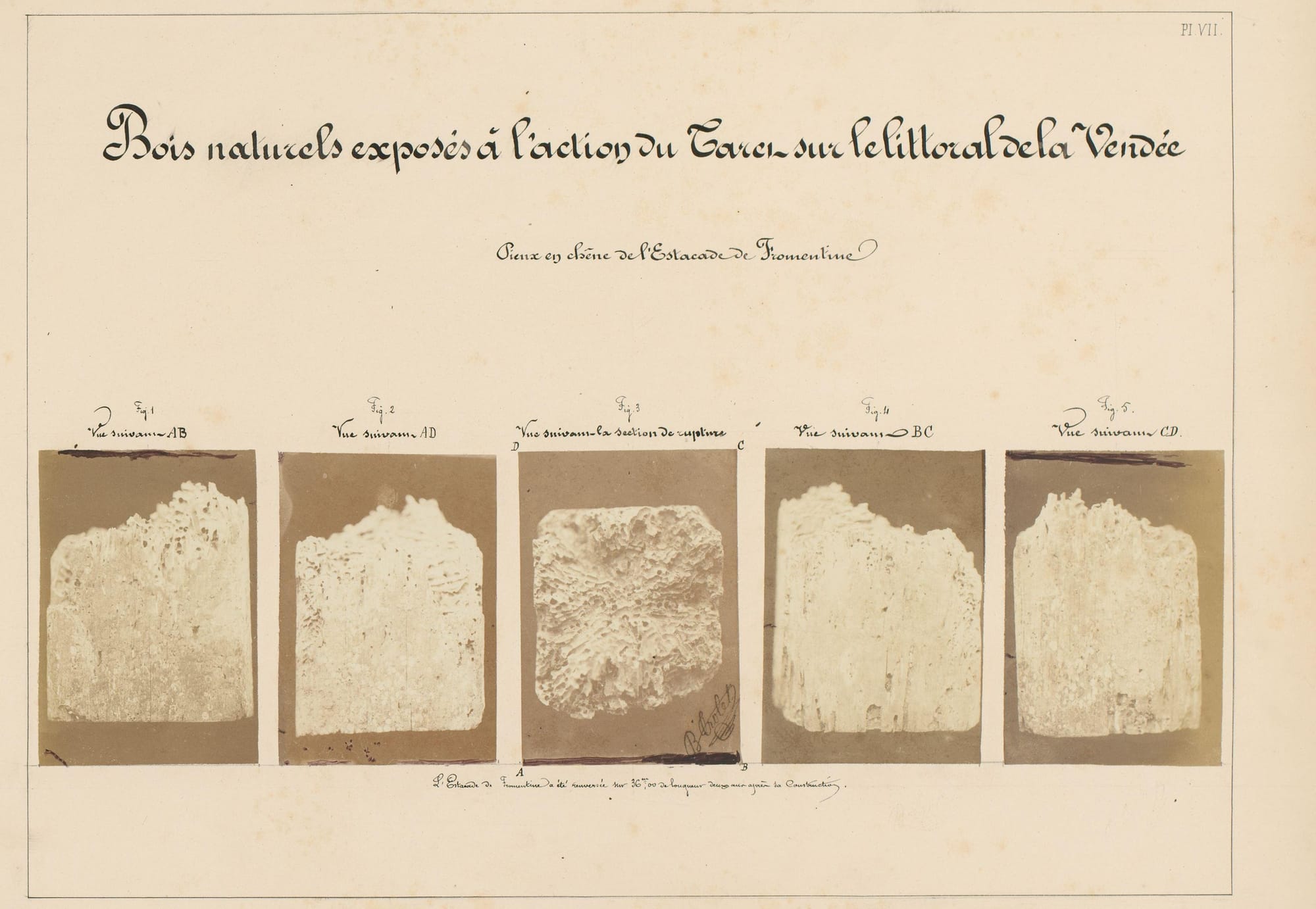
The wood has not turned to stone. It is true that, without oxygen, fungi and insects leave wood alone. But bacteria that live without oxygen do not, and they eat the cellulose. Studies by Italy's National Research Council in 2016, and more recent ones by the University of Padua and TU Delft, on samples taken from foundation piles, found decay in most of the samples, in some cases severe: some pieces are down to a third of their original density, and their compressive strength can be eighty or ninety per cent below that of fresh wood. The consortium that coordinates research on the lagoon calls the idea that a wooden pole in the mud lasts for ever a legend. And yet the houses stand, and the CNR researchers who found the decay note that it was apparently not related to the stability of the buildings.
The Salute's million. The figure that goes round, 1,106,657 piles, is usually given without a source. The English Wikipedia says a million, and cites a travel book from 1898.
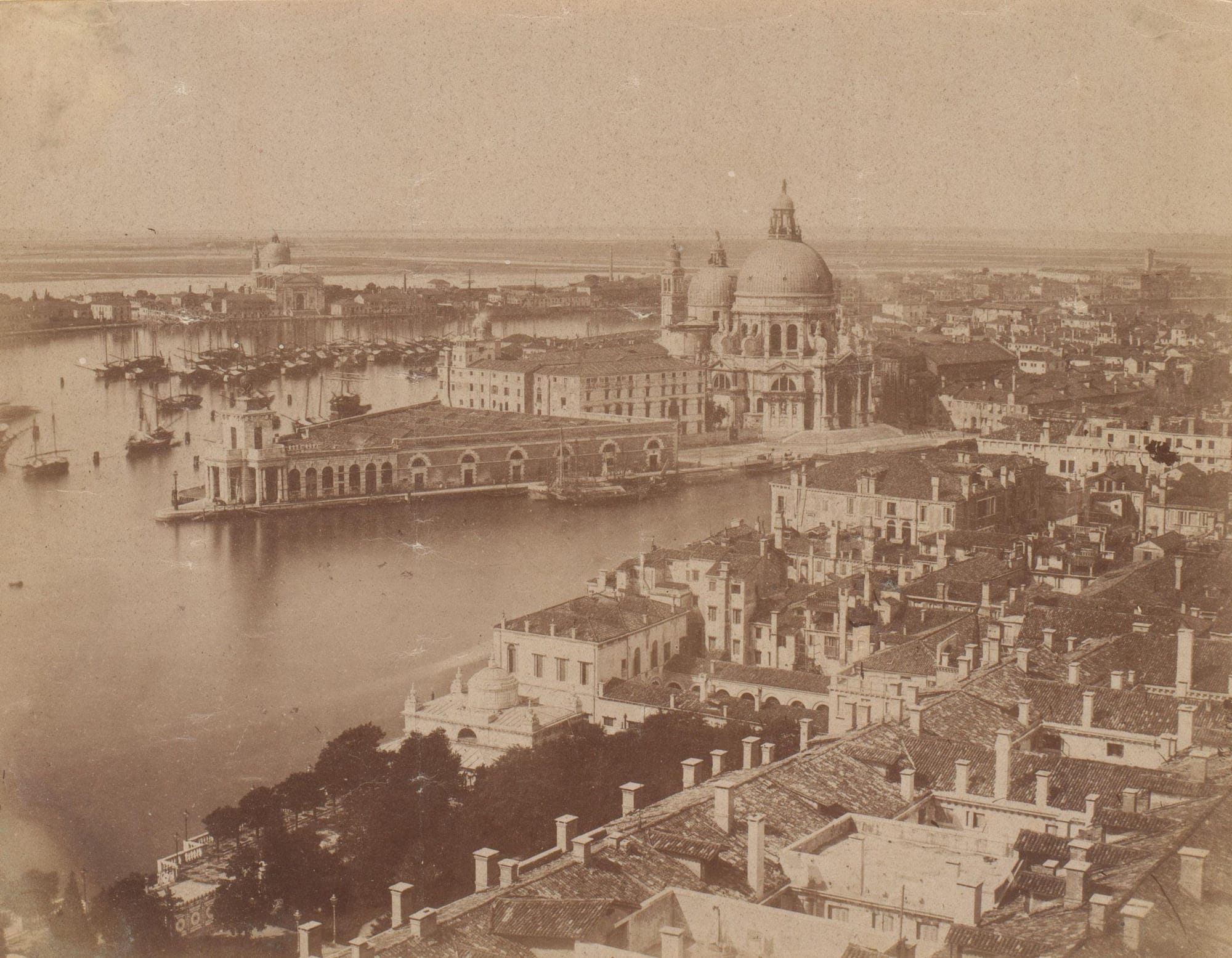
And Venice does not float, not even in a manner of speaking: it rests on the ground.
What is underneath, piece by piece
The lagoon. There are two kinds of ground under Venice. On top, a young layer of lagoon mud and sand, between eight and fifteen metres thick. Below it, the old plain of the last Ice Age, when the sea was much lower and rivers ran here: its surface lay open to the air for thousands of years, turned into a hard, lime-rich soil, and was buried when the sea came back. That is the caranto, a layer of compact clay a metre or two thick. Under the old city it lies a few metres down, about five under St Mark's Campanile; in some places it is deeper, in others it is missing. The islands the city stands on number 118 according to UNESCO, 121 according to others: it depends on how you count.
The foundations. This is how a Venetian house was built. Piles were driven close together into the mud: alder, larch, oak, pine, elm. On the piles went a raft of planks, in two layers; under the bell tower of the Frari it is between forty-five and sixty centimetres thick. On the raft, large blocks of stone. And where the wall meets the water, since at least the fourteenth century, a few courses of Istrian stone, a white, dense limestone from the other side of the Adriatic that lets very little water through: it is there to stop the salty damp before it climbs into the brickwork. Above that, the brick.
The timber. You will sometimes read that the piles came from the Montello and the Cansiglio, the forests the Republic reserved for itself from 1471 and from 1548. The sources tie those forests to the Arsenale, oak for hulls and beech for the oars of the galleys, not to the piles; and beech is not among the woods found under the houses.
The numbers you can count. For the Rialto Bridge, built between 1588 and 1591, the figure usually given is twelve thousand piles. When St Mark's Campanile collapsed on 14 July 1902, its old foundations were found to be intact. In the rebuilding they were enlarged from 220 to 410 square metres with about three thousand new larch piles, and the tower reopened on 25 April 1912. Between 2007 and 2013 the old and new foundations were tied together with titanium bars, because they were not working as one.
A city that takes water away. Venice was made not only by driving piles but by moving water. In the nineteenth century forty-four stretches of canal were filled in, six kilometres in all: the rii terà, which are streets today. The canals that are left fill up with mud, a couple of centimetres a year, and have to be dredged; between 1965 and 1995 hardly anyone dredged them. And the Republic, which from 1501 had a magistracy for its waters, diverted the rivers that were silting up the lagoon: the Brenta in 1507 and again in 1610, the Piave in 1664, the Sile in 1683.
A sea that rises. In the twentieth century Venice lost about twenty-four centimetres relative to the sea. Part of it was man-made: from the mid-1920s, wells pumping water from underground in Venice and Mestre made the ground sink faster, and between 1950 and 1970 alone it went down by about twelve centimetres. The wells were banned in the early 1970s. The rest is the nature of the place: ground that settles by itself, and a sea that rises. On 4 November 1966 the city went under water. Today the three inlets of the lagoon have MOSE, gates that lie on the sea bed and rise when a tide of about 110 centimetres or more is forecast. Its caissons at San Nicolò, on the Lido inlet, stand on concrete piles nineteen metres long. Under the houses, the piles are a few metres long, and made of wood.
A detail nobody notices
In the lagoon and the canals you see wooden posts everywhere: the bricole that mark the channels, the poles that boats are tied to. They are wood, like the piles under the houses. But the ones standing in open water are bored through by the larvae of the shipworm, a mollusc that feeds on wood, and many mooring piles now last barely eighteen to twenty-four months. The ones driven into the mud, under the palaces, have lasted for centuries. The same water, wood in both cases: what saves the ones under the houses is the mud.
Where to see it
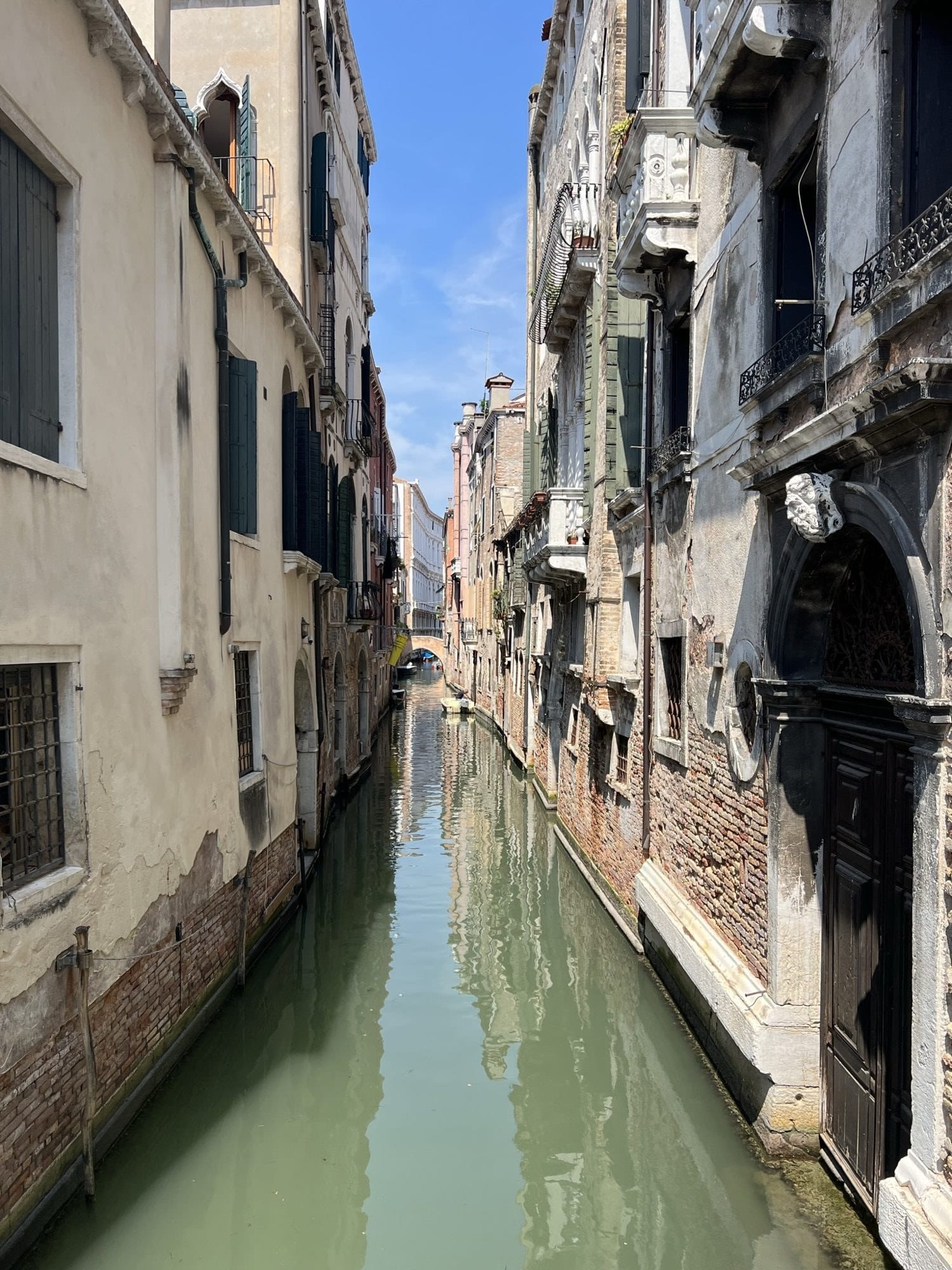
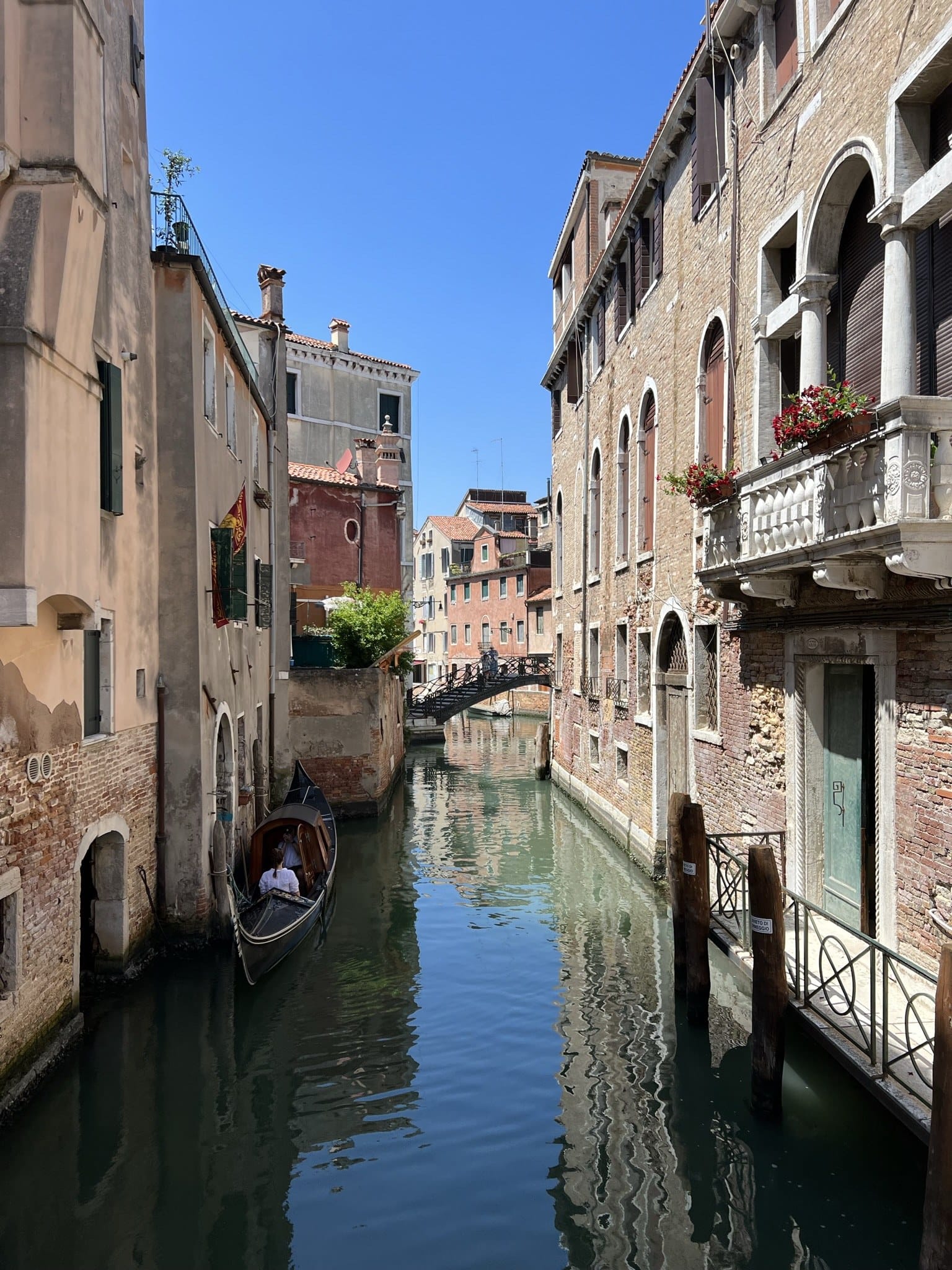
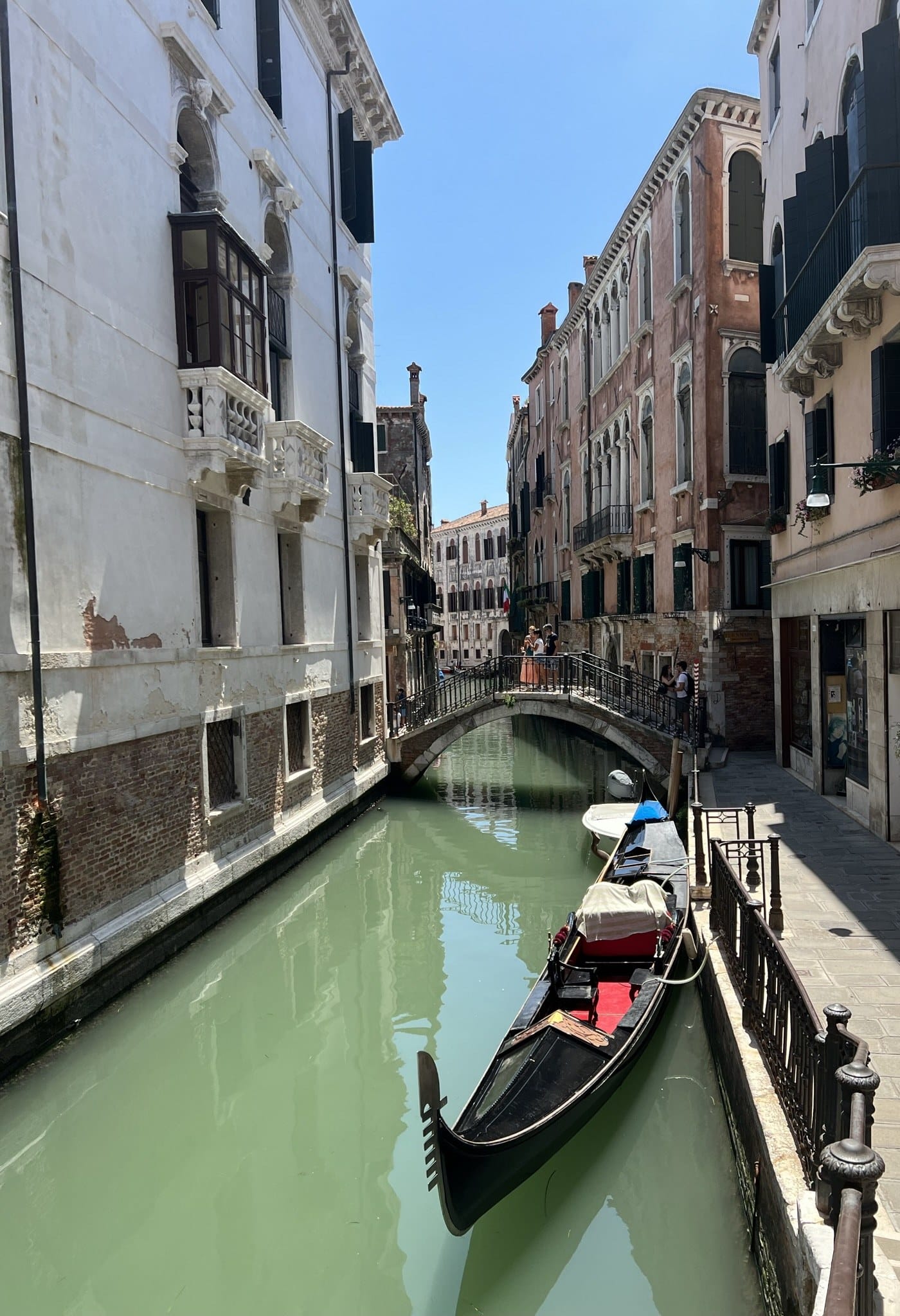
At low tide, from any fondamenta, the paved walks along the canals. Look at where a house meets the water: the white band of Istrian stone, the green line of algae, and above them the walls, where the salt, carried higher by the floods, still makes mortar and plaster crumble, sometimes as high as the first floor. The foundation piles themselves almost never show: they come to light only when a canal is drained for works, and then it is worth stopping. St Mark's Campanile stands on the foundation enlarged when it was rebuilt, from 1903; the bell tower of the Frari, where no caranto was found, had its foundation strengthened in 1904 with a palisade of larch piles. If you are in Venice for the Biennale, you walk on all this all day, between the Giardini and the Arsenale.
…, Exactly? answers one question about a building, properly. If there is one you have always wondered about, reply to any Slow Letter and ask.
Sources: M. Jamiolkowski, G. Ricceri, P. Simonini, "Safeguarding Venice from high tides: site characterization & geotechnical problems", 17th International Conference on Soil Mechanics and Geotechnical Engineering (2009); G. Gottardi, A. Lionello, C. Modena, "Influenza delle caratteristiche di fondazione sulla stabilità dei campanili di S. Stefano e dei Frari a Venezia", Quaderni IUAV 54 (2008); Cavaggioni et al., Loggia 22–23 (2010); Donnici et al., "The Caranto Paleosol and Its Role in the Early Urbanization of Venice", Geoarchaeology 26 (2011); N. Macchioni, B. Pizzo, C. Capretti, "An investigation into preservation of wood from Venice foundations", Construction and Building Materials 111 (2016); G. Pagella, T. Urso, M. Mirra, S. Naldini, J.-W. van de Kuilen, "Traditional wooden foundation piles in Amsterdam and Venice: techniques for the assessment of their state of conservation", Wood Material Science & Engineering (2025); G. Pagella, T. Urso, "Material and Environmental Factors Impacting the Durability of Oak Mooring Piles in Venice, Italy", Sustainability 17 (2025); M. Šimunić Buršić, D. Aljinović, S. Cancelliere, "Kirmenjak – Pietra d'Istria: a preliminary investigation of its use in Venetian architectural heritage", Geological Society Special Publication 271 (2007); L. Falchi, P. Lucéro Gomez, E. Zendri, "On the contribution of tidal floods on damp walls of Venice", International Journal of Disaster Risk Reduction 110 (2024); CORILA, "The wooden foundations of the buildings in Venice" (2012); Insula, Quaderni (1999–2002); Procuratoria di San Marco, "Bell tower"; "Storia delle diversioni dei grandi fiumi", annex filed with the Italian Ministry of the Environment (2020).