The empty stage
A confession: the ideal city of Sabbioneta disappointed me. A winter weekend, an empty theatre, and the sunset that finally lit the stage.
Now that the piece on Sabbioneta is online, I owe you a confession: Sabbioneta disappointed me.
It was January 2014, a weekend with Kat. Parma, Sabbioneta, Modena, the Ferrari museum. Parma and Modena are cities that live on their own account: you arrive and they're already busy doing something else, they have no time to wait for you. Sabbioneta, on the other hand, was waiting for us. Deserted. A light sleet on the roofs, the streets empty, the monuments open, someone sitting in each ticket booth. It felt like a city that lives for the people who come to look at it. And that day, there was no one even looking.
I know you're not supposed to say this. It's a World Heritage Site, it's the ideal city, it's one of those things an architect studies as a masterpiece, and the things you study as masterpieces you expect to love. I didn't love it. I admired it, which is something else. Admiration stays outside. Love goes in.
Then the sunset came.
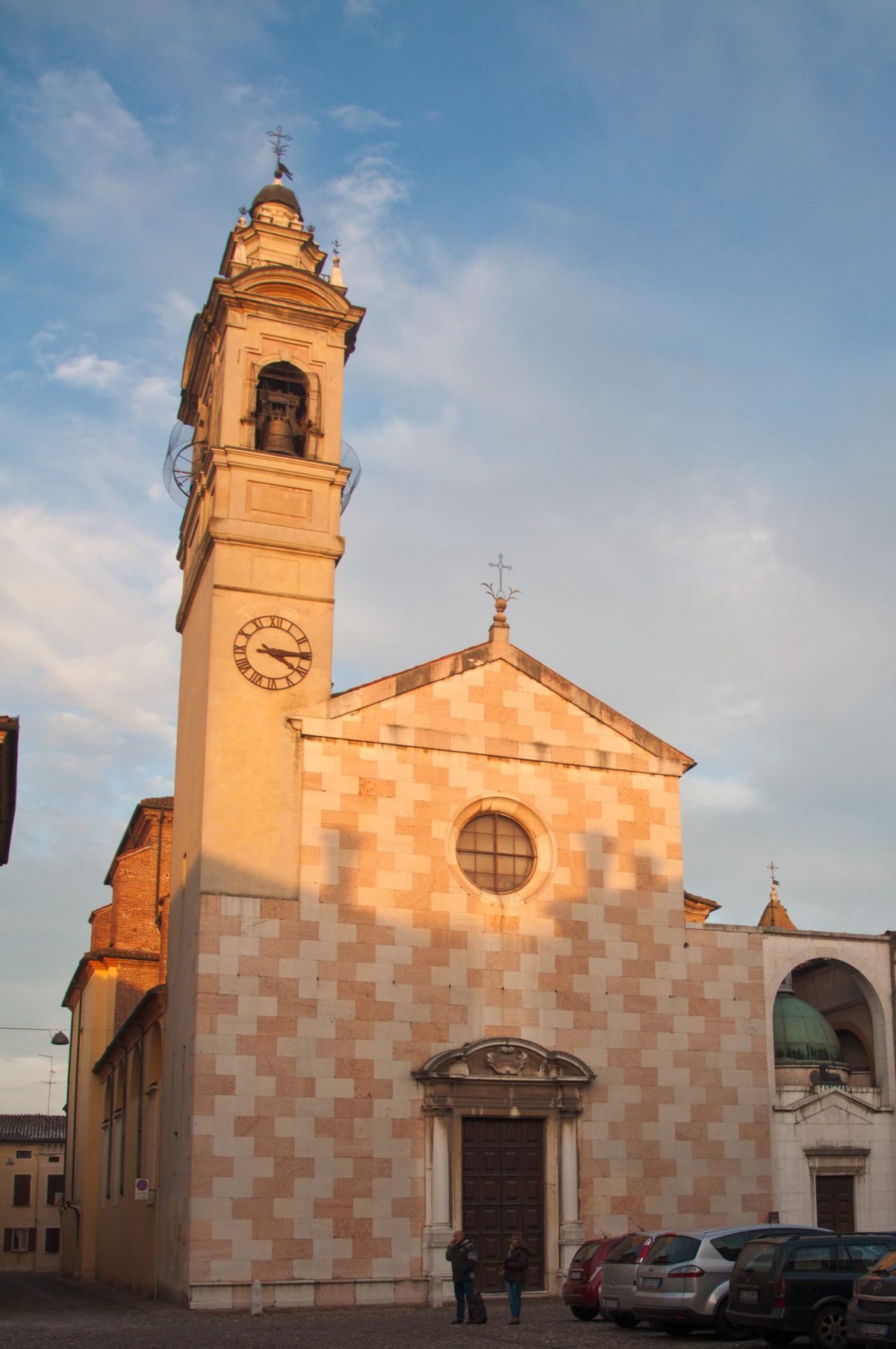
I hadn't expected it, and I've never forgotten it. The low winter light caught the façade of the Assunta, the one chequered in white and pink, and set it alight. The walls of the houses turned orange, then pink. The sleet on the roofs glittered. For a few minutes, Sabbioneta was perfect.
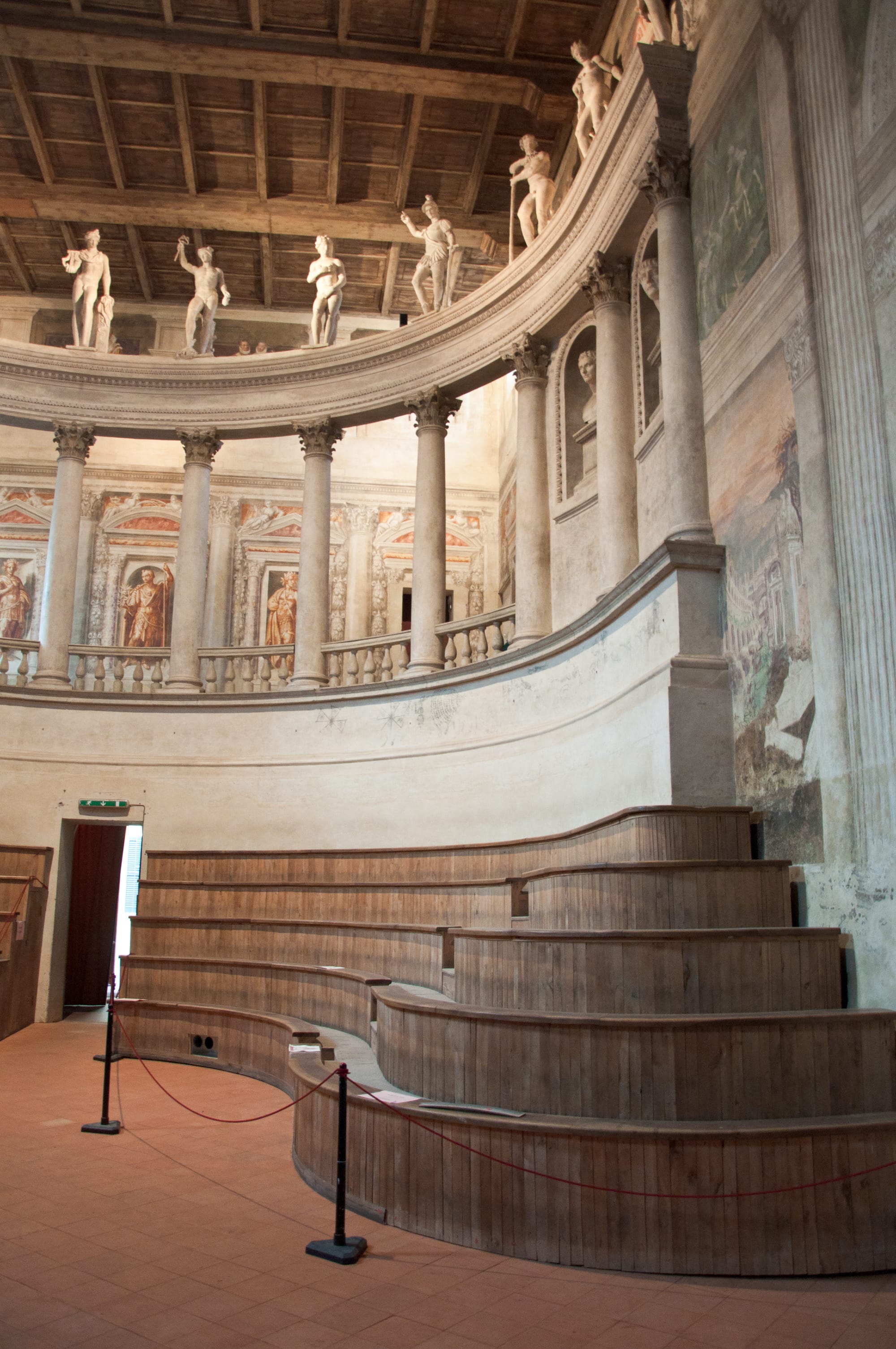
And I think I understood why it happened just then. Vespasiano Gonzaga built a city that is also a stage set: measured streets, studied perspectives, even a real theatre, Scamozzi's, with a wooden city on the stage. A city built to be looked at needs only one thing to work: the right light. At sunset the stage lit up. All that was missing were the actors.
I don't know if it's fair to call it a city without a soul. Four thousand people live there, and if I didn't see their lives in those hours, that doesn't mean they weren't there. But I know what I felt: that I was walking through a city that was waiting for someone. Someone who, in four centuries, has not yet arrived.
We left in the dark. I remember many things from that weekend, but of Sabbioneta I remember above all that light. Perhaps that's the fate of every stage set: in the end, what stays with you is the lighting, not the play.
Giulio Romano — The Slow Architect
P.S. After a summer of silence, the blog is back. The long piece on Sabbioneta — the Ideal City of Urbino, Le Corbusier, the Cretto of Gibellina, and why cities live by the where and not the how — is here: SABBIONETA — THE CITY TOO BIG FOR ITS LIFE . And there's a new page, The Slow Library: the books behind all of this.