Tivoli Day Trip from Rome: Villa d'Este, Hadrian's Villa, and How to Do Both
Two villas three kilometres apart, an emperor and a cardinal, water and ruins. Which one to choose if you have to, the order to do both in, tickets and hours, and the waterfall if you still have an hour.
Is Tivoli worth a day trip? The short answers
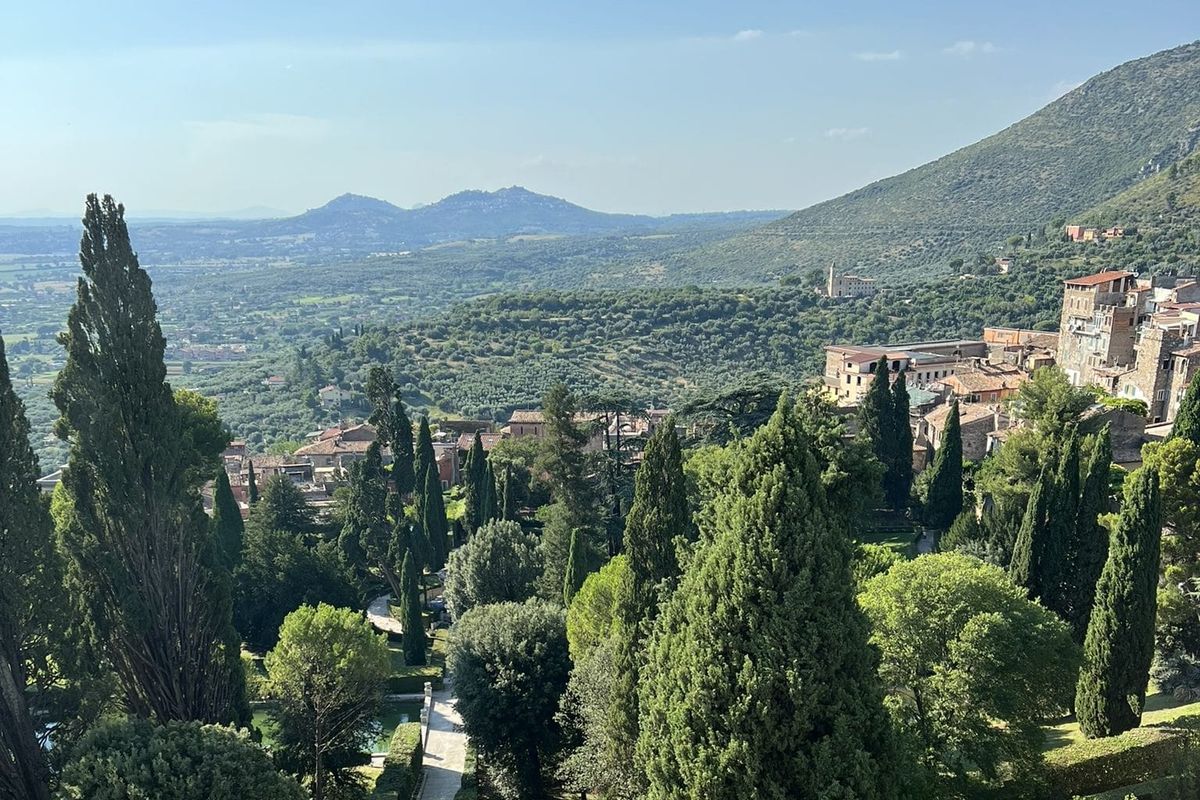
Is it worth it? Yes, and both villas are. Hadrian's Villa I saw for the first time at primary school, and went back to at university, when I was studying ancient history, to understand the size of the Romans: it is always worth it. Villa d'Este I have seen many times, and it is the more theatrical of the two, more winking, more grandiose: the water, the view and the frescoes are more recent and more intact, and they put on a show.
How long? Two hours at Hadrian's Villa, two at Villa d'Este, half an hour on the road between them, lunch in the middle: a full day that ends at five. With one villa only, half a day and the rest in Tivoli.
Train or car? I have always done them by car, and it is the easiest way to do both. The train from Roma Tiburtina reaches Tivoli in an hour, then a quarter of an hour uphill on foot; the Cotral bus from Ponte Mammolo, the Via Prenestina one, stops three hundred metres from Hadrian's Villa. Between the two villas there is the number 4 bus (see "Getting there").
How much? €15 per villa, €2 from 18 to 25, free under 18. The Villae Pass, €30, is valid for three days in both villas plus the Sanctuary of Hercules Victor: it costs the same as two tickets, so anyone doing both takes it without thinking.
What to combine it with? The other villa. Then Villa Gregoriana, the waterfall in the gorge below the town, easier from Villa d'Este; in summer, the thermal pools at Tivoli Terme.
Don't miss: at Villa d'Este the inside, the frescoed rooms of the palace, before the garden: don't skip it, it is magnificent. At Hadrian's Villa the scale model, at the entrance, before everything else.
Skip: nothing in either. If you have to cut, cut the town, not the villas.
Avoid: summer at Hadrian's Villa, where there is no shade; Monday morning at Villa d'Este, which opens at two; the first Sundays of the month, free and full.
This is the practical guide. Why Villa d'Este is a hydraulic machine and a map of the road to Rome is in the essay: Villa d'Este: Water as a Building Material. The frescoes, the automata and the lies of the palace are in the second one: Villa d'Este, the Other Side: Frescoes, Automata, Mysteries. An essay on Hadrian's Villa will come; here are the instructions, and my memories.
Which villa, if you have to choose one
I won't tell you, because I have done both more than once and have never chosen: the season tells you. Villa d'Este works all year round, and was designed for exactly that, to escape the heat: in summer it is the coolest place an hour from Rome. Hadrian's Villa in summer is a punishment, kilometres of ruins without a tree, and its season is the other one, October to April, with the low light on the brick. Then there is temperament. Whoever wants the effect, the water that leaps, the fountains that play and the painted rooms, chooses Villa d'Este and doesn't regret it. Whoever wants to understand what Rome was when it ran the world, and has patience for ruins, chooses Hadrian's Villa, which doesn't put on a show but gives you the measure: an emperor's villa was the size of a city.
If you have a whole day the problem doesn't exist: you do both, in the order below.
Getting there, and the order of the day
By car. From Rome it is the A24 motorway, Tivoli exit, forty minutes, fifty with traffic. Hadrian's Villa is in the hamlet of the same name, on the flat, two and a half kilometres after the toll booth along the Via Maremmana Inferiore, with a paying car park in front of the entrance. Villa d'Este is at the top, in the centre of Tivoli, which is a restricted traffic zone: you leave the car in the multi-storey car park at the foot of the Rocca Pia, a few hundred metres from the entrance in Piazza Trento, or in Piazza Garibaldi, both paying. I have always done it this way, with the car, and it is how you do both without watching the clock.
Without a car. The regional train from Roma Tiburtina, some from Termini too, reaches Tivoli in an hour, some in three quarters; the station is at the bottom, and you walk up to Villa d'Este in a quarter of an hour. For Hadrian's Villa, from the station or from the centre, there is the local bus, the CAT 4 or 4X, which stops in front of the entrance. Otherwise metro line B to Ponte Mammolo and the Cotral bus to Tivoli, which takes three different roads: for Hadrian's Villa take the one via the Via Prenestina, which stops three hundred metres from the entrance, because the ones via the Via Tiburtina and via the motorway stop on the Tiburtina and leave you two kilometres on foot; in Tivoli they all end at Largo delle Nazioni Unite, a few minutes' walk from Villa d'Este. Read the runs and times on the Cotral website the day before, above all for the way back.
The order. Hadrian's Villa in the morning, at opening time, when it is cool and empty, two hours; lunch; Villa d'Este from two, with the Organ playing at half past two and half past four, and the garden in the low light, which is the light it was made for. On Mondays the order is forced, because Villa d'Este opens at two. If you come by train you do the opposite, Villa d'Este first, which is a step away, and then the bus to Hadrian's Villa: it works, but in summer it puts you among the ruins at three in the afternoon, and I advise against it.
Hadrian's Villa, in order
It is the villa the emperor Hadrian had built for himself from 118 onwards, at the foot of Tivoli, on the flat, and the building sites went on until his death, in 138, a World Heritage Site since 1999: not a house but a city, with baths, libraries, theatres, an island and a canal, at least a hundred and twenty hectares, of which about forty can be visited. Today it is ruins and pines, and the first thing to do, before any ruin, is the scale model, in the pavilion just after the entrance, before the Pecile: five minutes in front of the model and everything you see afterwards has a place. Without it, it is a field of bricks.
Then the tour, two hours, with comfortable shoes and water, in the order the plan puts them: the Pecile, the great enclosure with the pool, which was the place for walking; the Maritime Theatre, the round island surrounded by water where Hadrian withdrew, the most beautiful thing in the villa; behind it, the Palace and the Piazza d'Oro, if you have the legs; then, going down, the baths, the Small ones, which despite the name were among the most luxurious buildings of the villa, and the Great; and at the very end the Canopus, the long canal with the statues around it and the Serapeum at the end, which is the postcard and the farthest point from the entrance, with the Mouseia beside it, the small museums with the sculptures found in the canal. It is all in the open, the shade is scarce and the paths go up and down: from May to September, a hat and opening time. Some areas may be closed for restoration: they tell you at the ticket office.
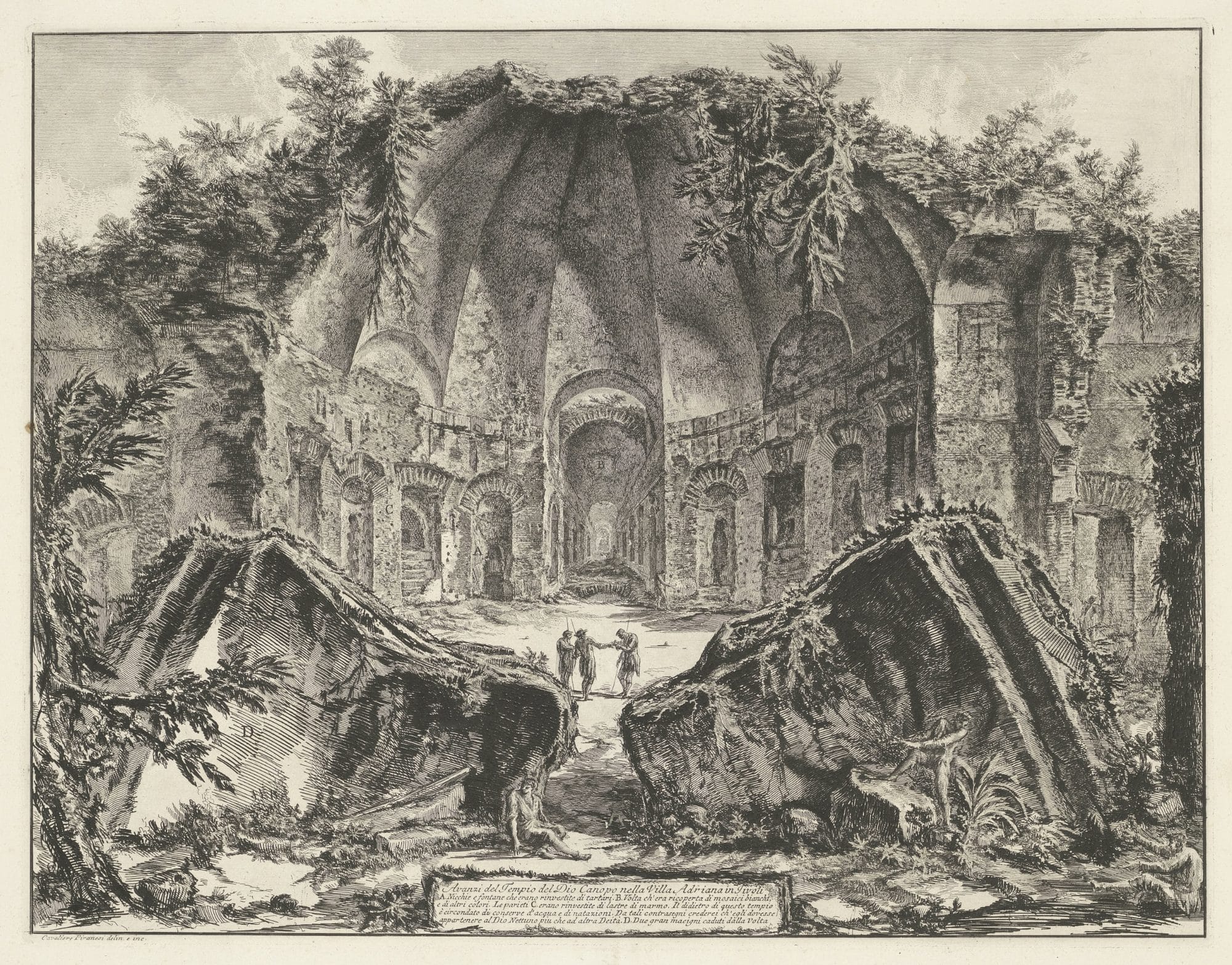
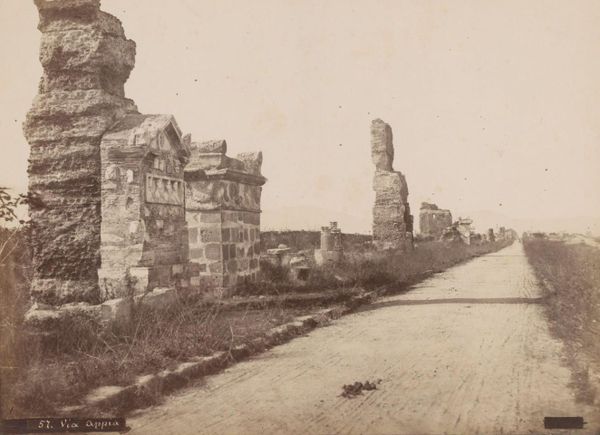
Of Hadrian's Villa I have no photographs of my own, and in their place I put the images of those who looked at it before me, and a piece of advice: before you go, watch The Belly of an Architect by Peter Greenaway, from 1987, an absolute masterpiece, with stupendous views of Rome and of Hadrian's Villa. You arrive among the ruins with your eyes already open.
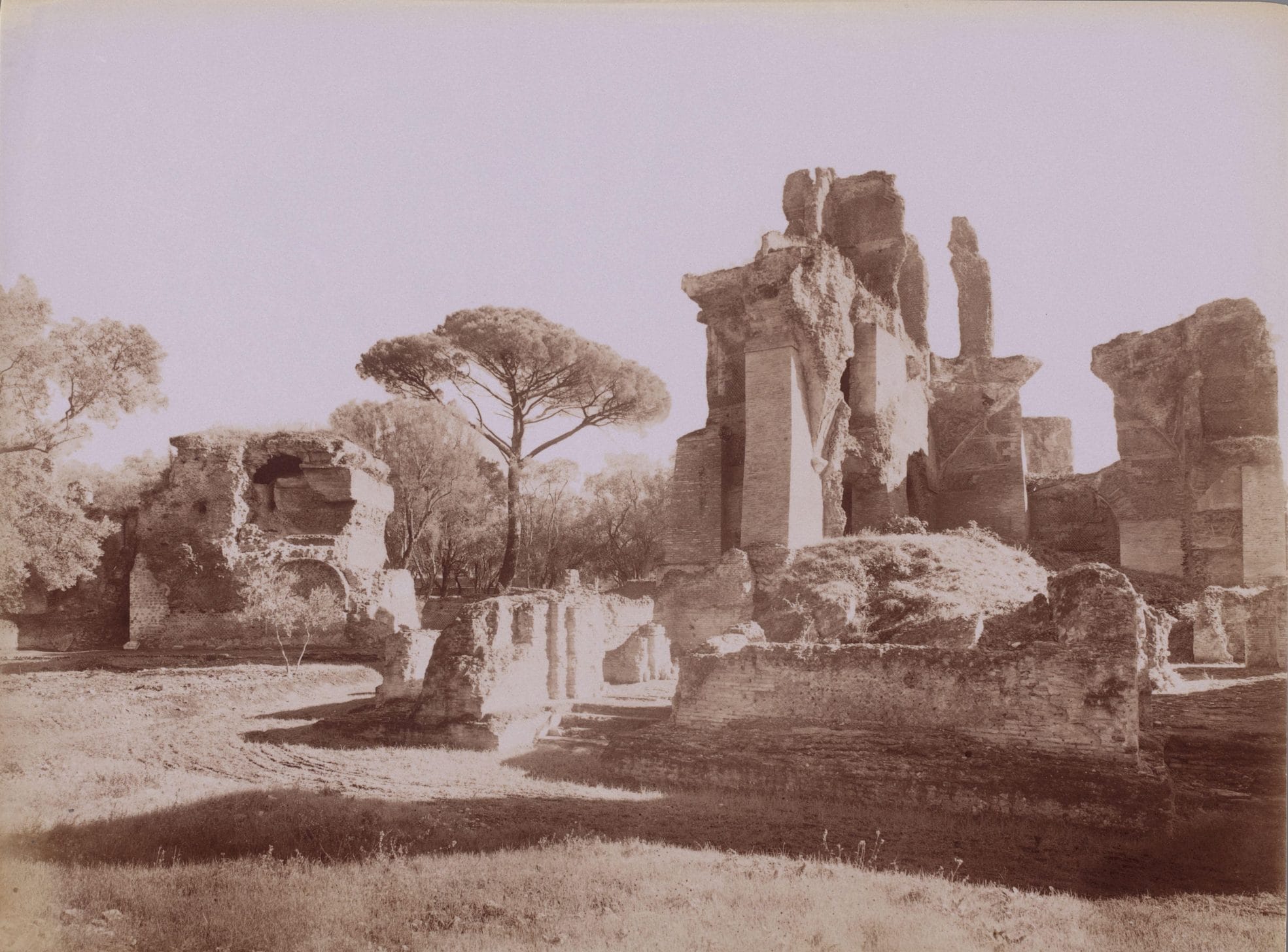
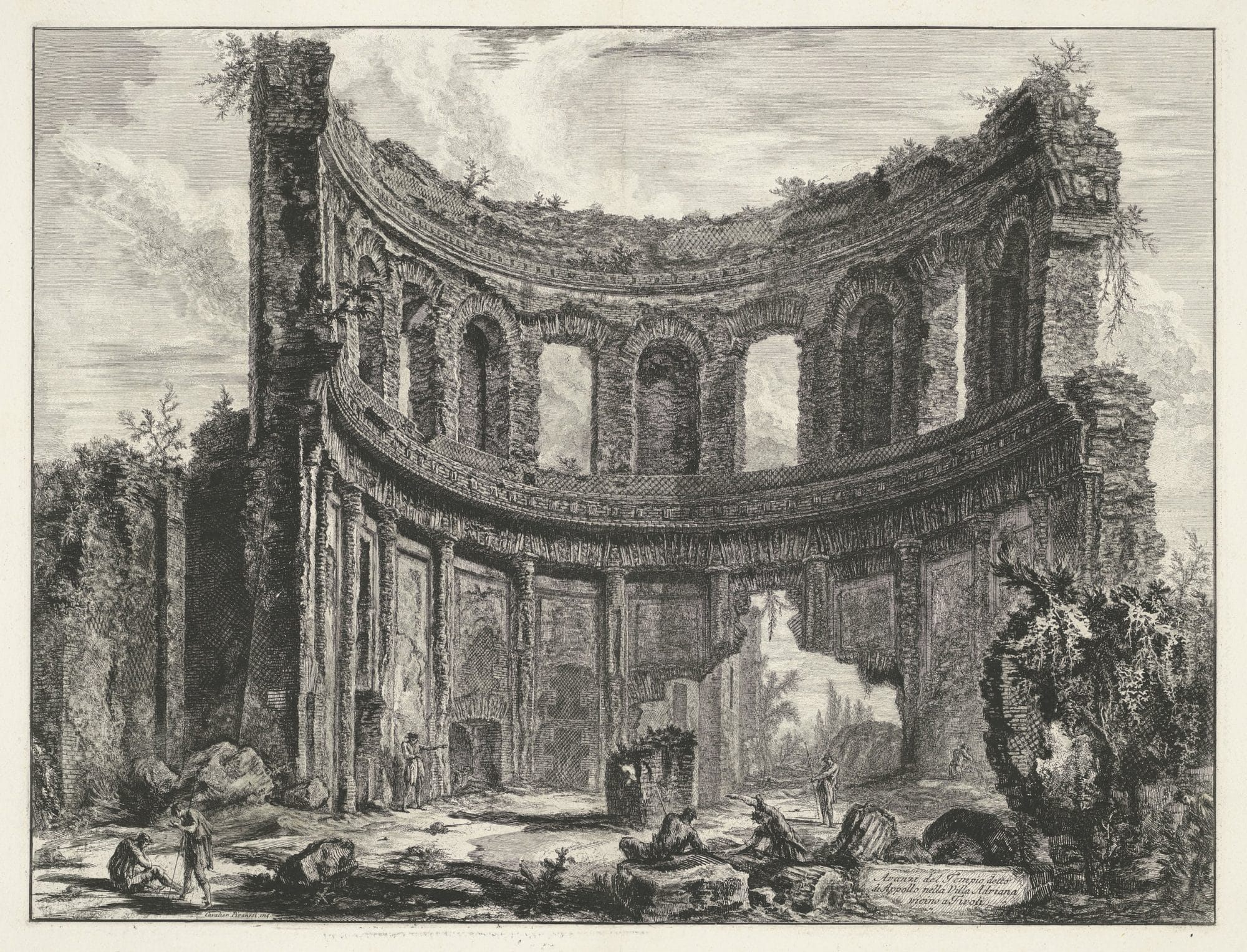
Hadrian's Villa before the tourists: the Latin Library in a photograph by the Anderson firm, late nineteenth century, and the round hall of the Accademia, in the upper part of the villa, off today's visitor route, which Piranesi called the Temple of Apollo
Villa d'Este, in order
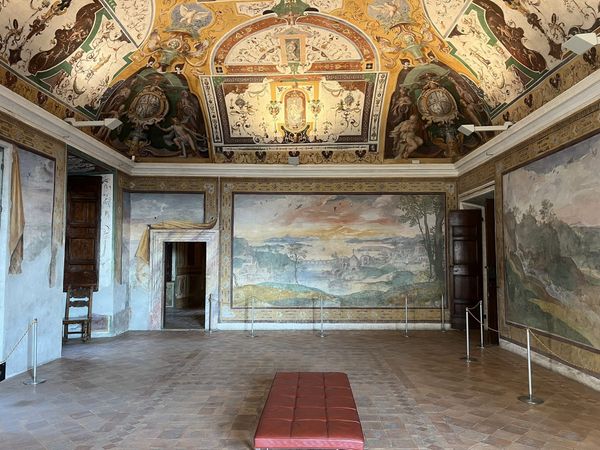
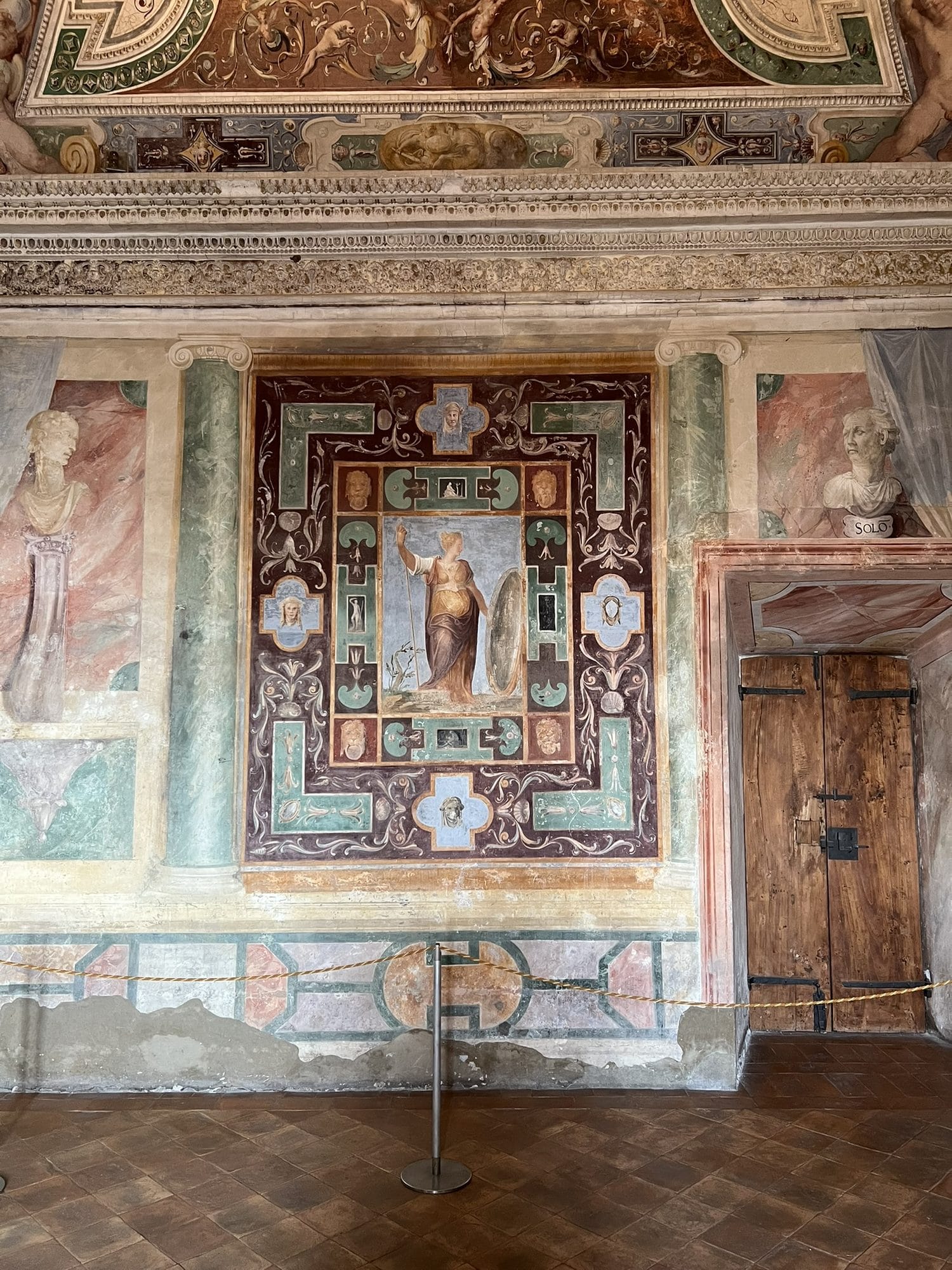
Inside, first. You enter through the palace, and the palace is not to be skipped: the apartments of Cardinal Ippolito d'Este are painted from top to bottom, rooms that tell the story of the villa's water before you have even seen it, with fake views, fake busts, and the real landscapes of Tivoli at the windows. It is magnificent, and most people run through it to get to the garden. Do the opposite: half an hour inside, then out. The why of each room is in the second essay.
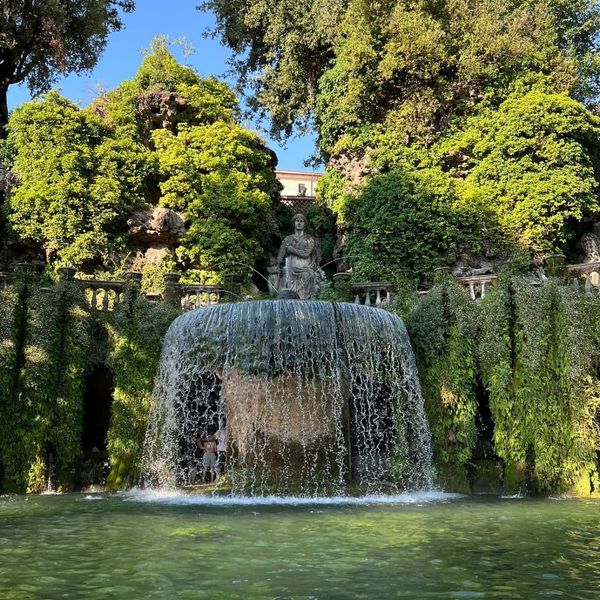
Outside, downhill. From the palace you come out onto the terrace, with the plain as far as Rome, and the garden is all below you, in terraces. You go down. The Ovato, the big fountain on the left, with the cascade you walk behind; the Hundred Fountains, the avenue of jets that crosses the garden and is the thing to photograph at an angle, not head on; at the end of the avenue the Rometta, Rome in miniature with the Tiber and the island; in the centre the Dragons; and at the bottom the Organ, which really plays, by water, every two hours from half past ten: at 12:30, at 14:30, at 16:30. Be in front of it five minutes early. Below, the great basin of Neptune and the fishponds, and Bernini's Bicchierone. You climb back up slowly, because the garden was designed to be climbed looking at the palace.
Time. Two hours, with the palace. The garden closes according to the month, in winter at five, and the last entry is an hour before: in November be in by four. After heavy rain, when the Aniene swells, the water of the fountains can be turned off: if it has rained for days, phone first.
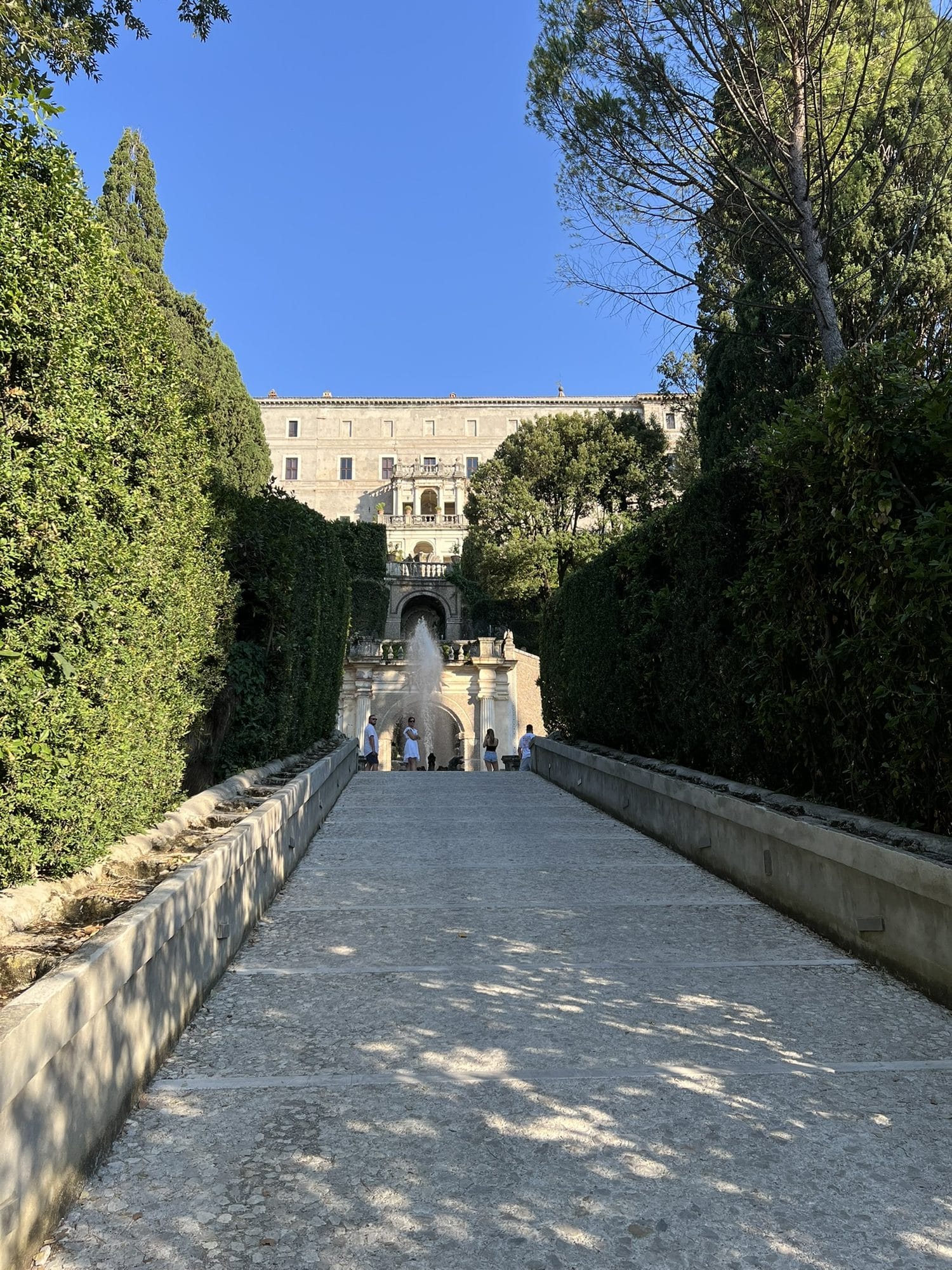
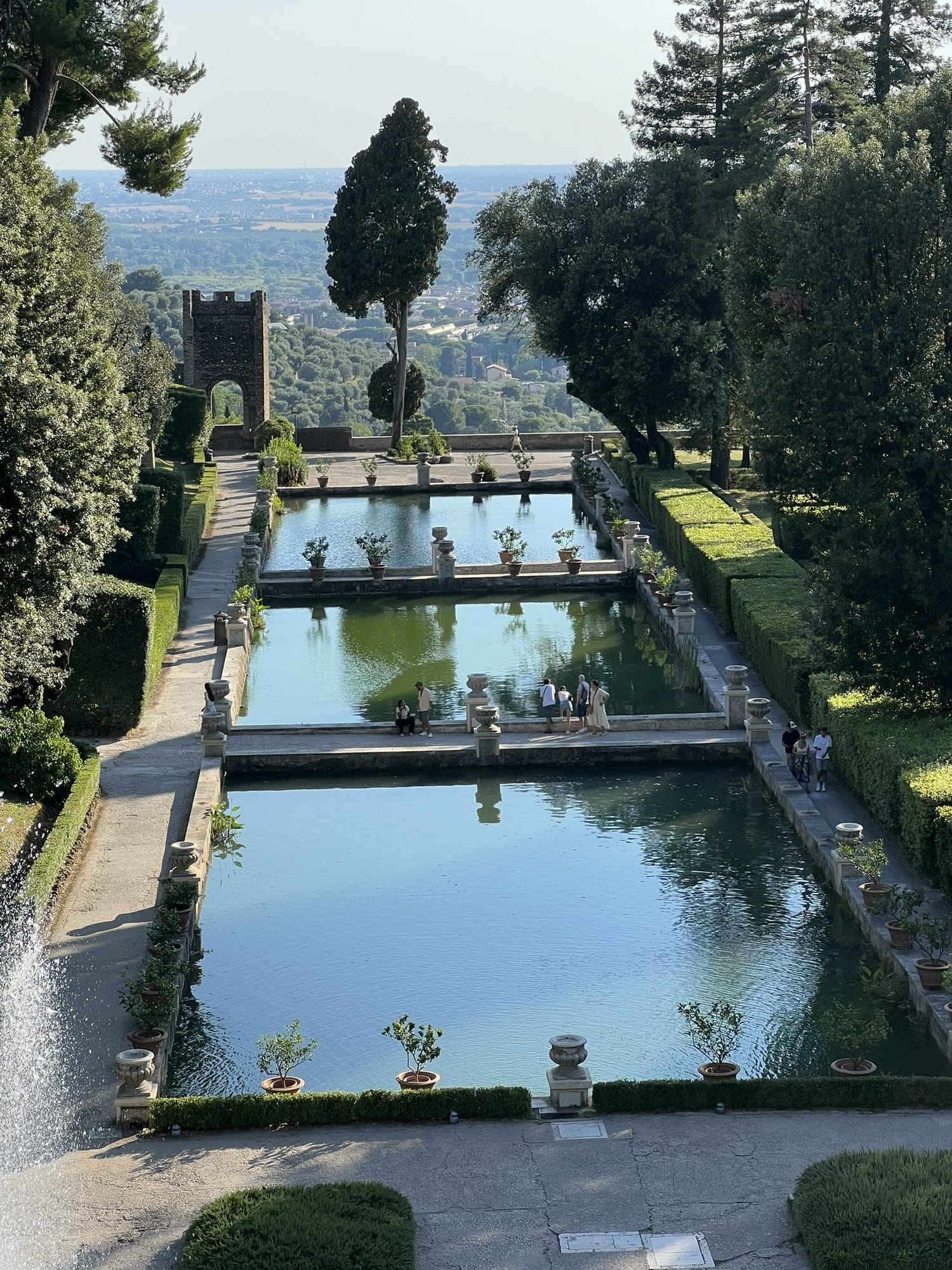
The garden both ways: the avenue climbing back towards the palace, with the Dragons at the end, and the fishponds seen from above, with the plain behind.
Villa Gregoriana, if you still have an hour
On the other side of the town, ten minutes on foot from Villa d'Este, Tivoli has a third thing the guides skip: the park of Villa Gregoriana, the gorge where the Aniene makes the Great Waterfall, with paths that go down among the caves and the Roman remains and climb back up to the Temple of Vesta, the small round temple on top of the cliff. It belongs to the FAI, the Italian National Trust, costs €10, you go in from Largo Sant'Angelo and come out at the temple, and it is stairs: no pushchairs. It is the right walk after the villas, and from Villa d'Este it is easy; from Hadrian's Villa it is out of the way. If you don't have the hour, there is still the walk through the centre, with the views over the Aniene valley from the Ponte Gregoriano, free: the whole waterfall, though, is seen only from inside. At least an hour and a half for the full circuit of the park; the Great Waterfall, a drop of more than a hundred metres, is not natural: it is the Aniene diverted under Monte Catillo by order of Pope Gregory XVI, after the flood of 1826, and inaugurated in 1835.
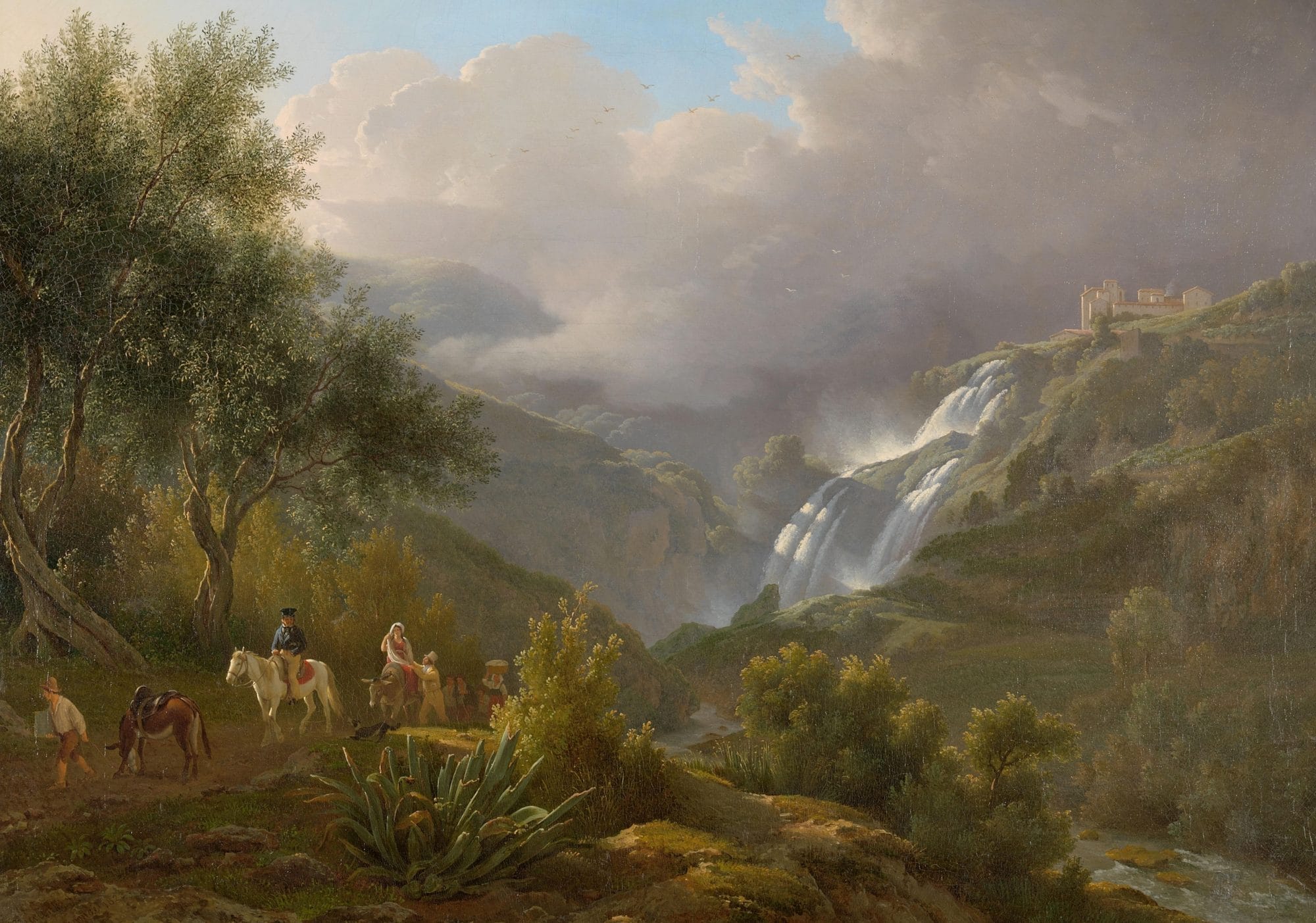
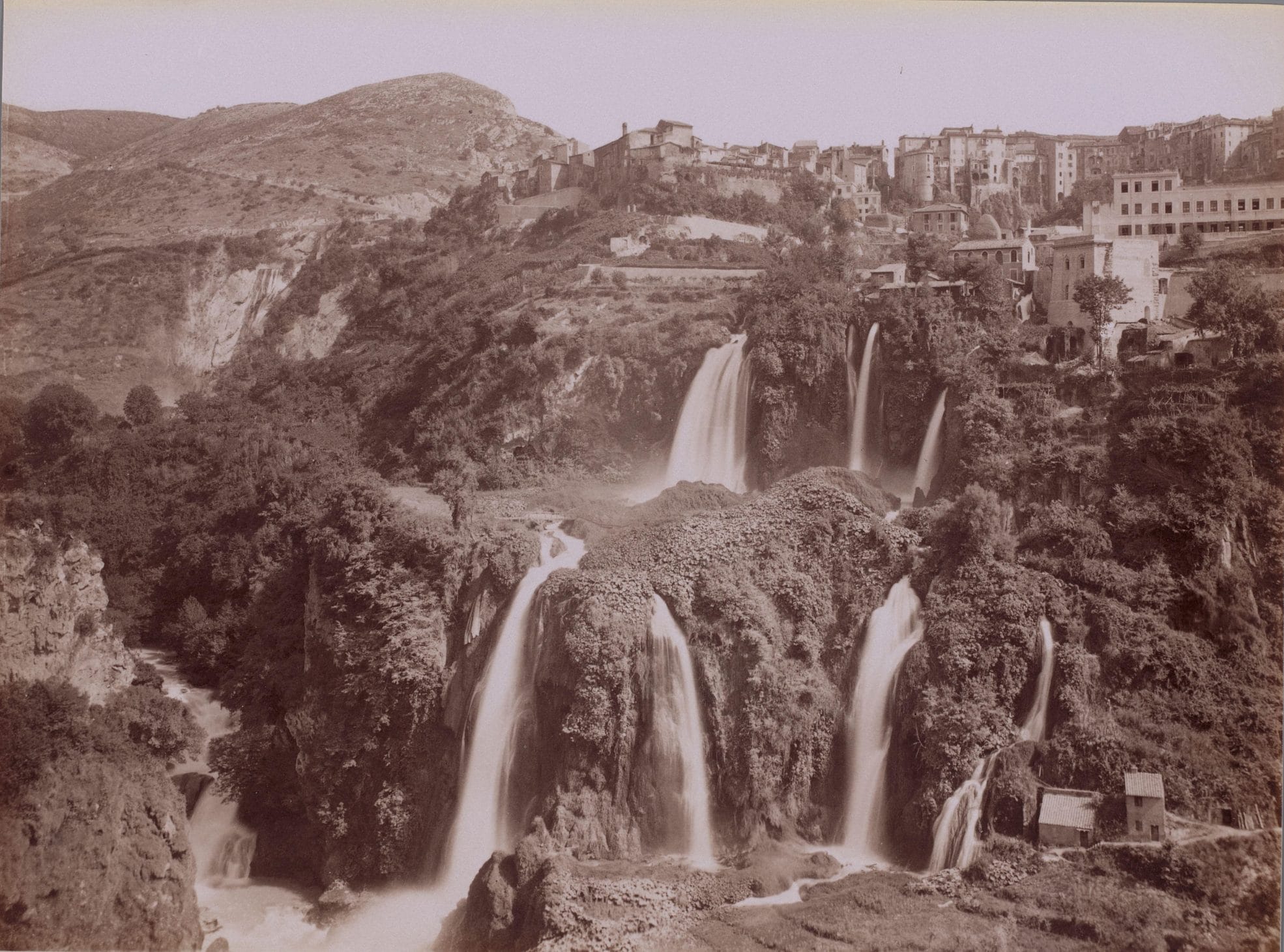
The waterfalls of Tivoli twice: painted by Abraham Teerlink in 1824, with the storm coming in, two years before the flood, and photographed by the Anderson firm at the end of the nineteenth century, with the river already diverted. Rijksmuseum, Amsterdam.
Eating
I'll tell you the truth, as I did for Caprarola: in Tivoli I have never eaten or drunk anything, in all the times I have been, and I am sorry about it. So no names. The rule that holds is the rule of the two villas: lunch between one and the other, in the centre of Tivoli, where you leave the car for Villa d'Este, and the villas' time left free.
The traps
Monday. Villa d'Este opens at two in the afternoon: in the morning you do Hadrian's Villa, there is no choice.
The first Sunday of the month. Free in both, and therefore full: entry to Villa d'Este may be limited and you leave by another door. If you can, another day.
Summer at Hadrian's Villa. No shade. At opening time, with hat and water, and out before midday.
The fountains off. After heavy rain the water at Villa d'Este can be suspended. If the weather has been bad for days, a phone call before you leave.
The train and the climb. Tivoli station is at the bottom and Villa d'Este at the top: a quarter of an hour uphill, which with children or in the heat is more.
Winter hours. From November to January the villas close at five and the last entry is at four, at Hadrian's Villa at half past three: the day gets shorter, and you leave early.
Prices online. Many sites still give €10, €12, €8: they are old. The ticket is €15 in both villas, and the page to look at is the Ministry's.
By car, the other roads
The baths. At Tivoli Terme, on the Via Tiburtina, ten minutes below the villas, there are the Acque Albule, the sulphur waters the Romans were already using: in summer, from June to September, the park with the four open-air pools at 23 degrees, €17 on weekdays and €22 on Sundays and holidays; all year round the spa building with the indoor pool and the circuits, with a day ticket of around €45. Half a day of rest to combine with one villa, not with both.
The travertine quarries. Between Tivoli Terme and Guidonia the plain is pitted with the quarries from which half of Rome was pulled out: the travertine of the Colosseum, of St Peter's, of the church façades comes from here, from the basin of the Acque Albule, and the Romans called it lapis Tiburtinus. Today's quarries are working industrial sites, and you don't go in: you look at them from the road, along the Tiburtina and the Maremmana, white and deep as canyons, or with the excursions and guided visits that the local associations and the geologists organise now and then, for instance during the Settimana del Pianeta Terra, Planet Earth Week, usually in October. Visit Tivoli, the town's tourism website, has put online an industrial-archaeology itinerary, the Via del Travertino, which tells the story: the Cava del Barco, opened between the third and second centuries BC, from which in the sixteenth century came the blocks for Villa d'Este and for the rebuilding of St Peter's; the quarrymen's farmhouse designed by Bernini at Fosse di Guidonia; the revival after 1870 with the embankments of the Tiber. If you like the places where you can see where cities come from, it is a detour of an hour.
The Castelli Romani, three quarters of an hour to the south, with Frascati and its villas, if you want to end the day with a glass. And Subiaco, an hour east along the Aniene, with the monastery of St Benedict hanging from the rock, for anyone with a second day.
One day, or two
One day is the one written above: Hadrian's Villa at half past eight, Villa d'Este at two, the waterfall or the baths if there is time left.
Two days change the villas, not the programme: with a night in Tivoli you go into Villa d'Este twice, with two tickets, in the evening with the low light and in the morning with the garden empty, and you do Hadrian's Villa at opening time without hurry. In summer, from early July to early September, the FAI opens Villa Gregoriana on Friday and Saturday evenings too, from nine to midnight, with the same €10 ticket: that is how it went in 2026; the 2027 dates are on the FAI website.