THE CATHEDRAL WITHOUT SHADOWS
I walked into Notre-Dame and found it flat. Then I discovered that the man who designed its light calls himself a sculptor of shadows.
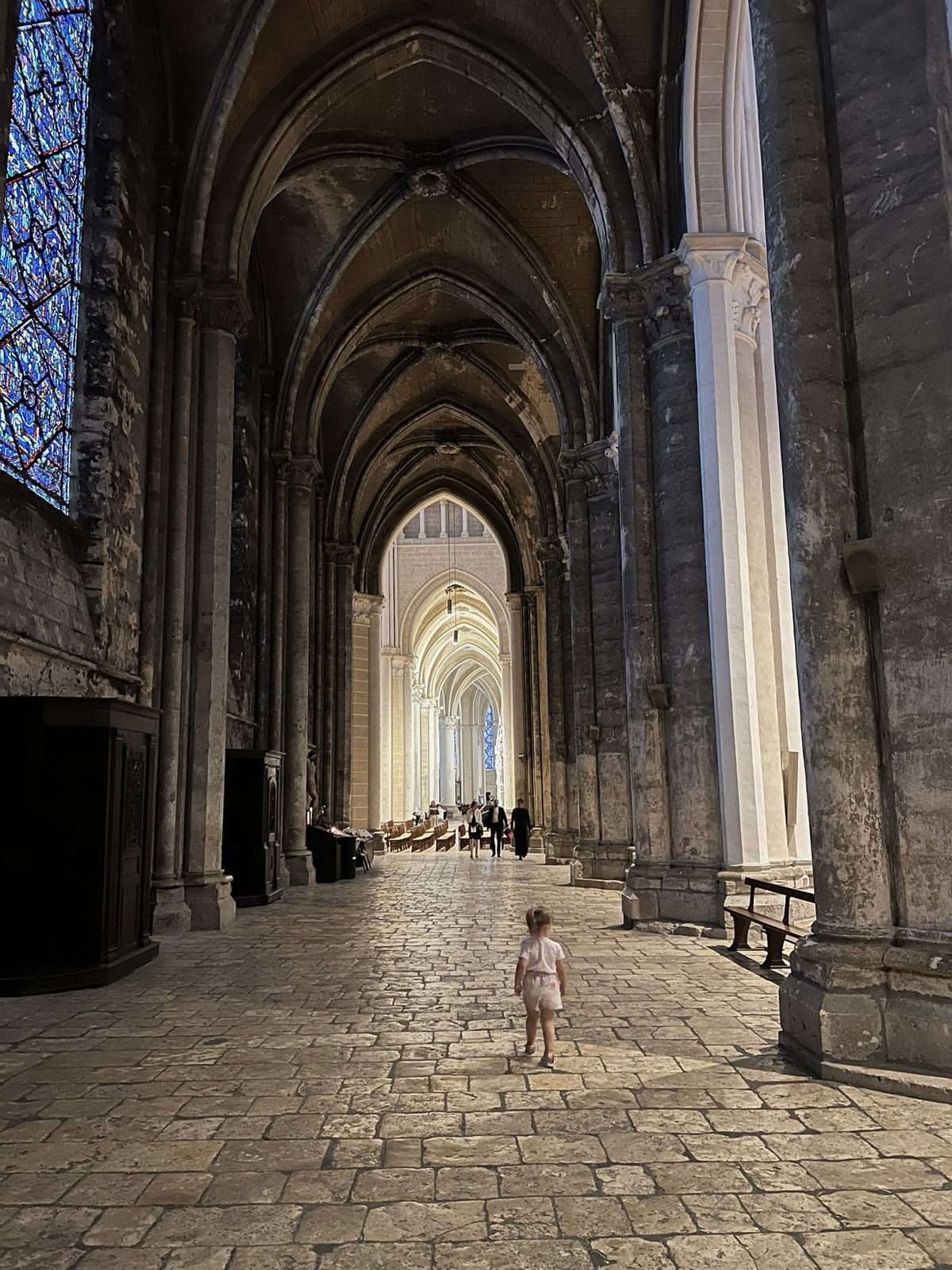
Lea hops from one square to the next. White, black, white, black, with the total concentration children have when they have invented a rule and have no intention of breaking it. I follow two steps behind and I am not looking at the vaults. I am looking at her, because inside Notre-Dame the crowd is such that three seconds of distraction are enough to lose sight of her.
Outside, the sky is grey; later a magnificent sun will come out. There is a crazy queue to get in: you have to book and turn up at the gate in your allotted time slot, and even then you go in shoulder to shoulder. I had thought of coming on a Sunday, but Masses take up most of the day and visits come almost to a standstill. We moved to another day.
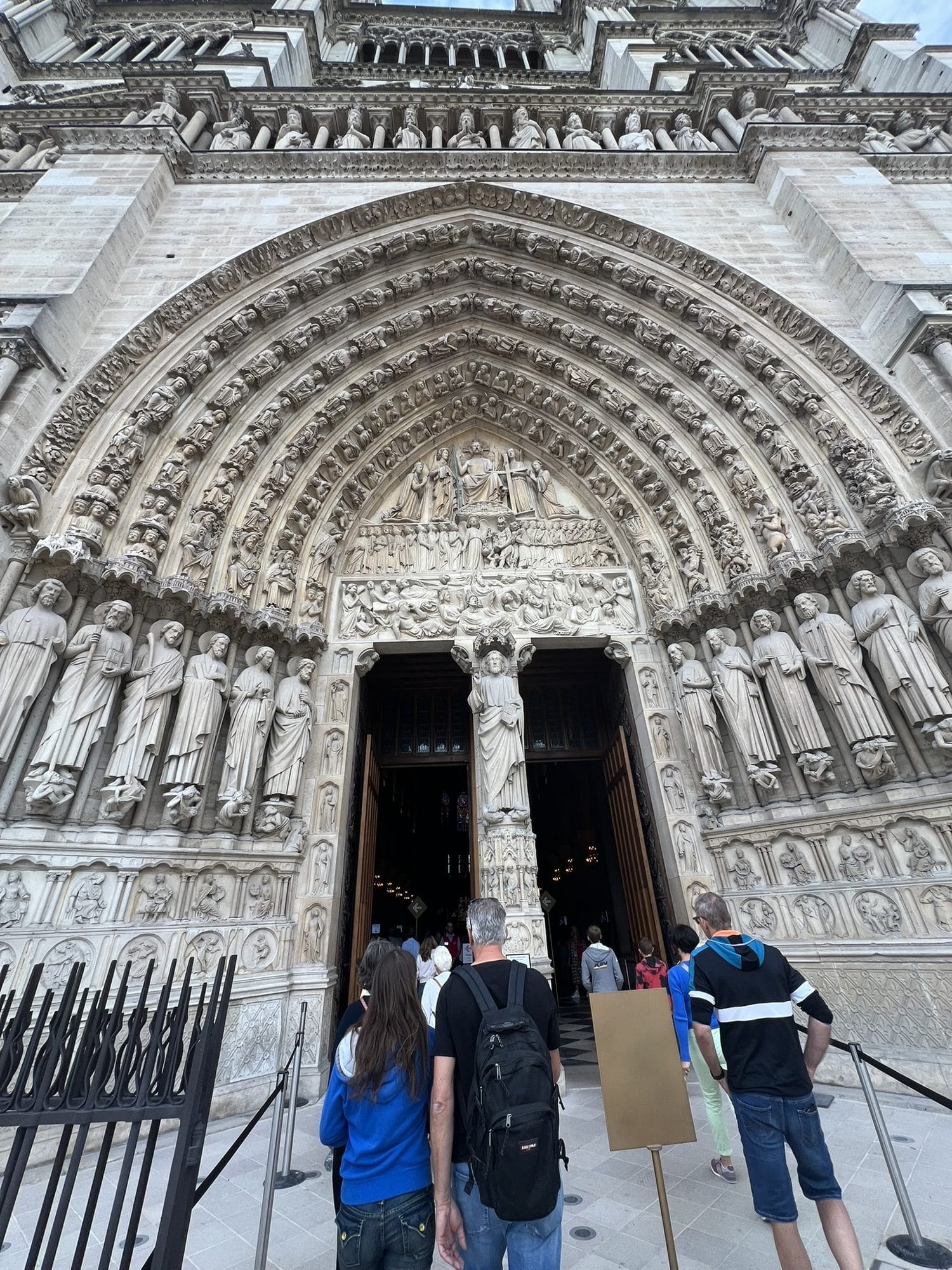
We had already seen Chartres, Rouen and Orléans. None of them had a crowd like this. You walk in, there is silence, three scattered visitors, a lit candle, and you can stay as long as you like. They are less attractions than churches.
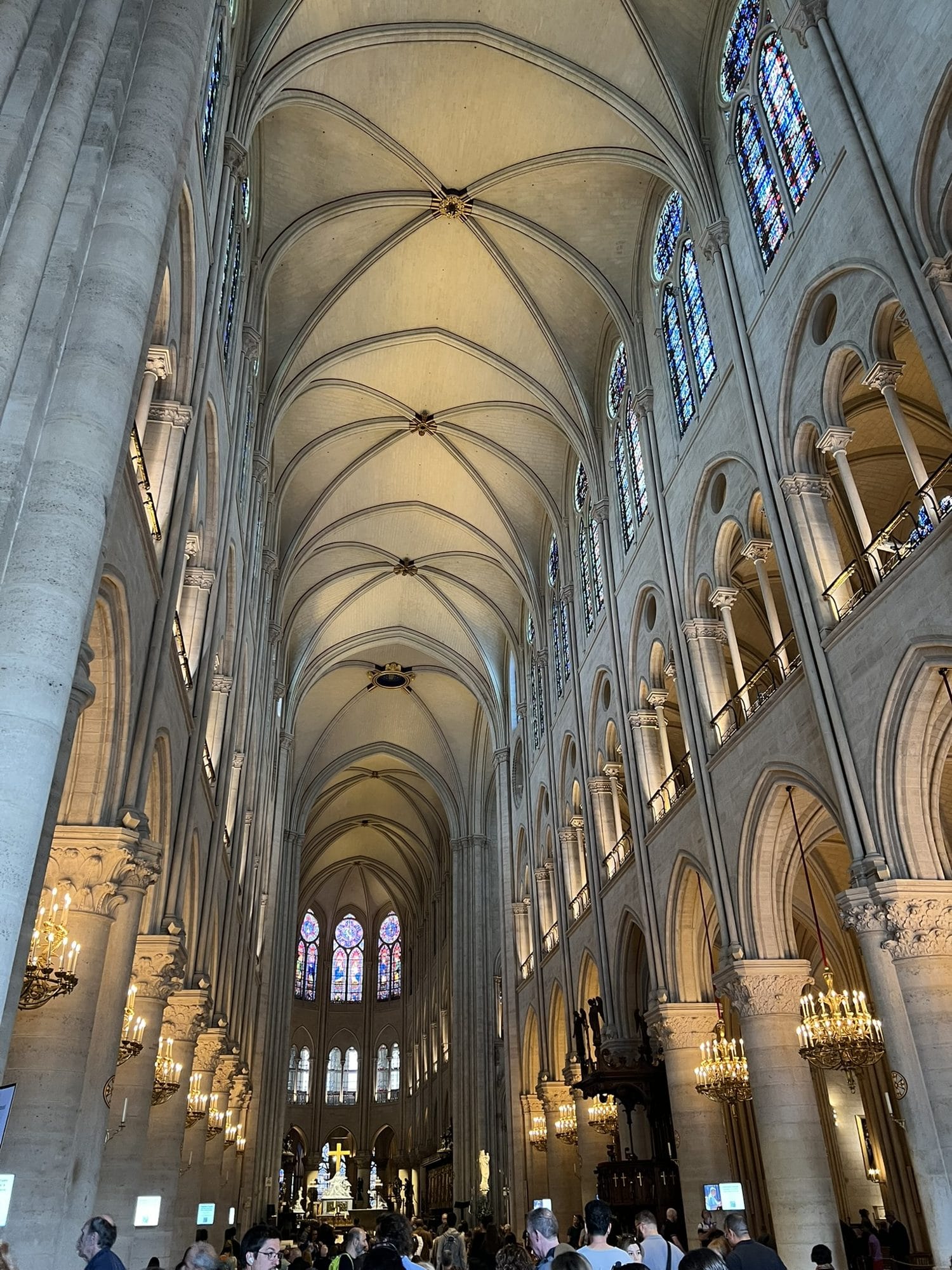
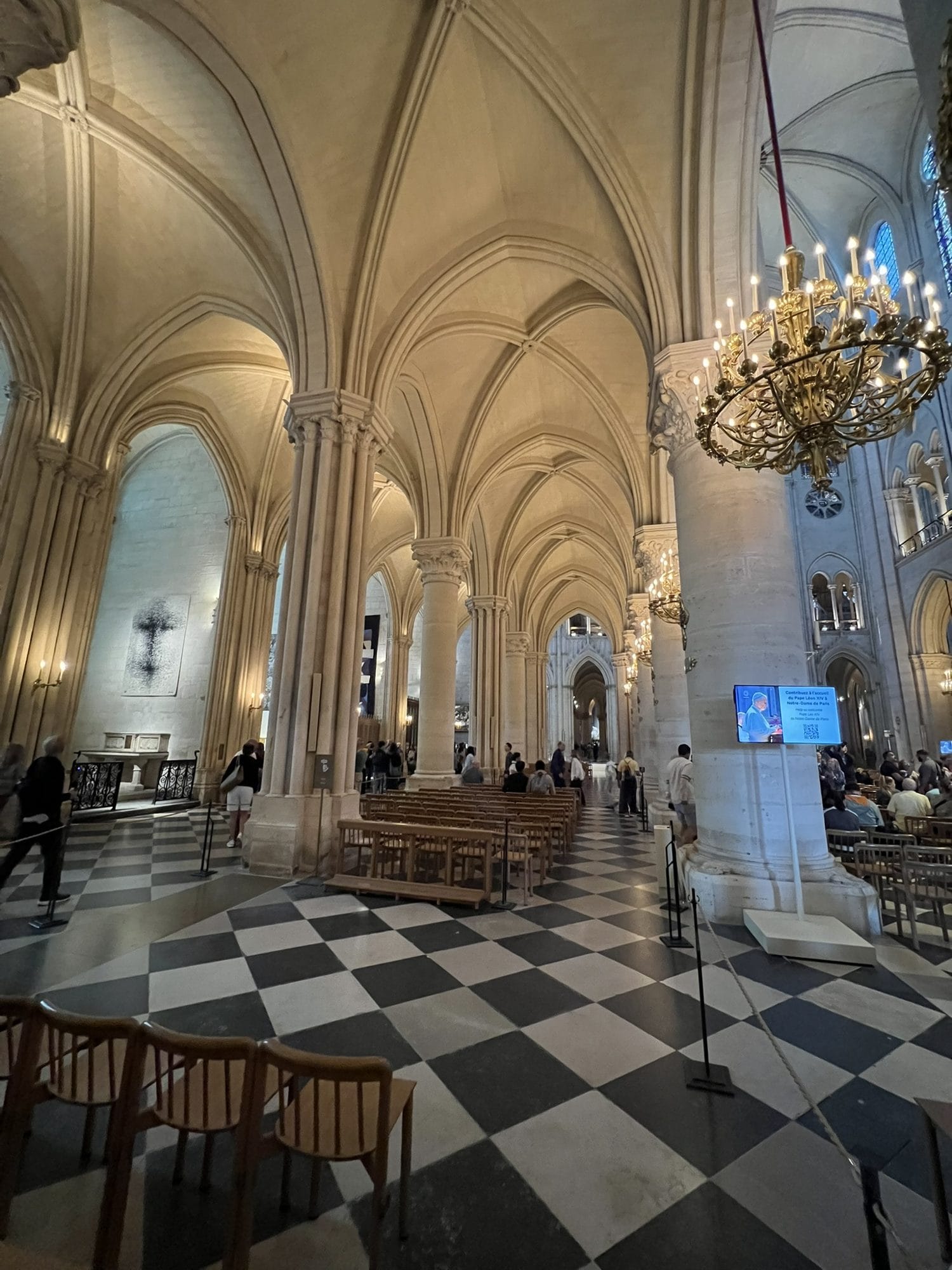
When I lift my eyes from my daughter's feet, the stone is pale, almost blond. The vaults look as if they had just been set in place. There is no shadow of the eight hundred years I know have passed through here. It looks new. No: it looks fake.
On the parvis, on the way out, I tell Kat that in Italy this would never have been done.
Four hundred tonnes
On 15 April 2019 the lead of the roof melted and rained down inside.
The fire did not take the building. It took the roof, the forest of medieval timbers above the vaults and Viollet-le-Duc's nineteenth-century spire, and it opened three holes. But the problem that determined everything else is this one: four hundred tonnes of heavy metal vaporised and redeposited on every interior surface, in a building that thirty thousand people pass through every day.
From there came the decontamination that halted the works for months, the protocols that dressed the workers like laboratory staff, and the cleaning done by spreading a latex paste over the stone, letting it dry and peeling it away together with dust, soot and lead. Philippe Villeneuve, who had been in charge of the cathedral since 2013 and had walked every inch of it for six years before watching it burn, had warned in advance that it would come out luminous. General Georgelin, who was then running the project, spoke of the shock it would cause.
If I had had to sign that decontamination plan myself, I am not sure how much room I would have had to leave the soot where it was.
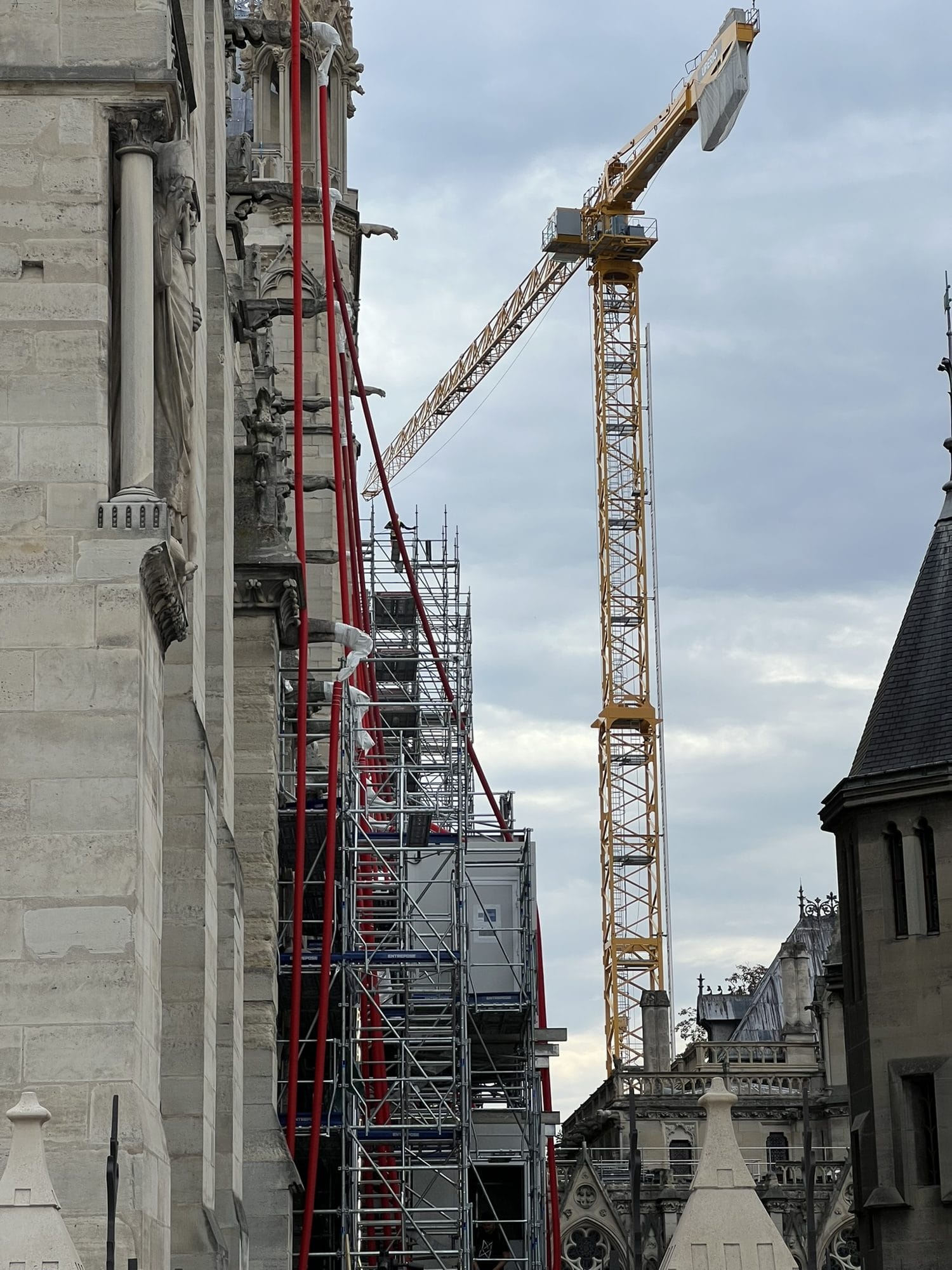
Chartres, first
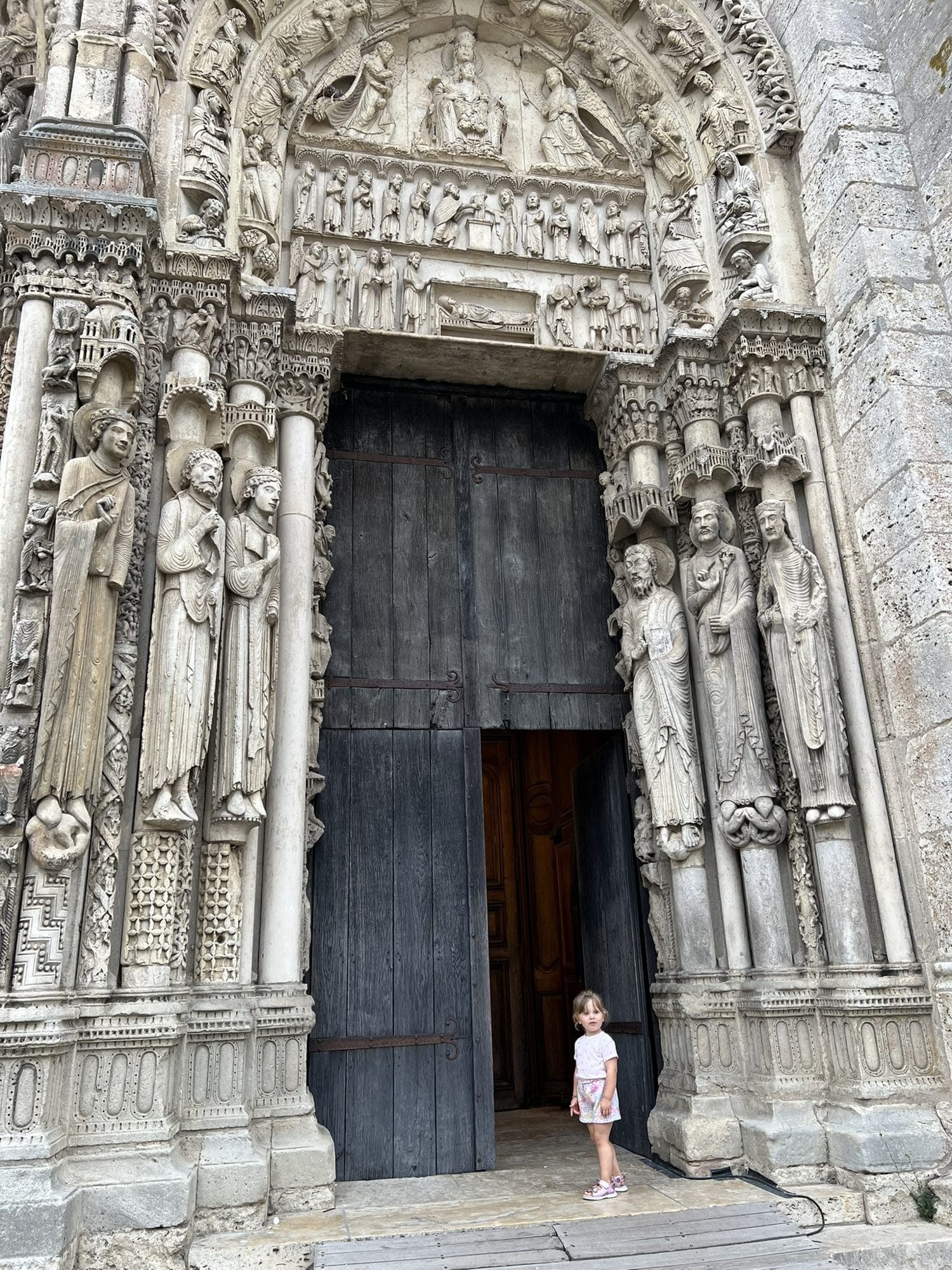
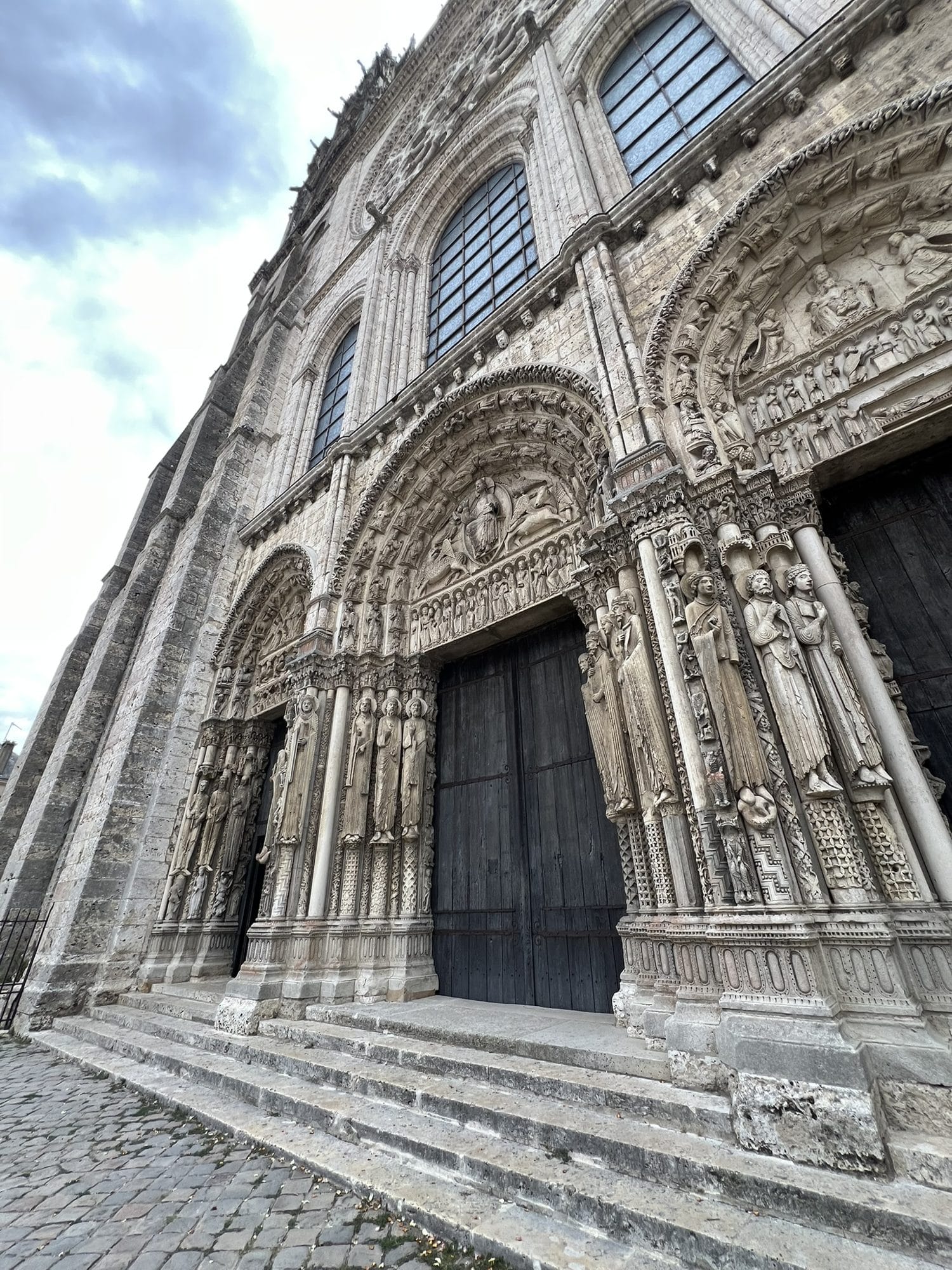
At Chartres there was no fire, and the stone is just as pale.
The French Ministry of Culture has been working on it since 2009, to remove eight centuries of deposits from candles and oil lamps and bring back the original polychromy: a pale ochre with false ashlar courses drawn in white. In 2014 Martin Filler attacked the operation in the New York Review of Books, accusing it of making authentic artefacts look fake.
And yet at Chartres I hadn't had that feeling. It took me a few days, and I had to open the photographs again and set them side by side on the screen.
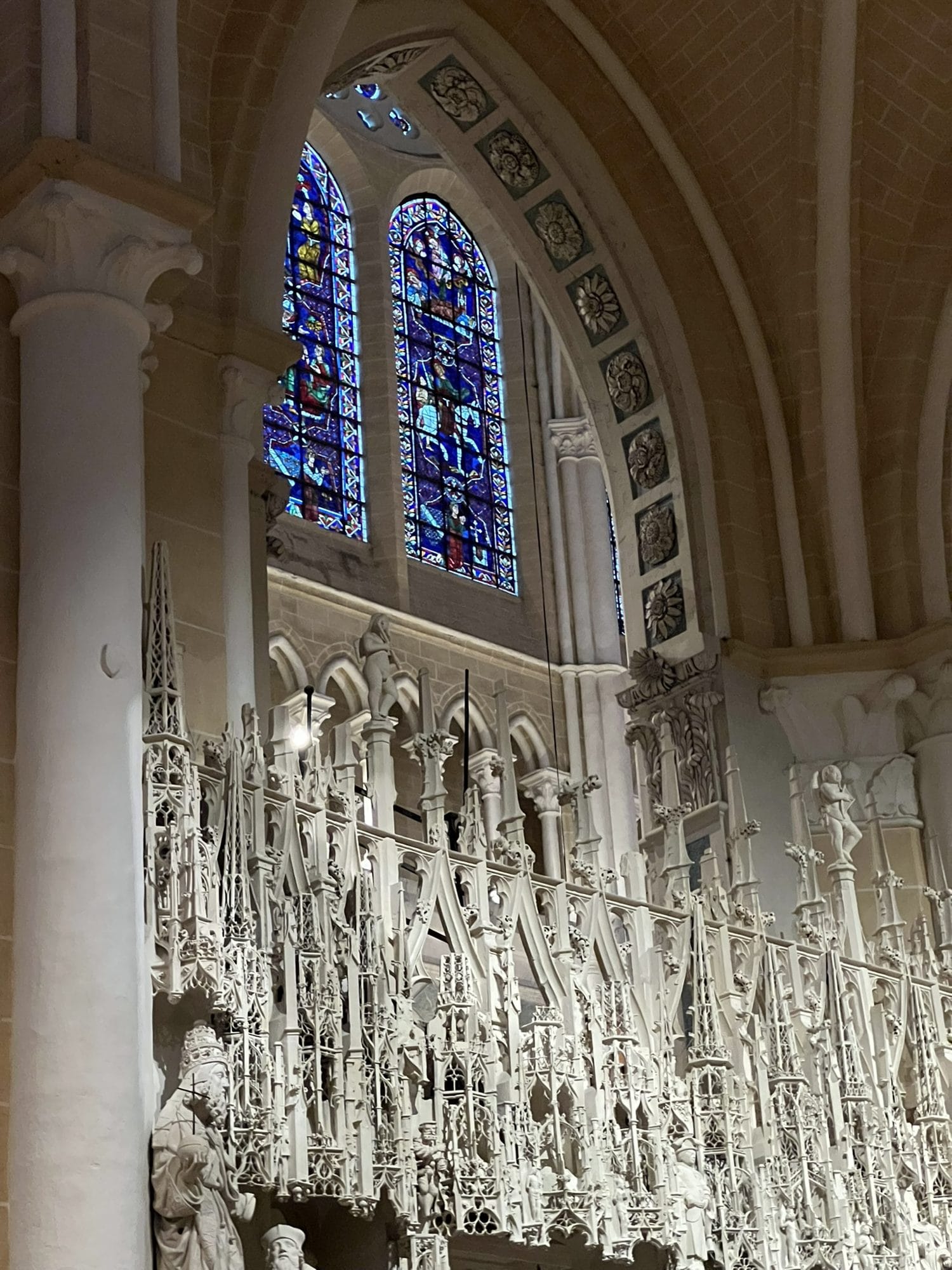
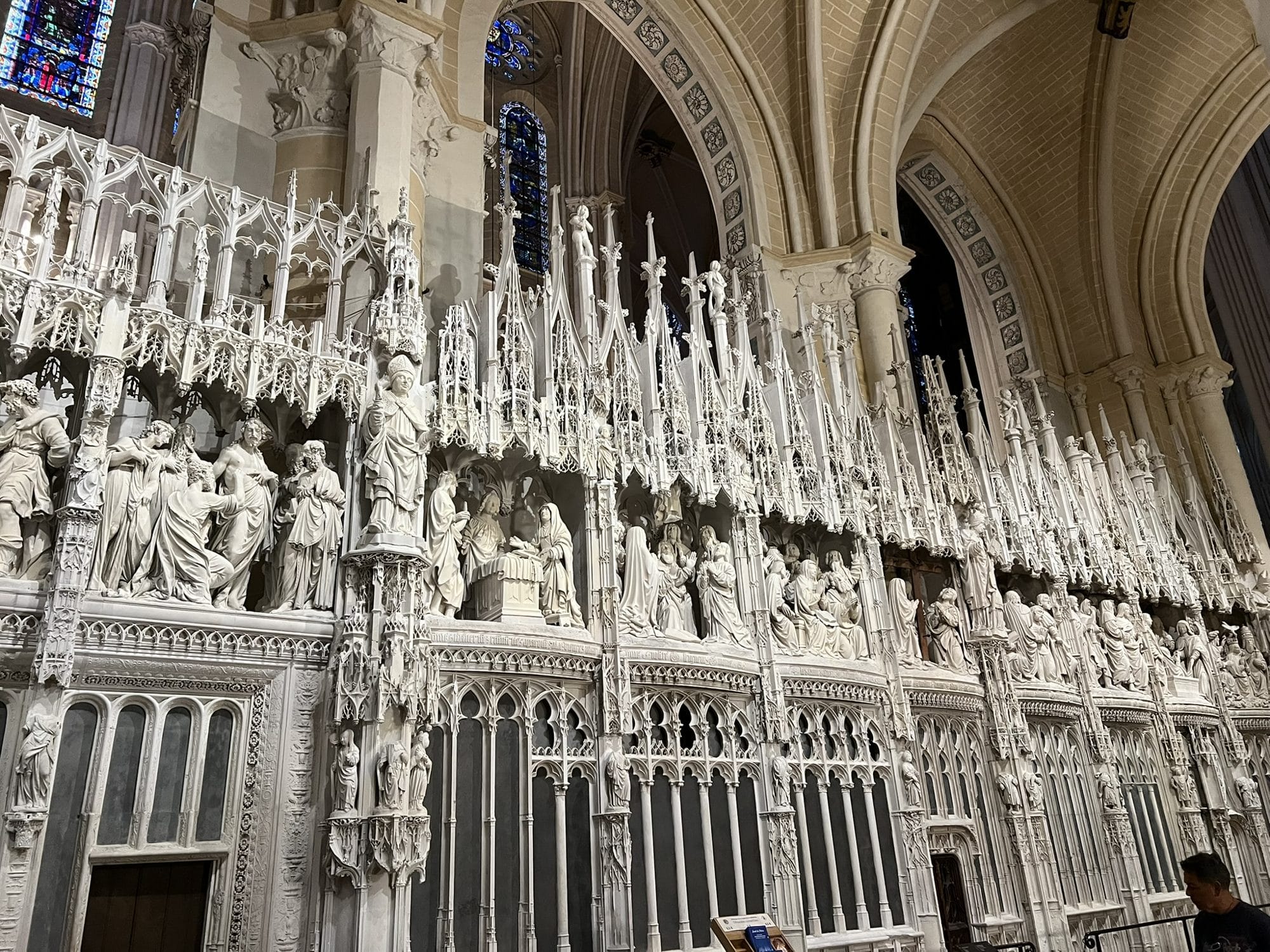
At Chartres you can see the works. They aren't finished, they move forward in phases, and in the side aisles the black of eight centuries is all still there: very dark vaults, soot-coloured walls, stone the colour it has always been. In one of my photographs there is a pier cut vertically, dazzling white on one face and black on the other, as if someone had run a blade down it. A little further on, the carved choir screen is the white of fresh plaster.
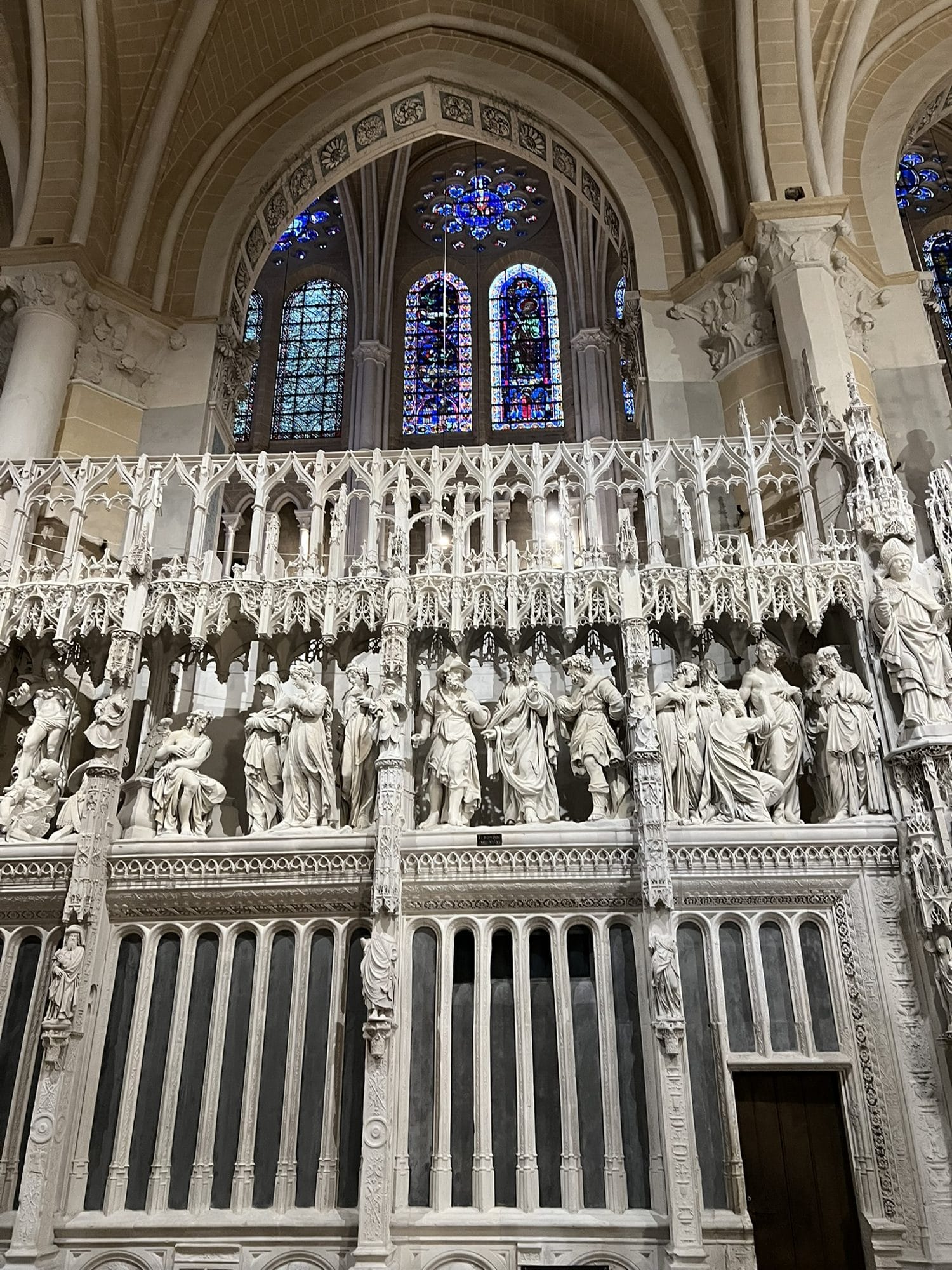
I don't think it is a question of method. It is the seam between a finished section and one still to be done. But it does exactly the job we would have done on purpose at home: it is the uncleaned sample, the witness left in place so that anyone can see where the work started from. Anyone left breathless in front of the choir at Chartres owes it partly to those dirty vaults in the side aisles.
And the choir, it has to be said, looks plaster-new, just finished, a little fake, and at the same time it is breathtakingly beautiful. Both impressions are with you at the same moment, and that is where I understood that the problem couldn't be newness. Chartres is just as new. Chartres holds.
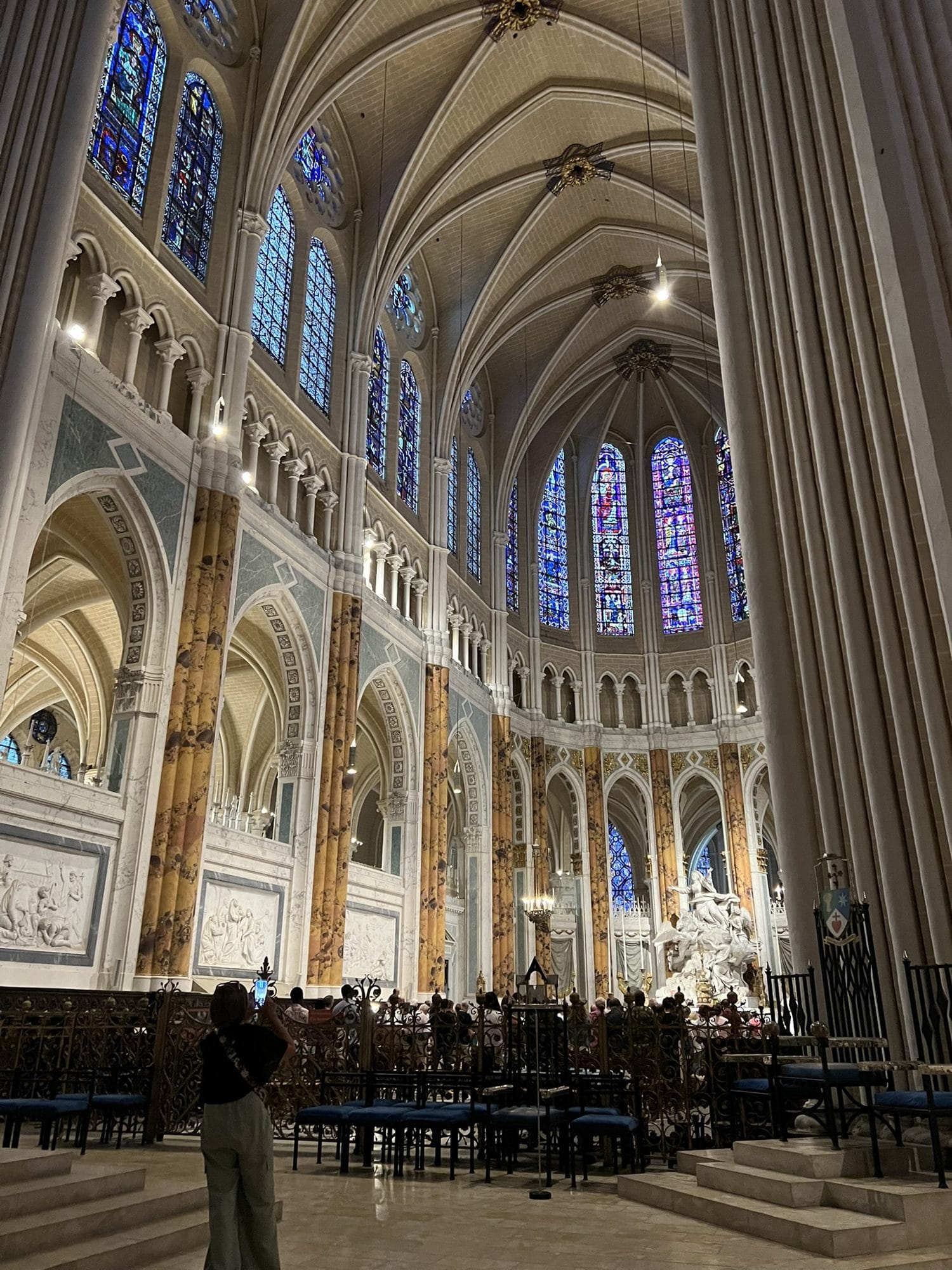
It holds, but not because the light at Chartres is beautiful. It isn't. It is white and cold, and to the eye it is too white: it comes from a few aimed fittings, and on stone that is already very pale it produces an operating-theatre glare that has nothing to do with a church. If I had to judge it as a design, I would fail it before the one in Paris.
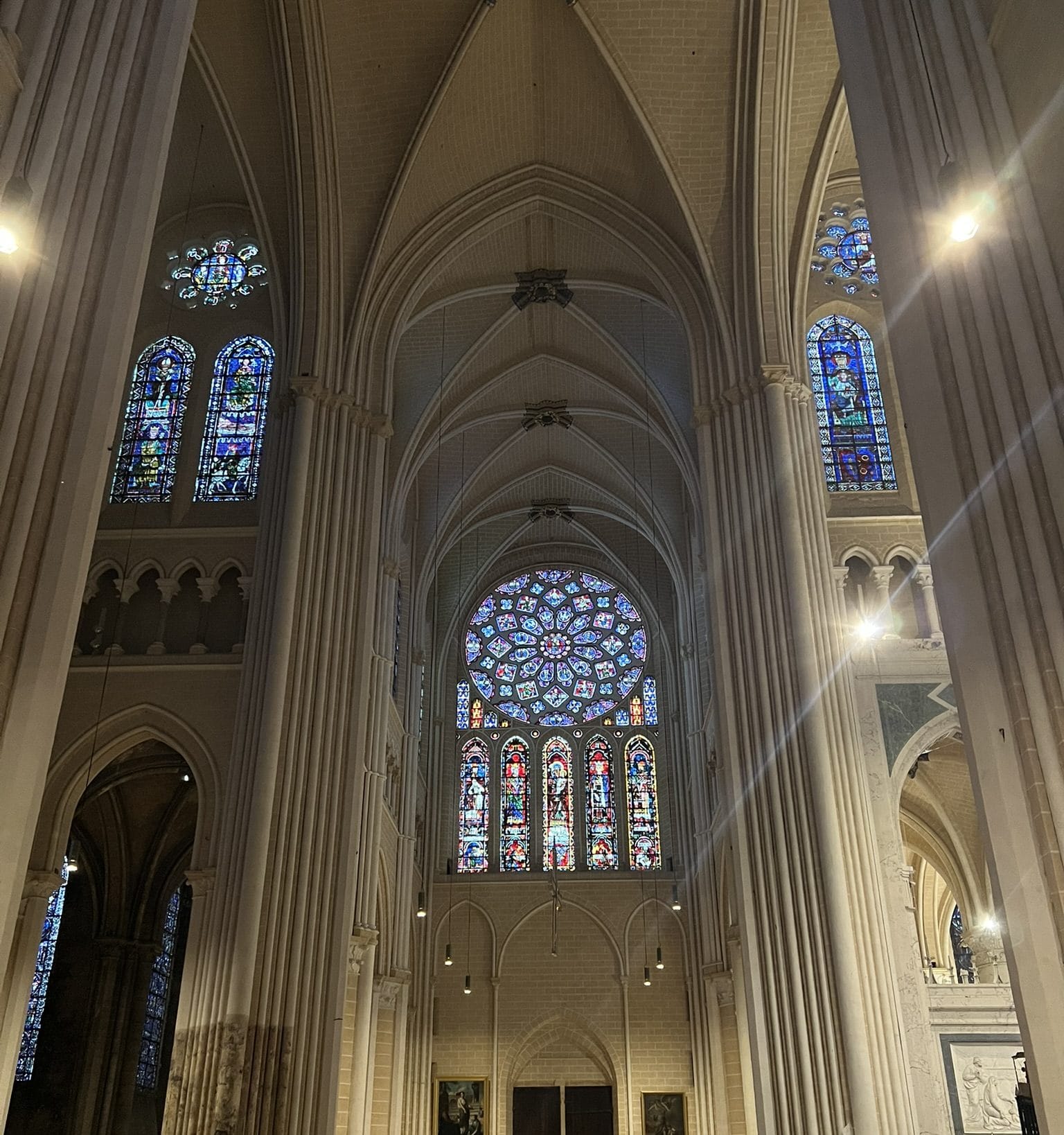
It holds for another reason, and I only noticed it by putting the photographs side by side. At Chartres those floodlights can't cover everything. They remain a few points in an enormous building, and in between, the work is still done by the light coming in through the windows. In the side aisles you walk in a true half-light, with brightness arriving from the far end. The transept vaults have corners that stay in the dark. There, Gothic still works the way it was designed to: the glass lights up, the stone receives, the shadow stays where the wall is thick.
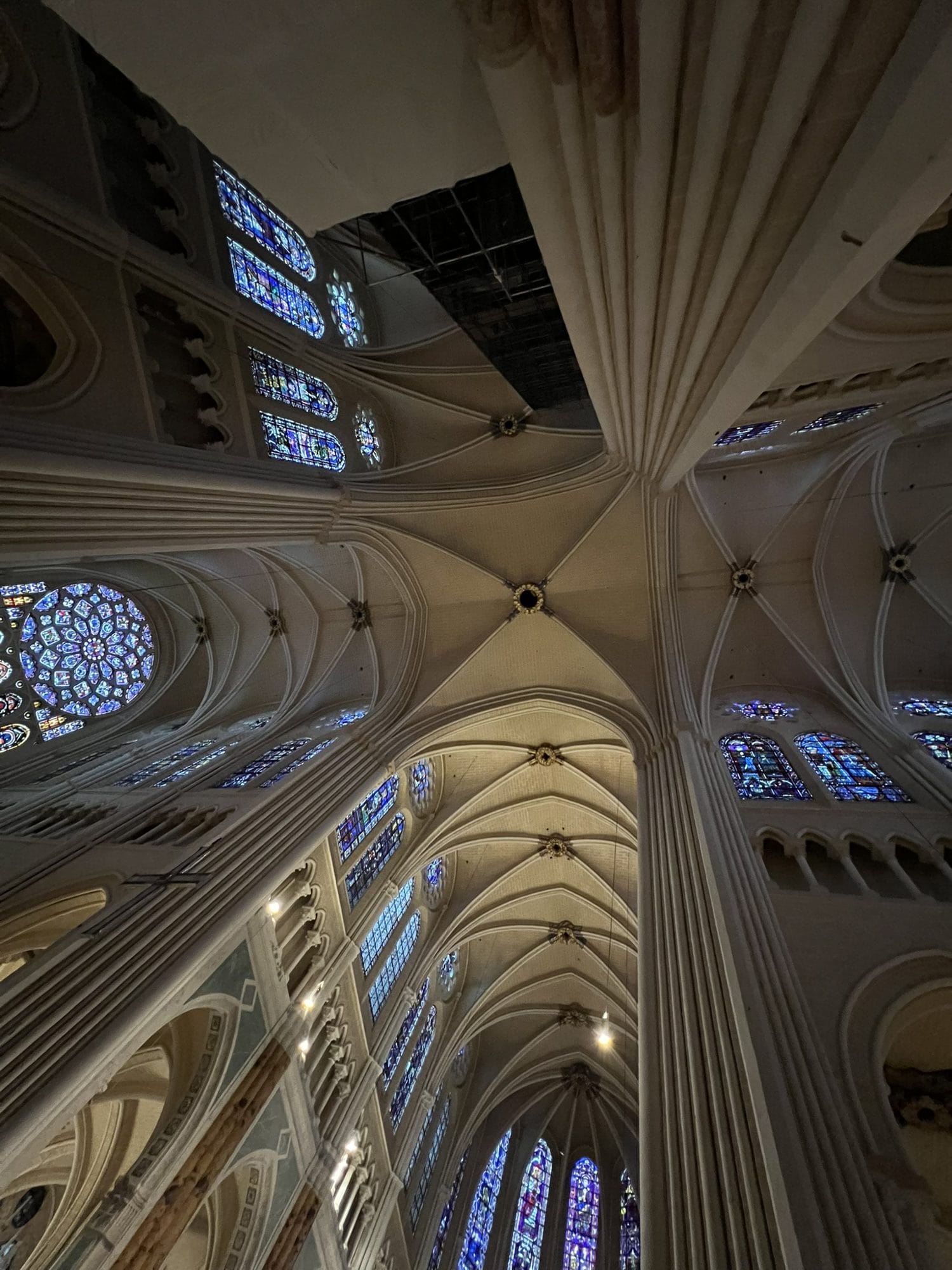
At Notre-Dame that margin is gone. Two thousand fittings leave no gaps for the sun to fill, and the artificial light doesn't sit alongside the natural light: it covers it. The difference between the two cathedrals is not the taste of whoever chose the lamps. It is how much electric light there is, and how much room is left for the light that comes through the windows.
Three registers
Notre-Dame has a diffuse, warm light, beautiful and welcoming. And here I have to correct myself, because the first thing I thought on the way out, that there were no shadows, doesn't hold up when I look at the photographs. The shadows are there. It's just that they are all above your head.
In most of the nave, Notre-Dame's elevation has three registers: the great arcades, the galleries, the clerestory windows. Only in the bays near the crossing did Viollet-le-Duc rebuild a fourth level, with oculi between the galleries and the windows. Take the two upper registers and they are another church. Up there the stone is grey and cold, and the stained glass burns against it as it should: the blues and the reds hold, the rose windows light up, the wall acts as a dark ground for the glass. That mechanism still works.
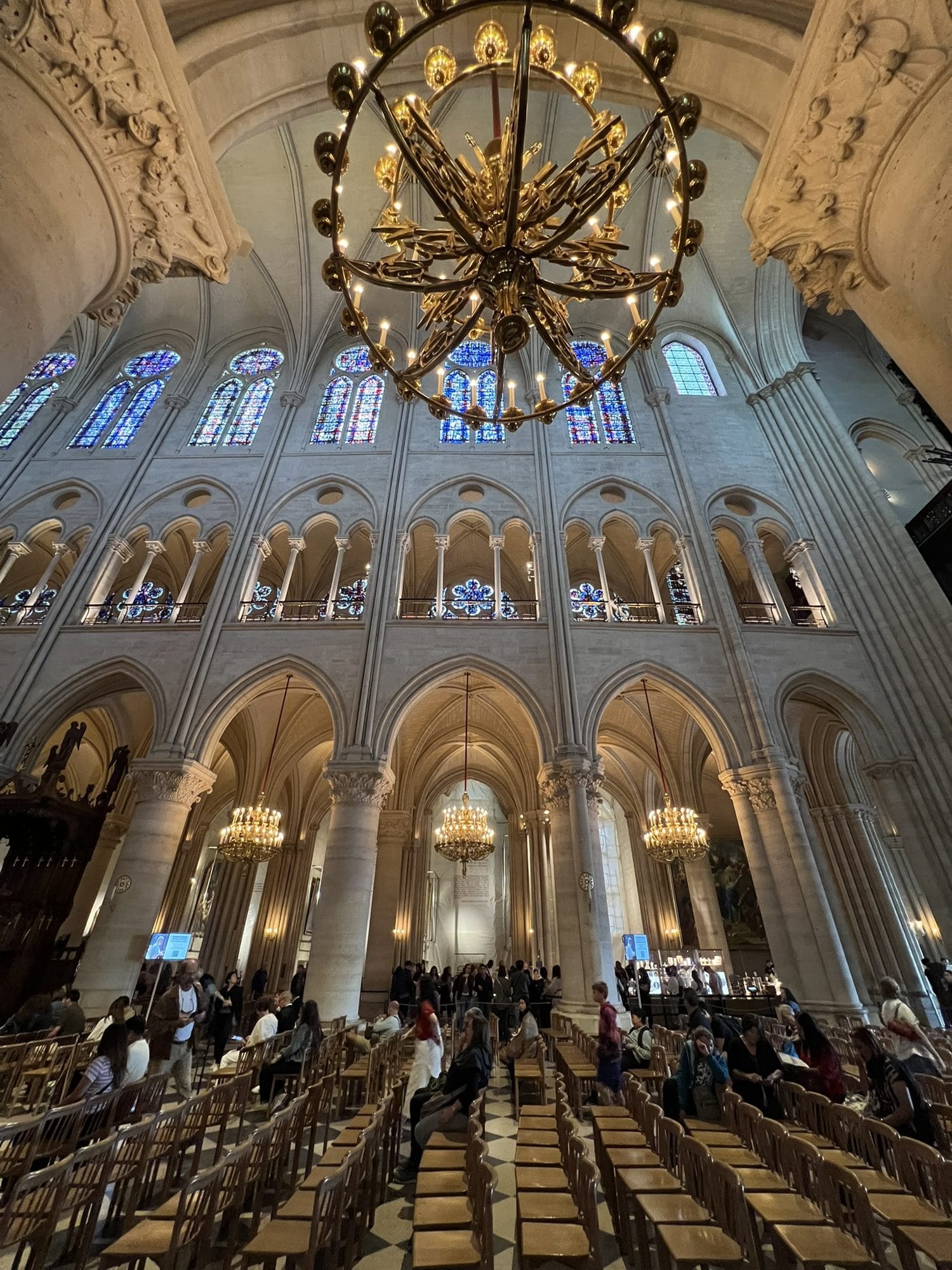
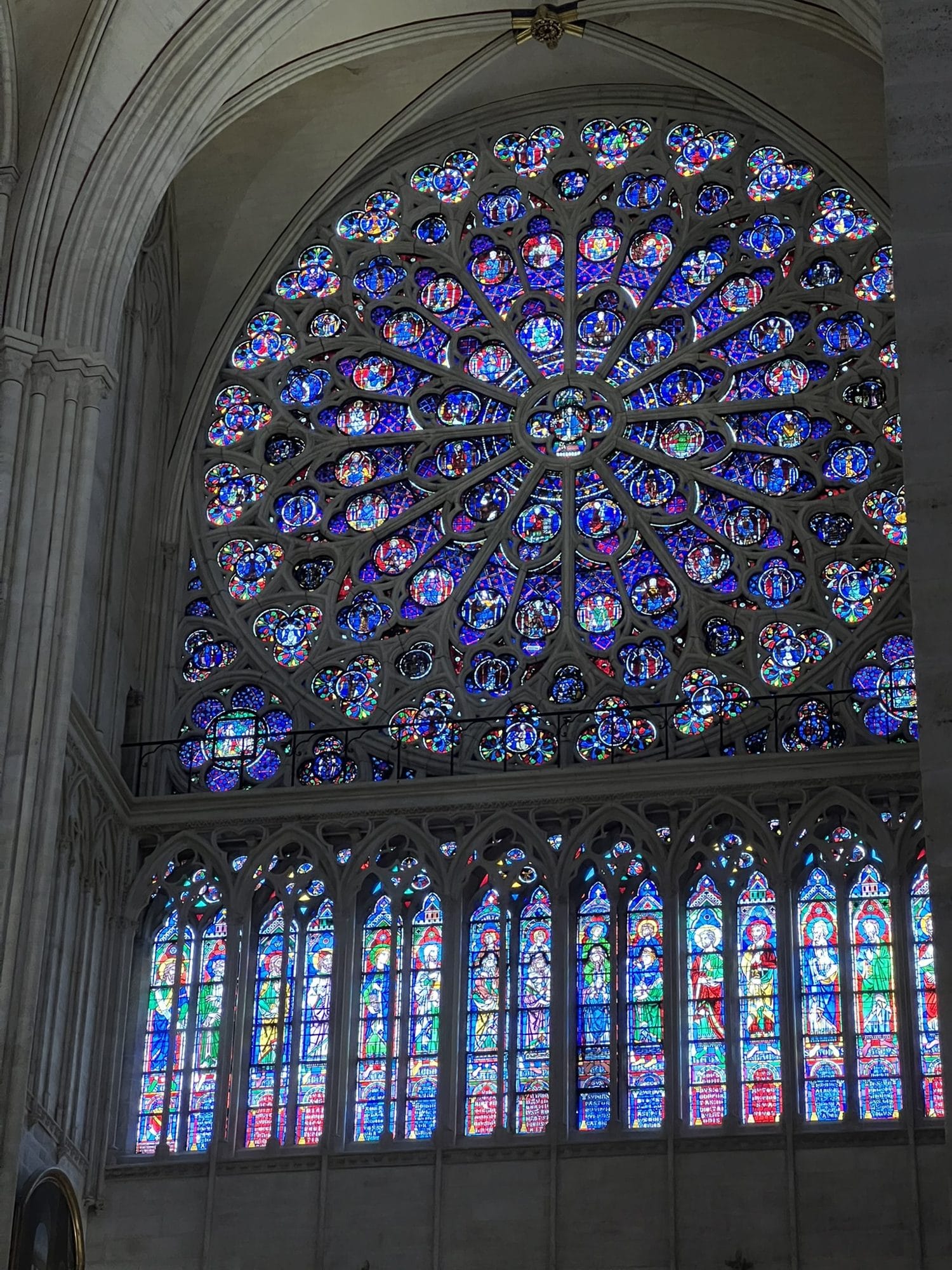
Then lower your gaze to the height where you are standing. The piers of the nave are great cylindrical drums, and they ought to have a light side and a dark side, with the curve turning away into shadow. They don't. The light starts at the capitals and rises to light the vaults, and the shaft below remains a cylinder that reads all in one tone, without volume. The vaults of the side aisles are a uniform warm yellow, and the ribs read as a drawn line, not as a projecting rib. Under the arcades, no bay is darker than the next.
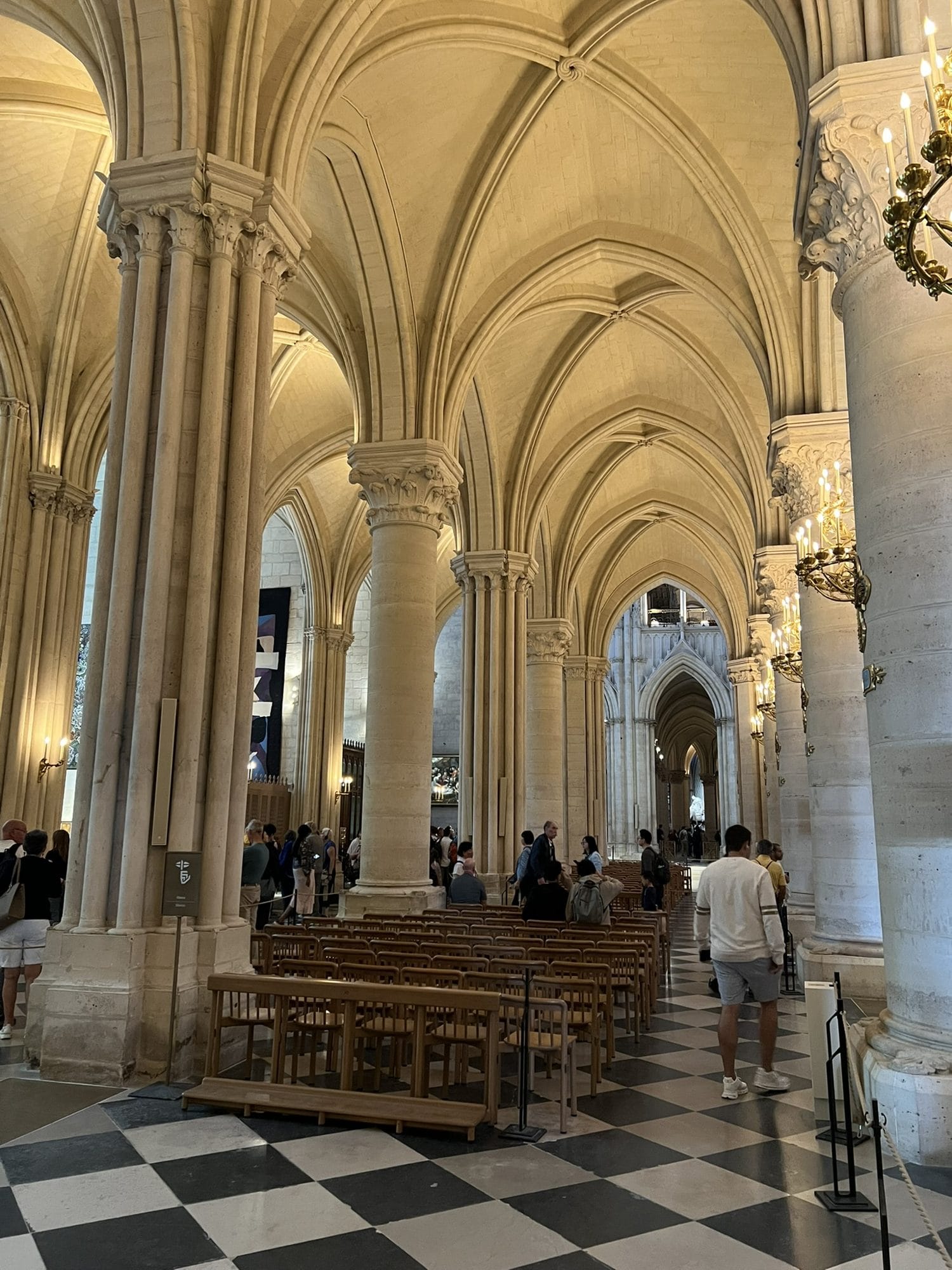
The light, in short, has not been switched off: it has been moved. The chiaroscuro has stayed up high, where no one's body reaches, and the band you walk through is an evenly lit plane, lukewarm, without depth. It is a cathedral lit like a stage seen from the stalls. Beautiful above. Flat where you are.
The detail that made me laugh, and that says it all, is that the coldest light inside Notre-Dame doesn't come from a window. It comes from the information screens scattered through the aisles, which make blue patches in the yellow in my photos, and are the only thing in the entire building that truly stands out against the background.
Some people have built entire careers on this and on nothing else. Le Corbusier at Ronchamp and La Tourette. Lewerentz at Klippan. Ando in the Church of the Light. Zumthor in the Bruder Klaus Chapel. None of them ever lit evenly. Tanizaki, ninety years ago, had already written that certain kinds of beauty exist only in relation to the darkness around them, and that brought into full light they vanish.
A cage of light
That light was not designed by the ministry.
In France, light and sound in cathedrals are the responsibility of the Ministry of Culture and the architects of historic monuments. For Notre-Dame, the Diocese of Paris insisted on taking it on, and Archbishop Michel Aupetit called in Patrick Rimoux. An electronics engineer by training, then the Beaux-Arts in the studio of Claude Viseux, Rimoux found his way when he met Henri Alekan: the cinematographer of Cocteau's Beauty and the Beast and of Wings of Desire, one of the greatest masters of shadow that cinema has ever had.
Rimoux says he does not think of himself as a lighting designer but as a sculptor of shadows, because without shadows there is no light. He describes setting the angles of the six projectors on the central cross with obsessive care, so as not to overload the space. He calls the cathedral a cage of light, built on an axis that lets the sun in differently in every season, and explains that he tried to extend that movement with electric light.
I went in, and at the height where I was walking, the shadows weren't there.
Two thousand two hundred kelvin
According to the diocese, the installed system has around two thousand one hundred light points and fifteen hundred projectors, each individually controlled, with continuous transitions of intensity and colour temperature.
A system like that doesn't produce a light: it produces scenes. The diocese lists fifty of them: thirty liturgical, ten architectural, ten for concerts.
Rimoux is candid about it: the lighting has to be architectural and liturgical at once, and the programming makes it possible to lower the architectural lighting during services so that the liturgical lighting can rise. The example he gives is the Easter Vigil. The general lighting drops, a very warm light at 2,200 kelvin remains, and the vault stays in half-darkness.
The vault stays in half-darkness.
The shadows of that cathedral were designed by someone who knows exactly what he is doing. They have also been rationed, and assigned to the moments when the building becomes a church again. What I saw, on a Monday morning in late August at around ten, was the daytime scene.
On this I have to be honest, because it is my job. A building open to the public has numbers to respect, and they are not a matter of opinion. The European standard on interior lighting recommends for churches an average maintained illuminance of around a hundred lux in the nave and three hundred at the altar during celebrations, and emergency lighting must guarantee at least one lux along escape routes. These are average thresholds, and an average is far easier to hold by spreading the light than by concentrating it. Every zone you leave in the dark has to be made up for elsewhere, and the higher the flow of people, the less margin you have. Thirty thousand a day, in a one-way building, with security staff who need to see everything: whoever set up that scene was not doing stage design. They were holding together a number and a risk, which is the thing you put your signature to. It is the same reason I couldn't take my eyes off my daughter that day.
Sunday
I had given up on going on a Sunday because the services block visits.
In other words, I had given up on the only day when the cathedral switches off the tourist scene and switches its own back on. I booked a slot for the visitable version and then complained that it was the visitable version.
Two things still stand, though.
The first is that, for almost everyone, flat light is the rule. Eleven million visitors in the first year after reopening, around thirty thousand a day, more than before the fire. If the half-darkness comes on only for those taking part in the liturgy, then the building Europe will know for the next fifty years is a cathedral without shadows, and darkness is the exception reserved for those who come in on a Sunday morning.
The second is that it can be changed, and cheaply. The patina won't come back; that has gone for good. The nineteenth-century windows on the south side, taken down to make way for a contemporary work even though the fire never so much as touched them, are unlikely to return: the Venice Charter, in Article 11, states that "the valid contributions of all periods to the building of a monument must be respected", and it is the text the French opponents invoked without getting anywhere. But light is software. Two thousand individually controlled points can be reprogrammed, and a visiting scene with a few bays left in the dark would cost, against the seven hundred million of that project, the price of a week's work. Of everything that has been done in there, the lighting is both the most reversible part and the one that decides how the building is perceived by those who walk through it.
The sentence I said to Kat on the parvis took me much longer. I found out that the first restoration to erase the centuries in the name of a collective image was not invented by the French, and that in Venice we did it more than a century earlier. But that story deserves its own space, and I tell it .
Lea, for her part, had no problem with the light. She had found the only thing in that cathedral you could still use rather than look at, and she was jumping on it.
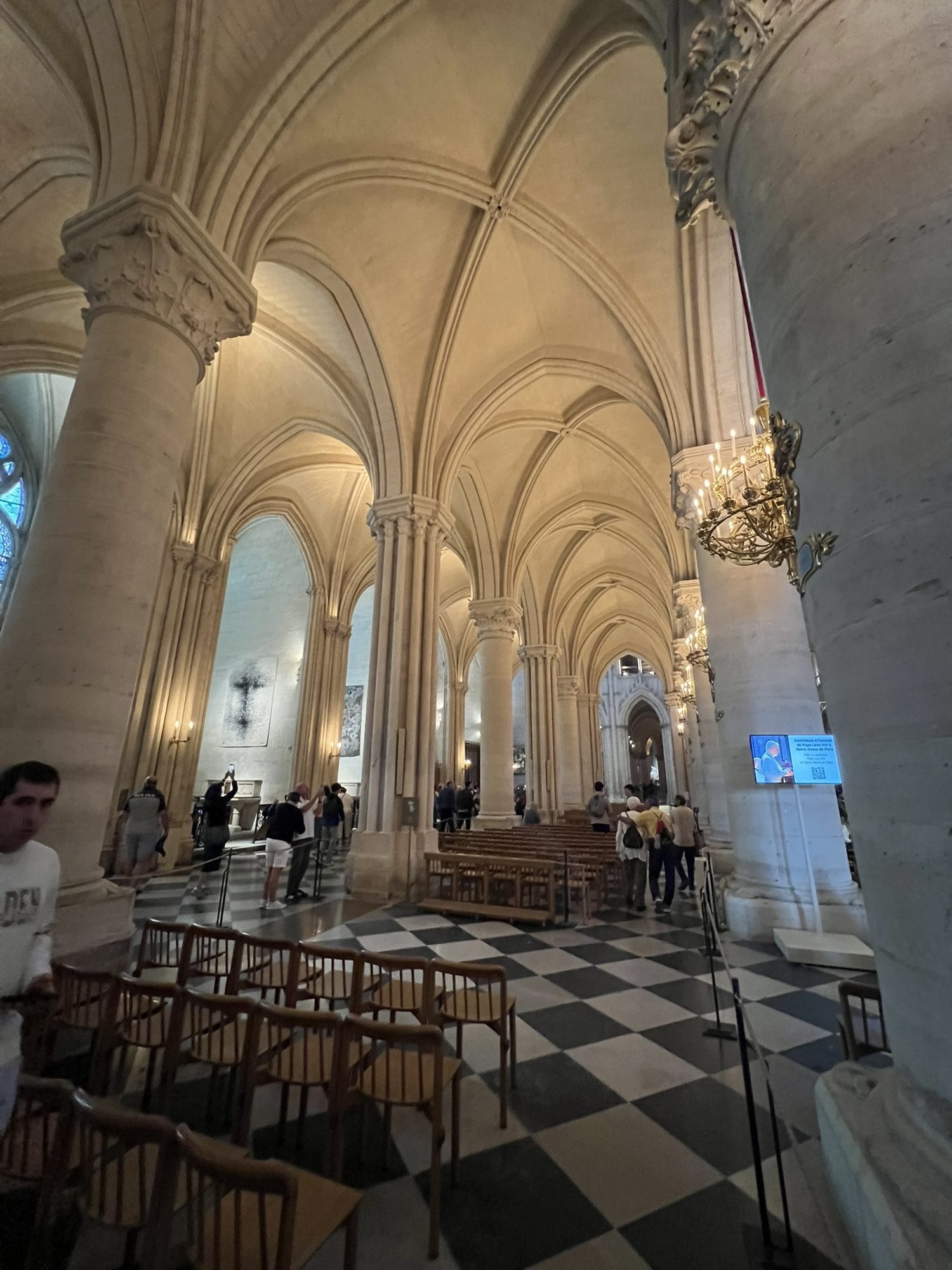
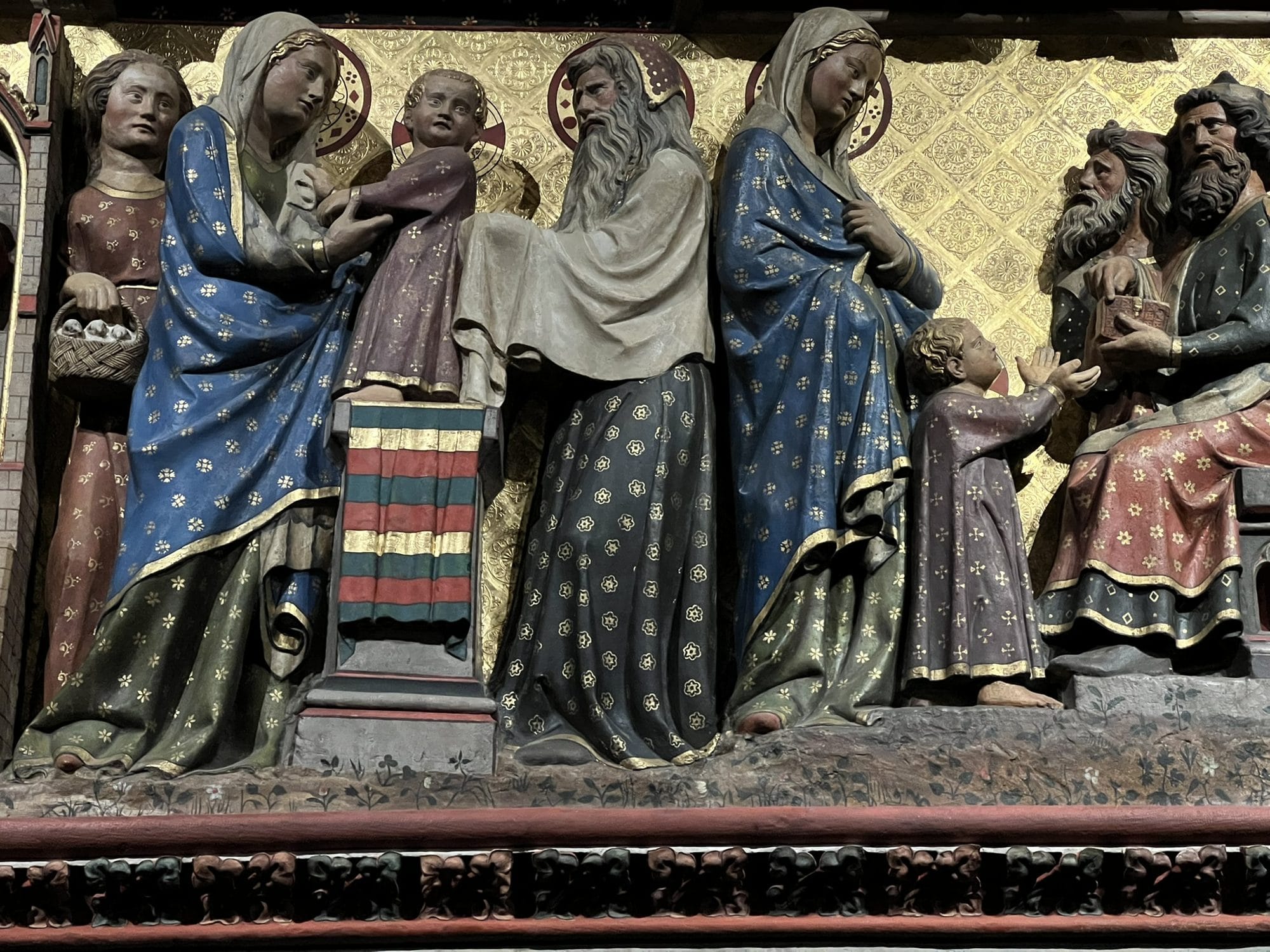
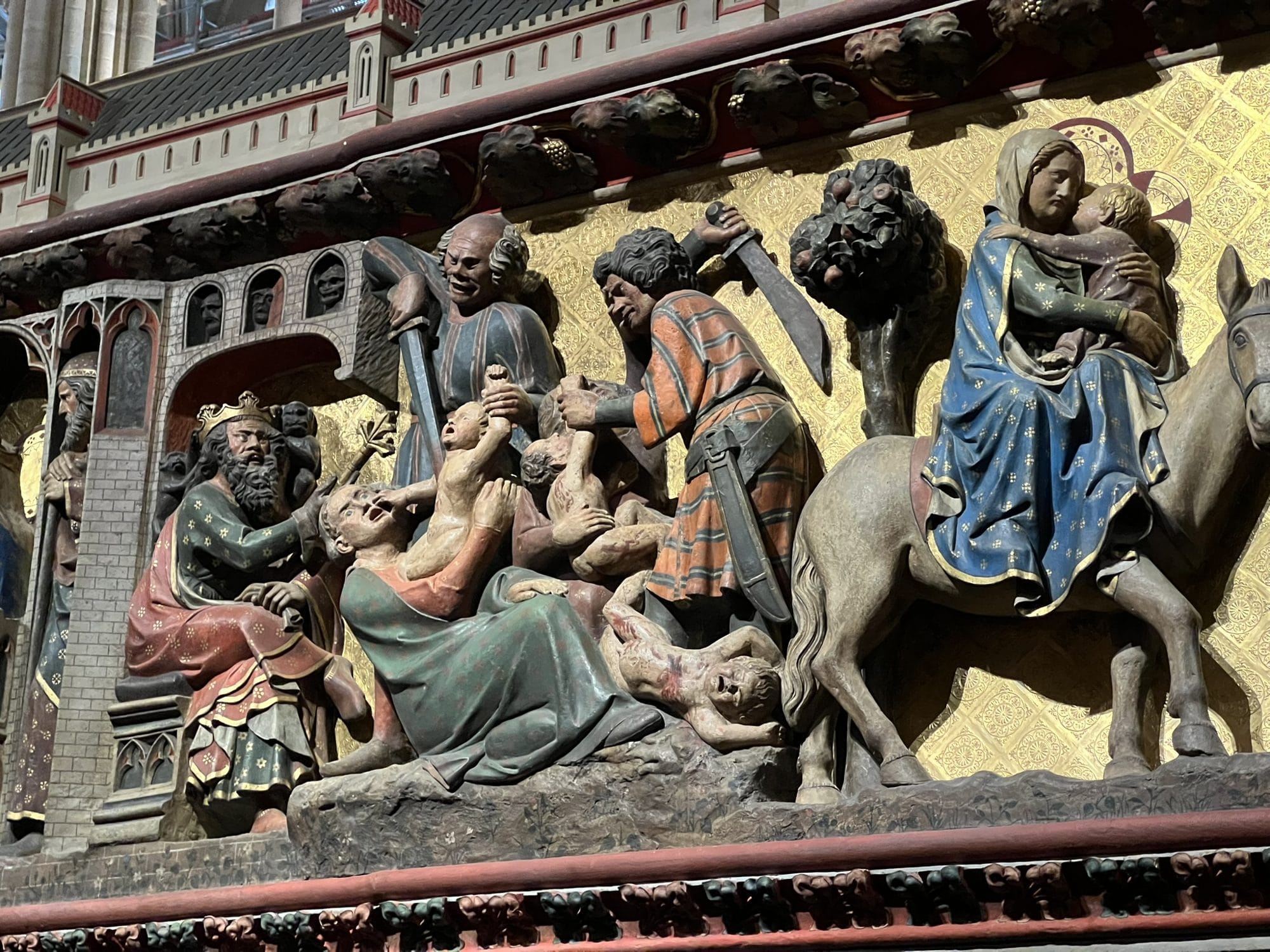
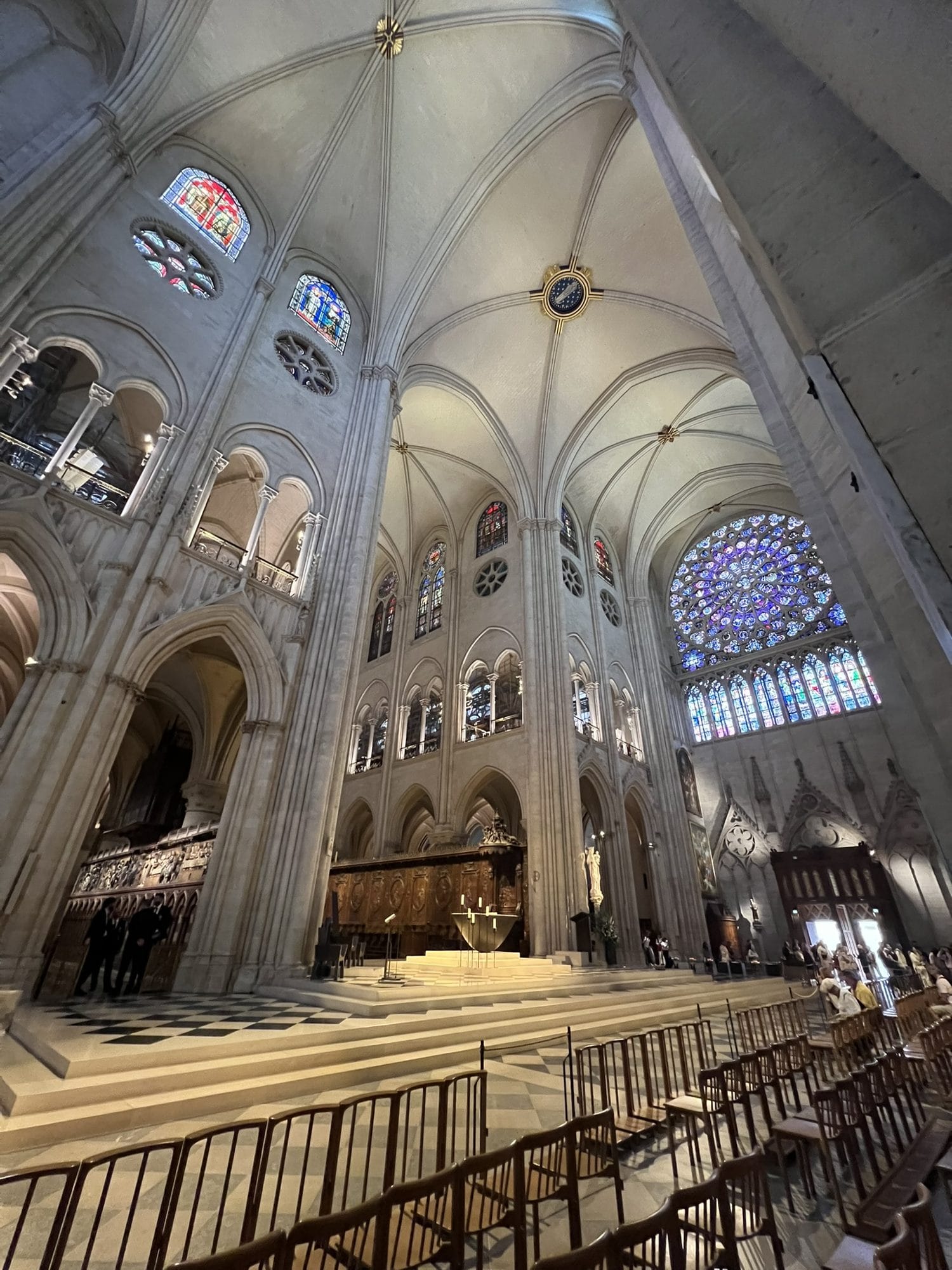
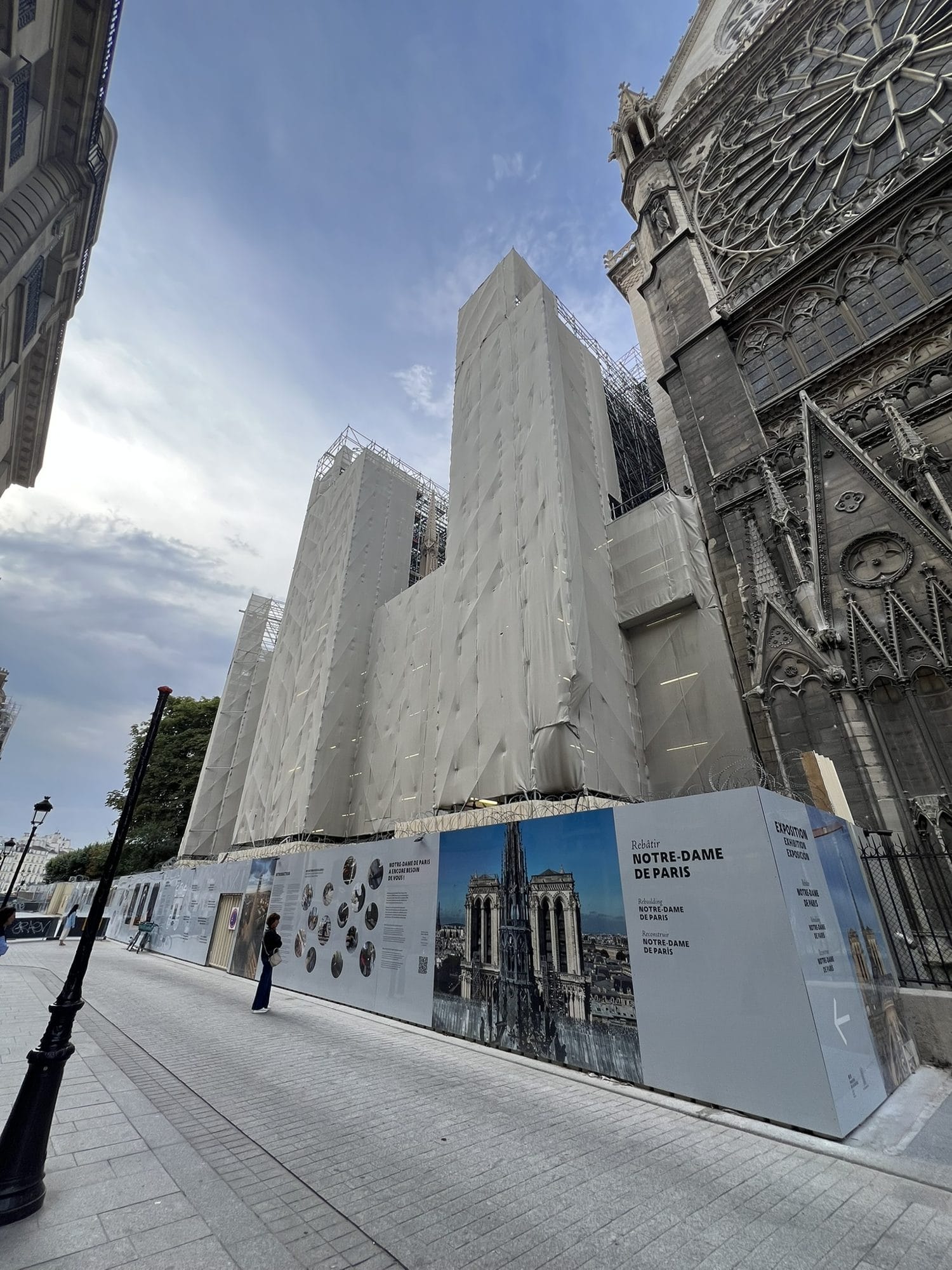
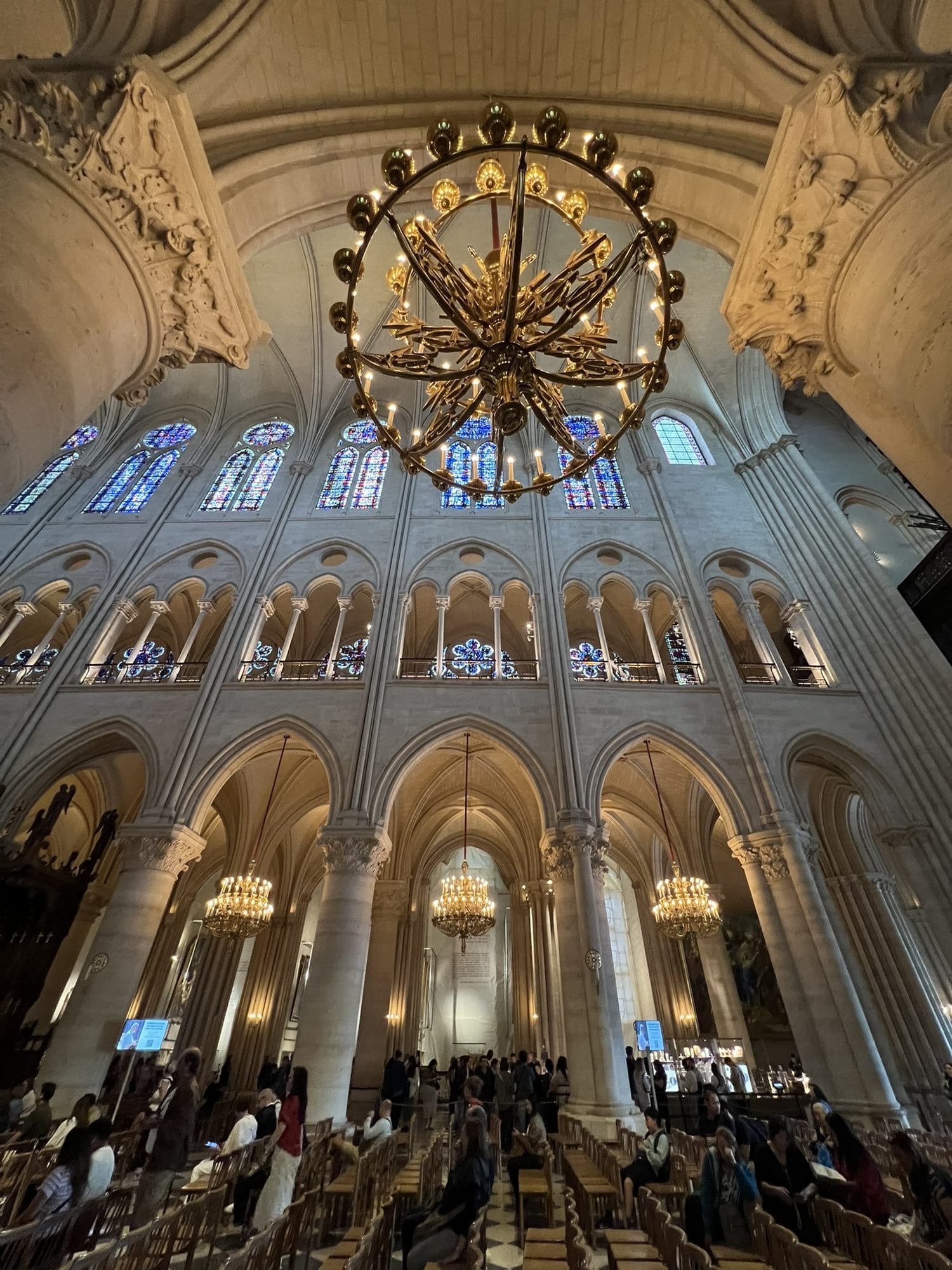
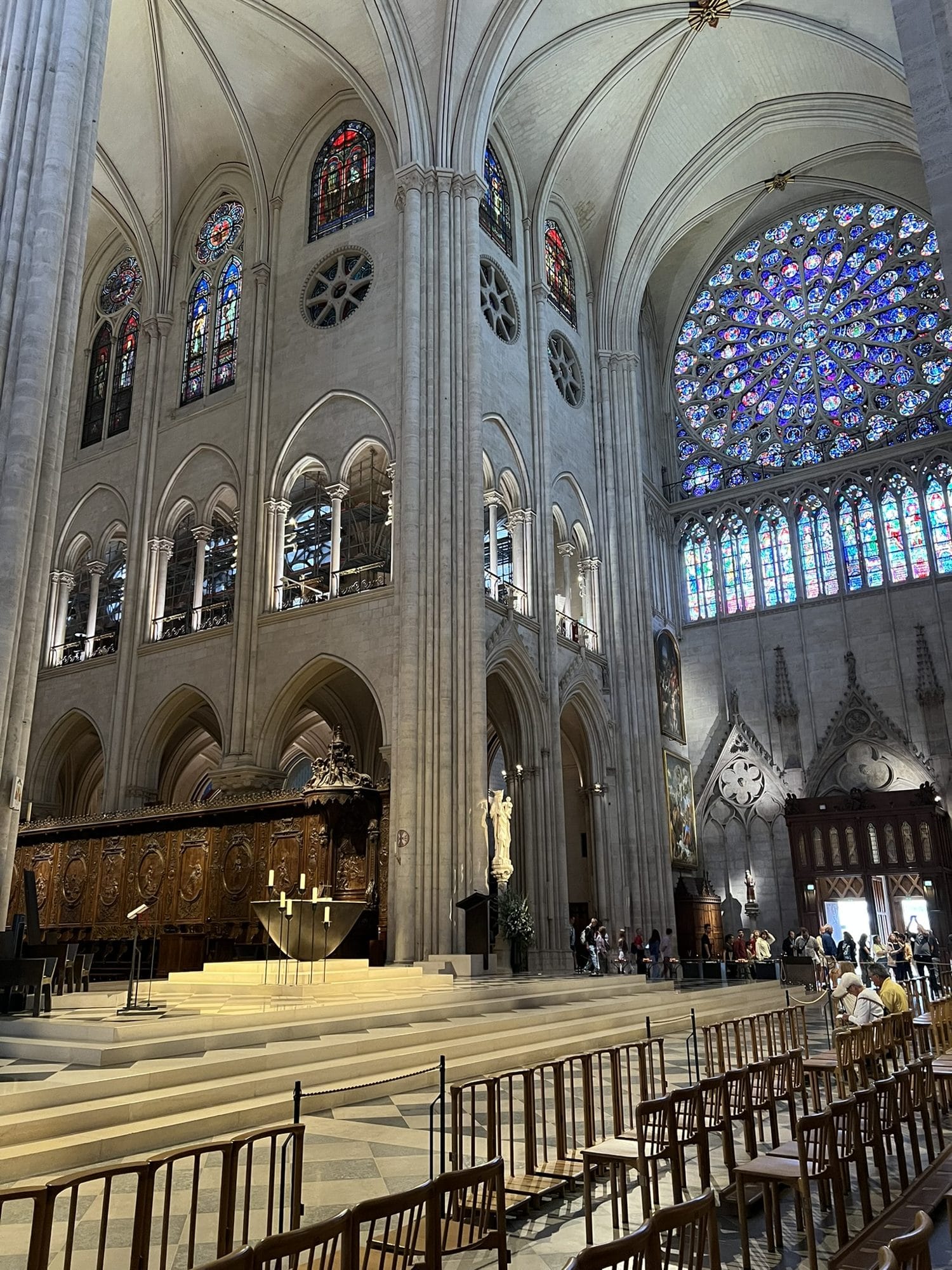
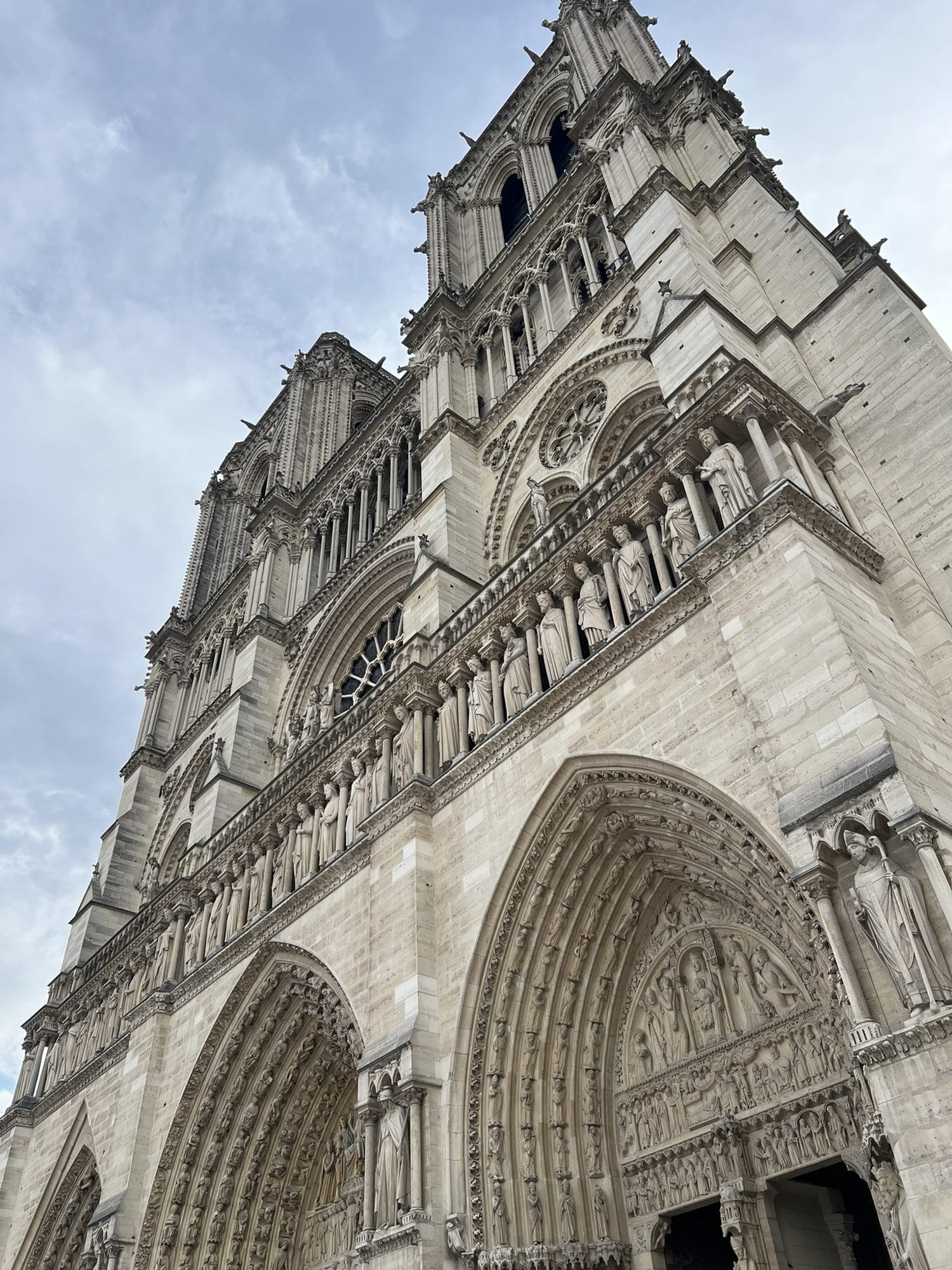
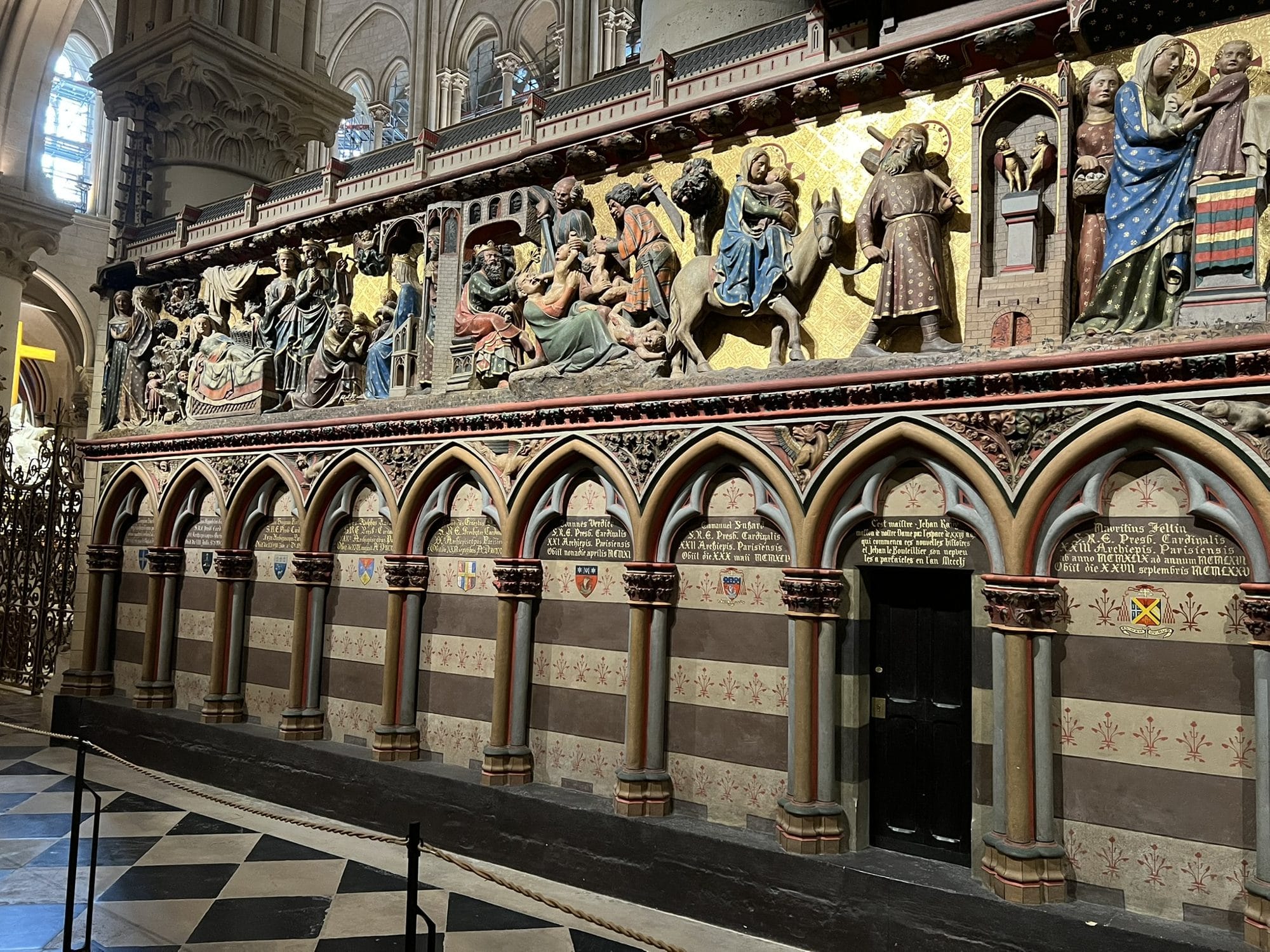
Notre-Dame de Paris, on the morning of 24 August 2026.
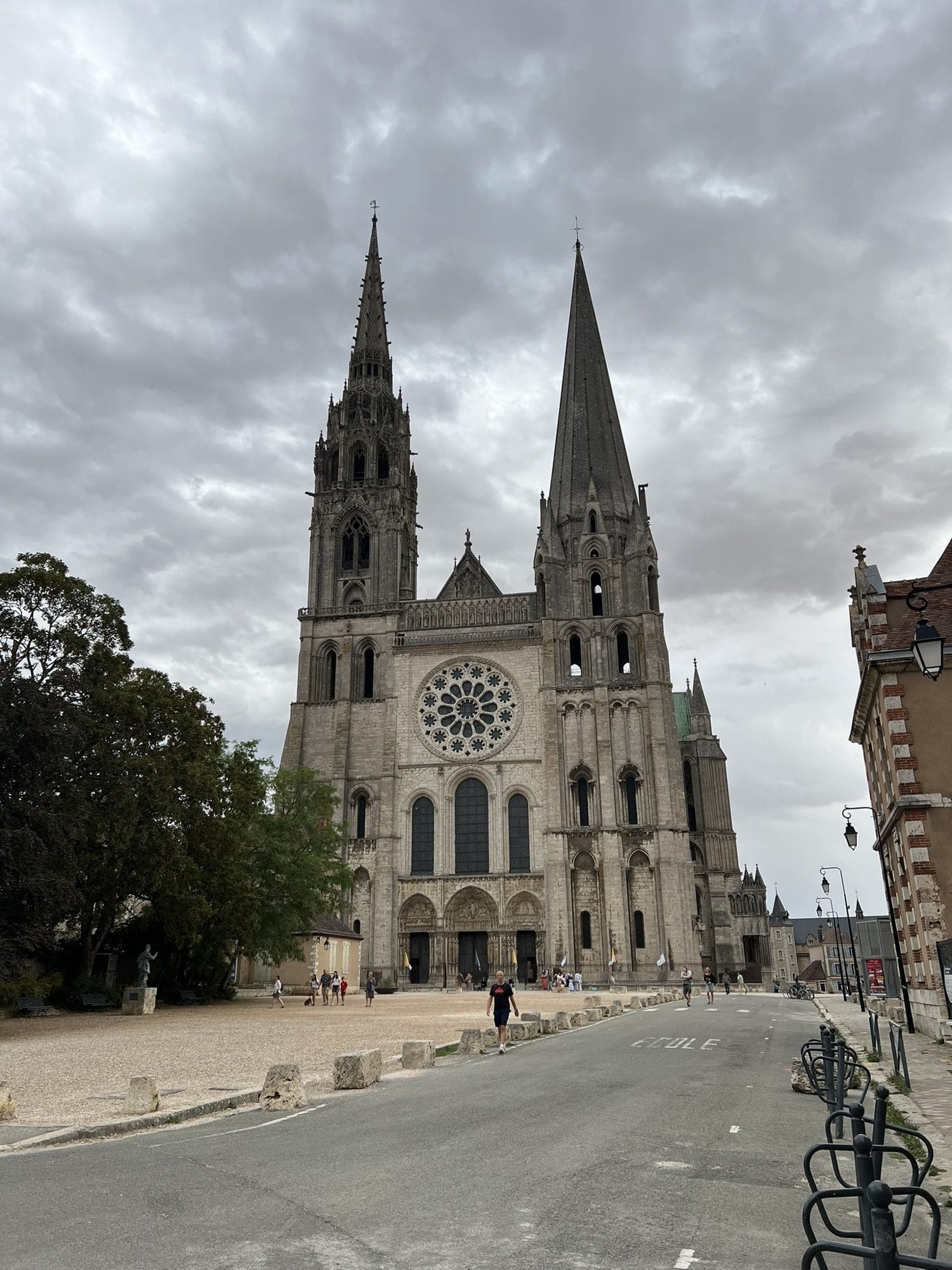
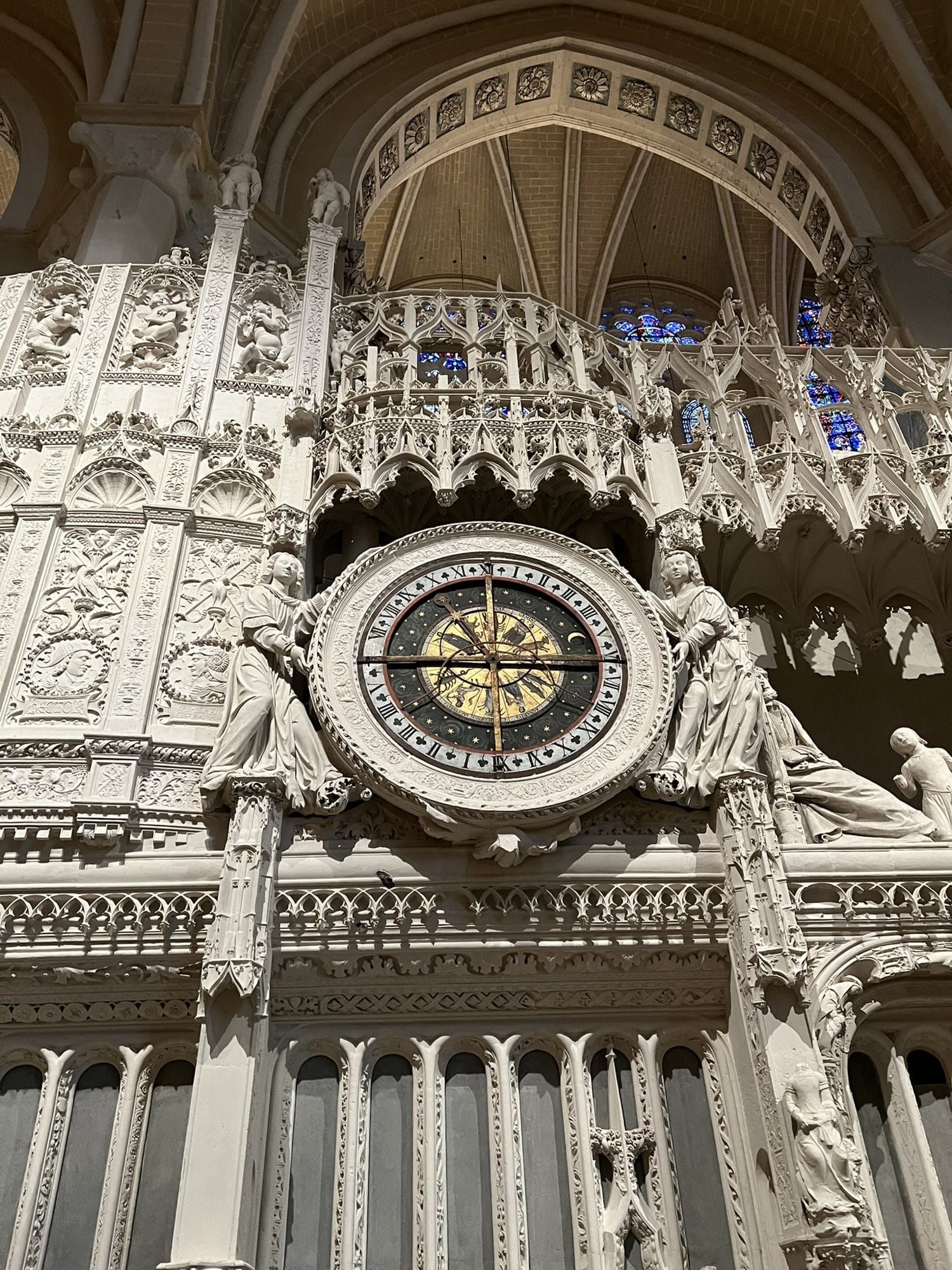
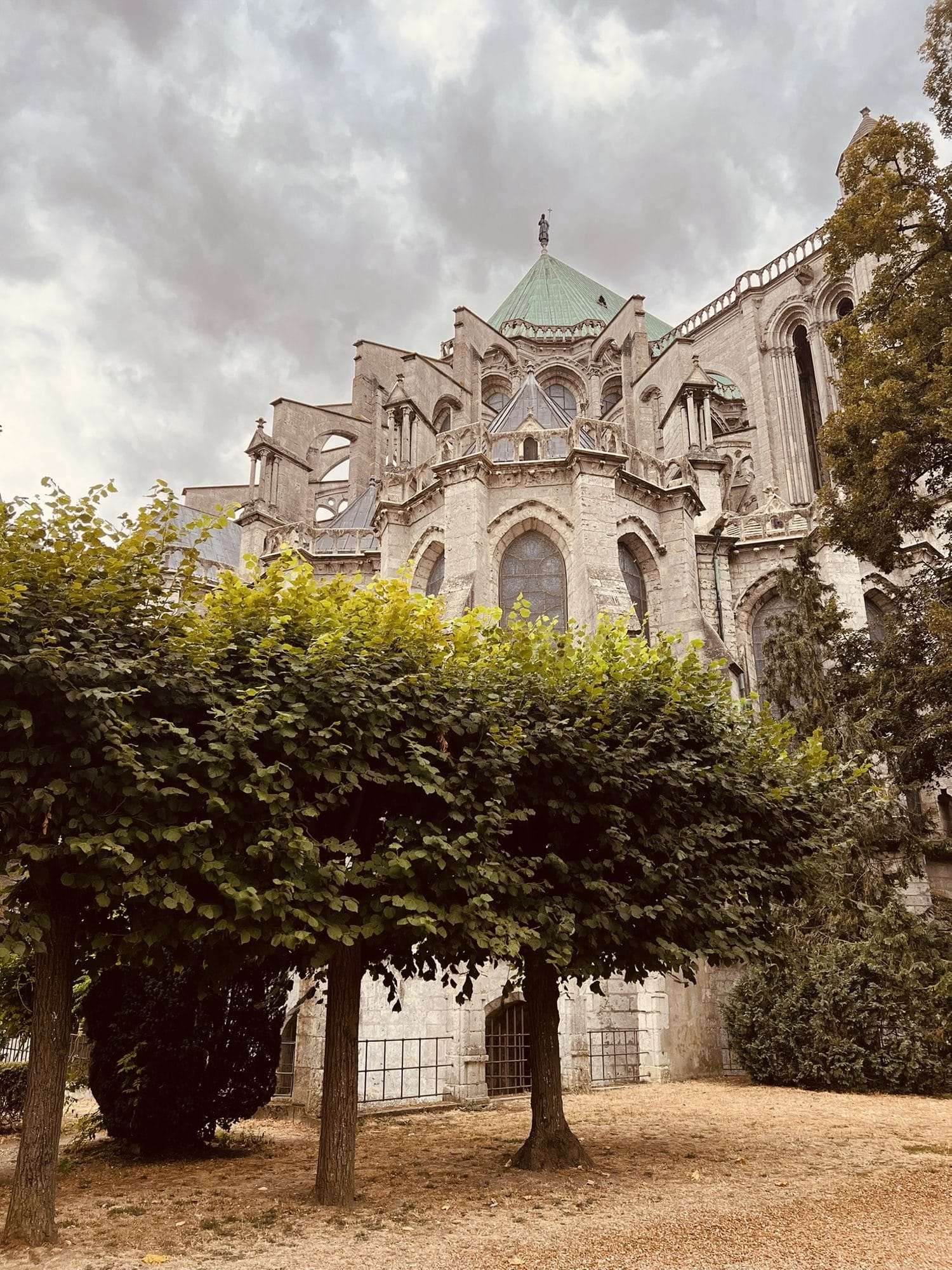
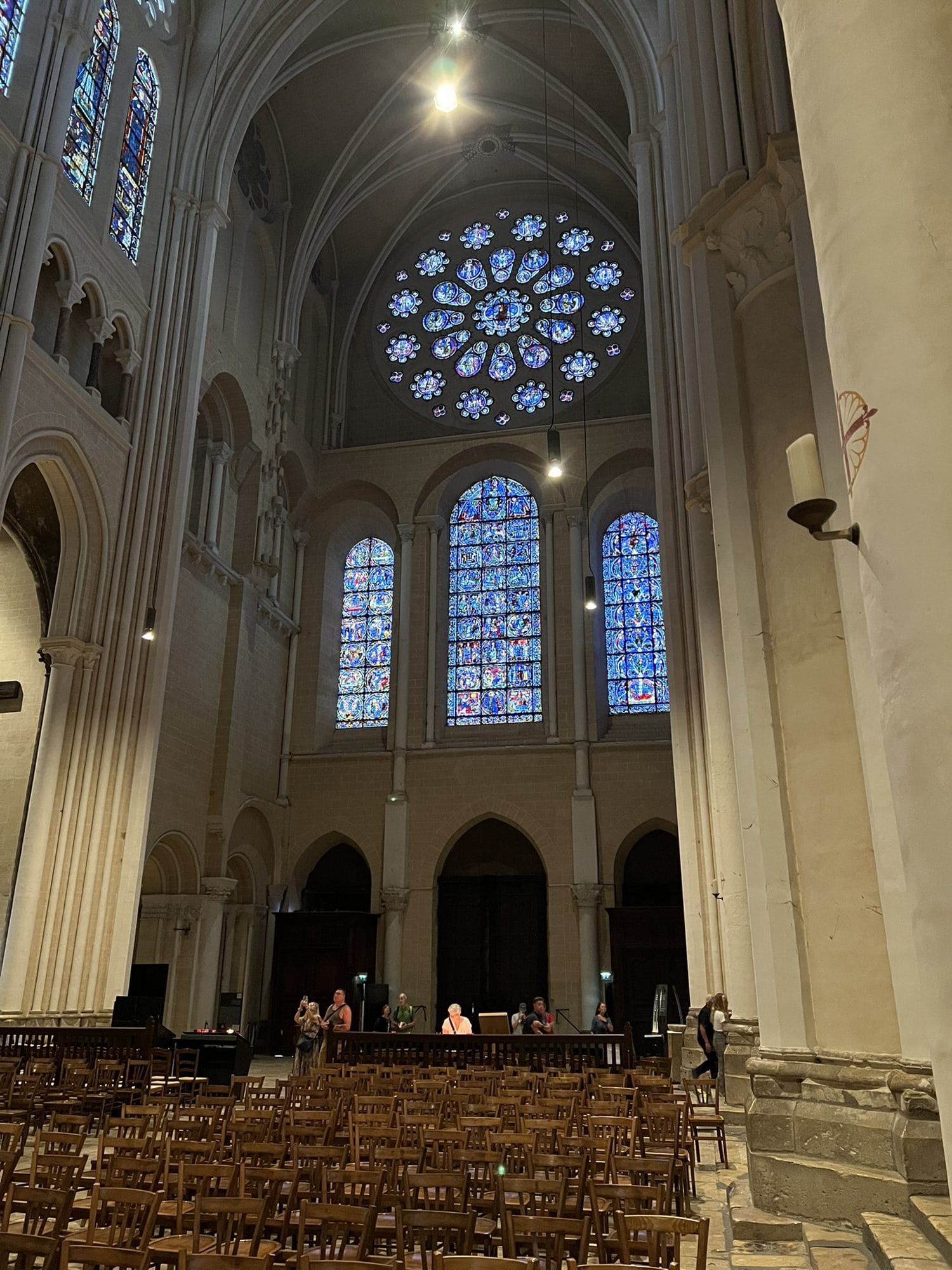
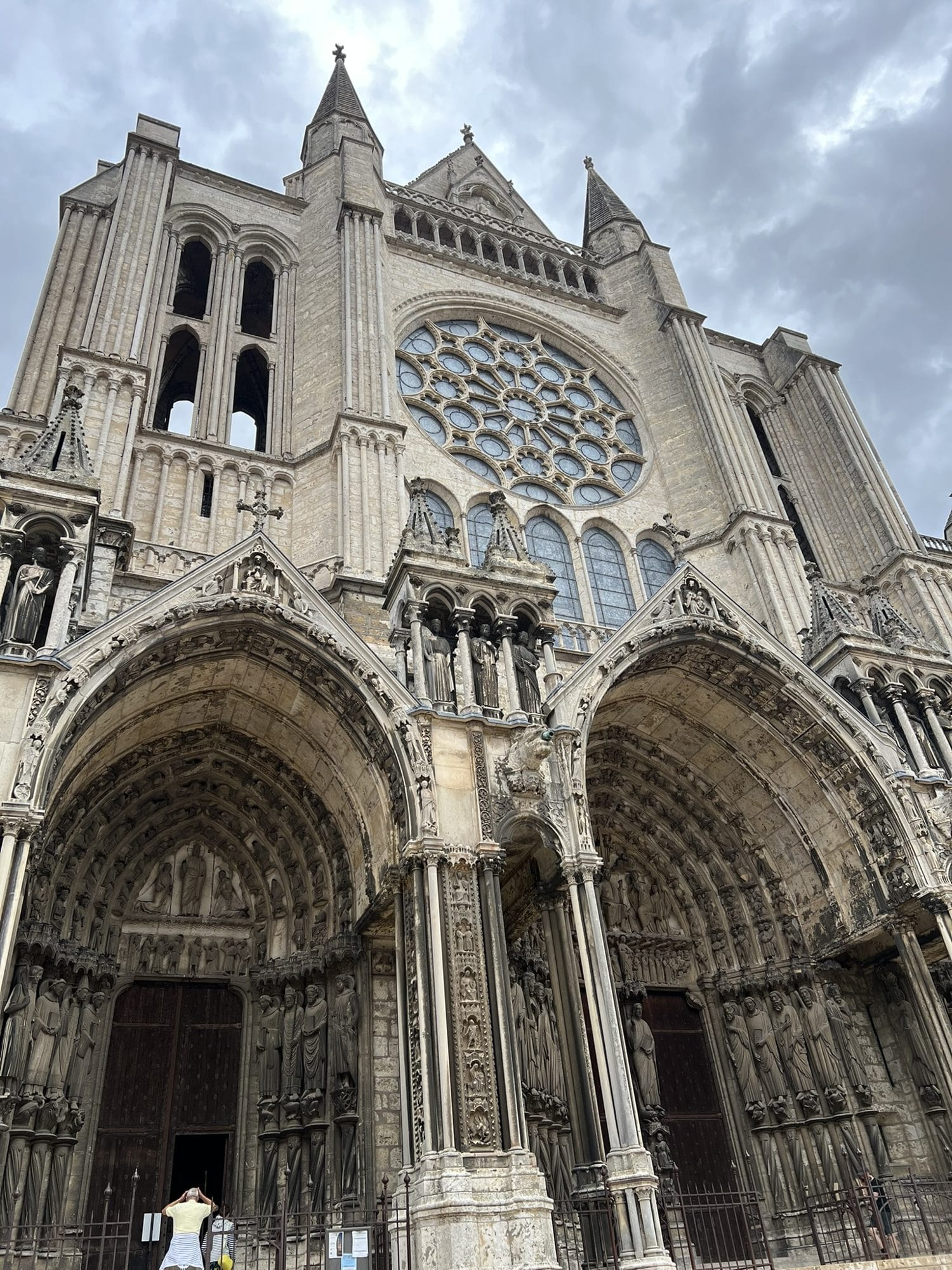
Chartres, 9 August 2026, under grey skies and rain.
Visiting
Entry is free, but booking is in practice essential: you reserve a time slot, the ticket goes on your phone, and anyone who turns up without one joins a queue that in summer never ends. Queues are shorter early in the morning and late in the afternoon.
On Sundays, services take up most of the day and tourist visits are almost at a standstill. That said: if you want to see the building as it was conceived, Sunday is the right day. You go in for Mass, not for a visit, and the difference is the whole point of this article.
With children it works well, with the caveat that the crowd is dense and the routes are one-way. The chequered floor keeps them busier than anything on the walls.
Further reading
If you read only one thing, read the interview with Patrick Rimoux on Light ZOOM Lumière. It is technical, it is long, and it is the only place where the lighting design is explained by the person who did it rather than summarised by someone who saw it. In French.
On Chartres, the whole controversy is in two texts: Martin Filler's attack in the New York Review of Books and the responses gathered by Apollo Magazine. Read them in that order, and notice that neither of them mentions lighting.
Jun'ichirō Tanizaki, In Praise of Shadows. A short book, more than ninety years old, and it hasn't aged a day. It is the book that explains why Notre-Dame's problem is not solved by cleaning less.